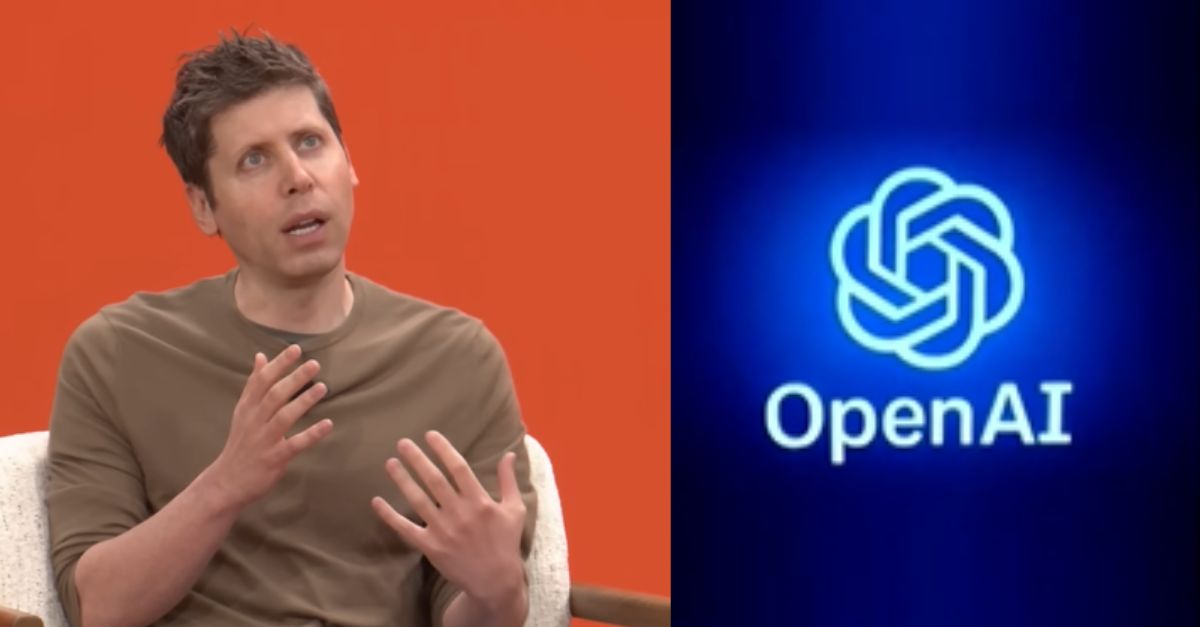
NEW YORK (Diya TV) — OpenAI is making a public admission that has alarmed both mental-health professionals and technology watchers: its flagship chat-assistant, ChatGPT, is seeing hundreds of thousands of weekly users whose conversations suggest serious mental-health crises.
OpenAI reports that about 0.07 % of its users in a given week may display signs of “possible mental-health emergencies related to psychosis or mania.” At the scale of roughly 800 million weekly users, that works out to around 560,000 individuals. The company further estimates 0.15 % of users (which would be around 1.2 million) engage in conversations with “explicit indicators of potential suicidal planning or intent.”
OpenAI says it arrived at these figures after working with over 170 psychiatrists, psychologists, and primary-care physicians practising across 60 countries. The goal: to improve ChatGPT’s ability to identify signals of distress, offer empathy, and guide users toward real-world help instead of replacing human care.
To most users, 0.07 % or 0.15 % may sound negligible. But when you multiply by hundreds of millions, the numbers become significant. As one expert put it:
“Even though 0.07% sounds like a small percentage, at a population level with hundreds of millions of users, that actually can be quite a few people.”
There is growing concern in the mental-health community that chatbots and AI assistants may not just passively reflect distress—they may, in some cases, amplify it. Researchers have documented cases of “AI psychosis,” where users engage in long sessions with chatbots and start to experience delusional or emotionally dependent symptoms.
One study of frequent users of ChatGPT found higher levels of loneliness, dependence, and lower real-world socialisation. And another found that some chatbots were giving dangerously irrelevant replies to self-harm signals (for example, a user expressing suicidal intent being told about bridges).
OpenAI says the latest model powering ChatGPT (known as GPT-5) includes “meaningful improvements” in recognising emotional distress, avoiding unhealthy emotional dependency, and reducing undesired responses in critical contexts. The company also says it will display reminders during long chat sessions to give users a break. OpenAI emphasises that ChatGPT is not a substitute for professional mental-health care; instead, it is meant to guide users toward support.
Despite the updates, many experts say we are far from a safe or reliable scenario. The core issue: AI chatbots may lack the nuance to properly manage mental-health crises, detect subtle signs of emergency, or intervene when needed.
Some of the documented dangers include:
- Users are developing emotional dependency on a chatbot that feels like a friend or confidant.
- Chatbots fail to recognise self-harm or delusional thinking, instead responding like a normal conversational partner.
- Heavy usage is linked to worse loneliness or social isolation rather than improvement.
Mental-health professionals warn that for vulnerable people, these risks are real:
“AI can broaden access to mental health support, and in some ways support mental health, but we have to be aware of the limitations.”
This disclosure by OpenAI is a wake-up call. It underlines how fast AI adoption has raced ahead of our understanding of its psychological and social impact. For users, the takeaway is clear: treat ChatGPT as a tool, not a therapist.