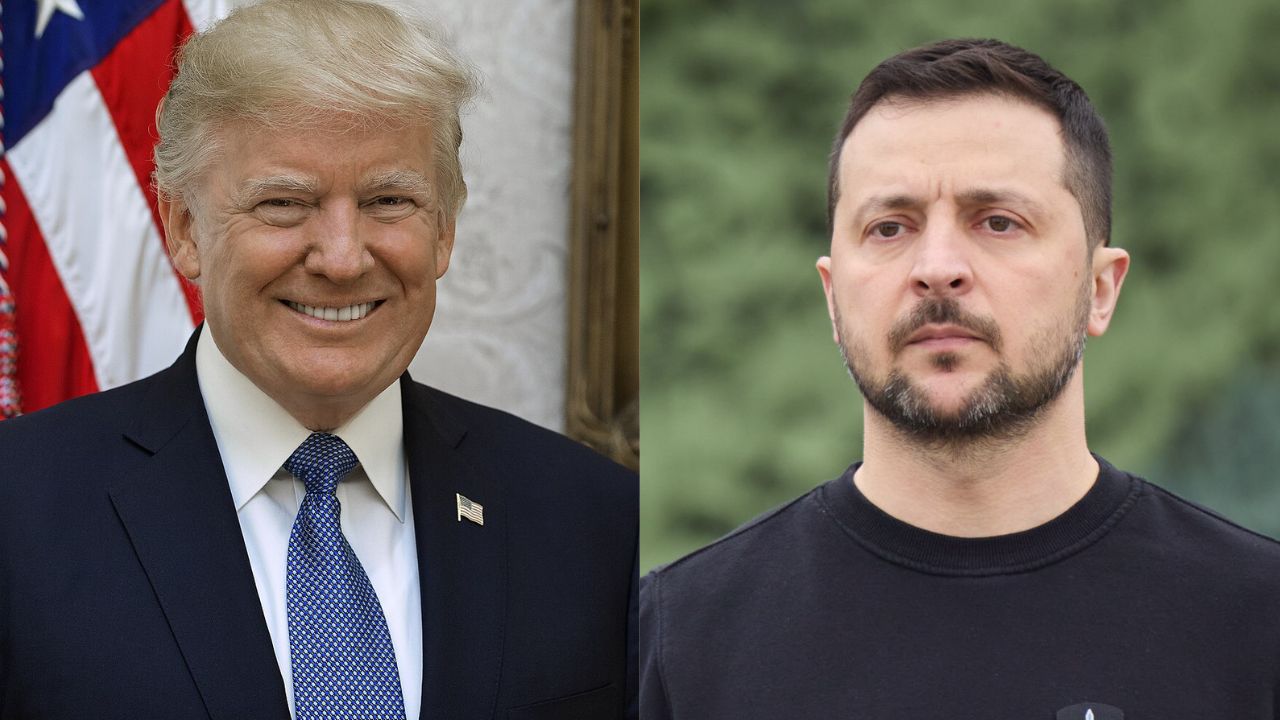
WASHINGTON (Diya TV) — President Donald Trump denied Friday that he ordered restrictions on Ukraine’s military satellite communications, as Ukrainian officials sought removal of a speed cap disrupting drone operations.
The denial followed a Reuters report that the instruction to restrict SpaceX’s Starshield service originated inside the White House. Two U.S. officials and a Western official told the news agency that Pentagon leaders received instructions to impose the limits. The report did not identify who issued the order.
Trump told reporters he had not ordered the restrictions and did not believe SpaceX founder Elon Musk was responsible. Ukrainian presidential adviser Serhii Beskrestnov said negotiations with the Pentagon, SpaceX and U.S. officials remained underway Friday.
The cap concerns how fast a terminal can travel while maintaining its satellite connection, rather than internet download speeds. Terminals on platforms exceeding roughly one hundred miles per hour lose connectivity.
Ukrainian units reported sudden communication failures earlier this week that disrupted strike missions, reconnaissance and logistics. A Ukrainian Defense Ministry source subsequently said service had improved for moving terminals below the threshold, but the formal limit remained.
Beskrestnov said Friday that SpaceX had fixed additional outages but had not removed the cap. Ukraine was exploring either lifting the restriction or switching to a more expensive aviation service without that limit. He also said Starshield does not provide connectivity for Ukrainian drone attacks on refineries inside Russia.
Musk has distinguished Starshield, which serves government and national security customers, from SpaceX’s commercial Starlink service. He said U.S. authorities control Starshield’s usage restrictions.
Ukrainian military officials said intermittent connections forced some units to cancel missions. Slowing drones to preserve connectivity also made them more vulnerable to Russian attacks, while the restrictions complicated efforts to intercept faster Russian drones.
U.S. officials have not publicly identified who authorized the cap or explained its purpose.