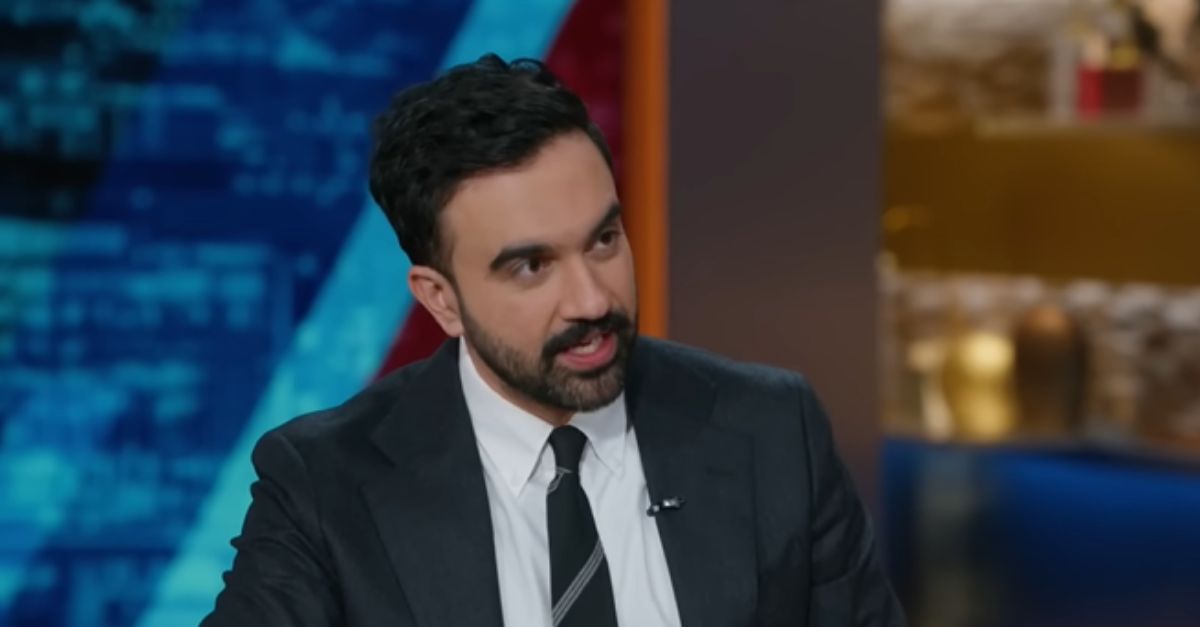
NEW YORK (Diya TV) — New York City mayoral front-runner Zohran Mamdani clarified Monday that the “aunt” he spoke about in an emotional campaign speech last week was actually his late cousin — not a biological aunt — after critics questioned the story’s accuracy.
The Queens assemblyman, known for his progressive politics, said during a press conference that the woman he mentioned was his father’s cousin, Zehra, whom he affectionately called “fuhi,” a word meaning paternal aunt in Urdu and Hindi.
“I was speaking about Zehra Fuhi, my father’s cousin, who passed away a few years ago,” Mamdani told reporters. “I used the term ‘aunt’ because that’s how I referred to her my entire life.”
His clarification came after online users shared photos of a woman they claimed was his biological aunt, questioning his emotional story about post-9/11 Islamophobia. Mamdani’s campaign declined to provide Zehra’s full name.
The controversy began Friday when Mamdani recalled his “aunt’s” fear of wearing a hijab and riding the subway after the Sept. 11, 2001, terrorist attacks. The story, shared during a campaign rally outside the Islamic Cultural Center in The Bronx, quickly spread online.
“In an era of ever-diminishing bipartisanship, it seems that Islamophobia has emerged as one of the few areas of agreement,” Mamdani said during his speech. He accused rivals — including former Gov. Andrew Cuomo, Curtis Sliwa, and Mayor Eric Adams — of fueling anti-Muslim sentiment in the mayoral race.
Mamdani said his relative’s experience reflected the fear many Muslims faced after 9/11. But critics seized on his comments, questioning his honesty and attacking his credibility.
Among those weighing in was Vice President JD Vance, who mocked Mamdani’s remarks on social media. “According to Zohran, the real victim of 9/11 was his auntie who got some (allegedly) bad looks,” Vance wrote on X.
Internet users soon circulated images of Masuma Mamdani — a public health consultant they said was the candidate’s only biological aunt — noting that she appeared without a hijab and lived in Tanzania at the time of the attacks.
Amid the growing speculation, Mamdani addressed the confusion on Monday. “For the takeaway from my more than 10-minute address about Islamophobia in this race and in this city to be the question of my aunt tells you everything you need to know about Cuomo and his inability to reckon with a crisis of his own making,” he said.
Masuma Mamdani could not be reached for comment.
The controversy over Mamdani’s remarks came as Cuomo escalated his campaign attacks. Running as an independent, the former governor criticized Mamdani for inviting left-wing Twitch streamer Hasan Piker to a “New York Is Not For Sale” rally in Forest Hills.
“I think that is insulting to all New Yorkers,” Cuomo told reporters Monday. “Hasan Piker is the person who said, ‘America deserved 9/11.’”
Piker, a popular but controversial online figure, was seen filming and interviewing attendees at the Sunday rally. He was given a “new media” press pass to cover the event, which featured Rep. Alexandria Ocasio-Cortez and Sen. Bernie Sanders.
Mamdani previously faced criticism for appearing on Piker’s stream in April, where his association with the influencer drew backlash. During a recent debate, Mamdani condemned Piker’s past remarks for the first time.
“I find the comments that Hasan made on 9/11 to be objectionable and reprehensible,” Mamdani said during the mayoral debate earlier this month.
The controversy comes as New Yorkers head to the polls for early voting ahead of the Nov. 4 mayoral election. Mamdani, who represents Astoria in the State Assembly, has surged in polls thanks to support from prominent progressives. Cuomo, meanwhile, has framed Mamdani as “too extreme” for New York City. He continues to hammer the Democrat over his ties to left-wing activists and online personalities.
Despite the backlash, Mamdani remains focused on issues like housing, transit, and Islamophobia. “This race is about the soul of New York City,” he said. “We are fighting for a city that welcomes everyone — no matter their faith, race, or background.”