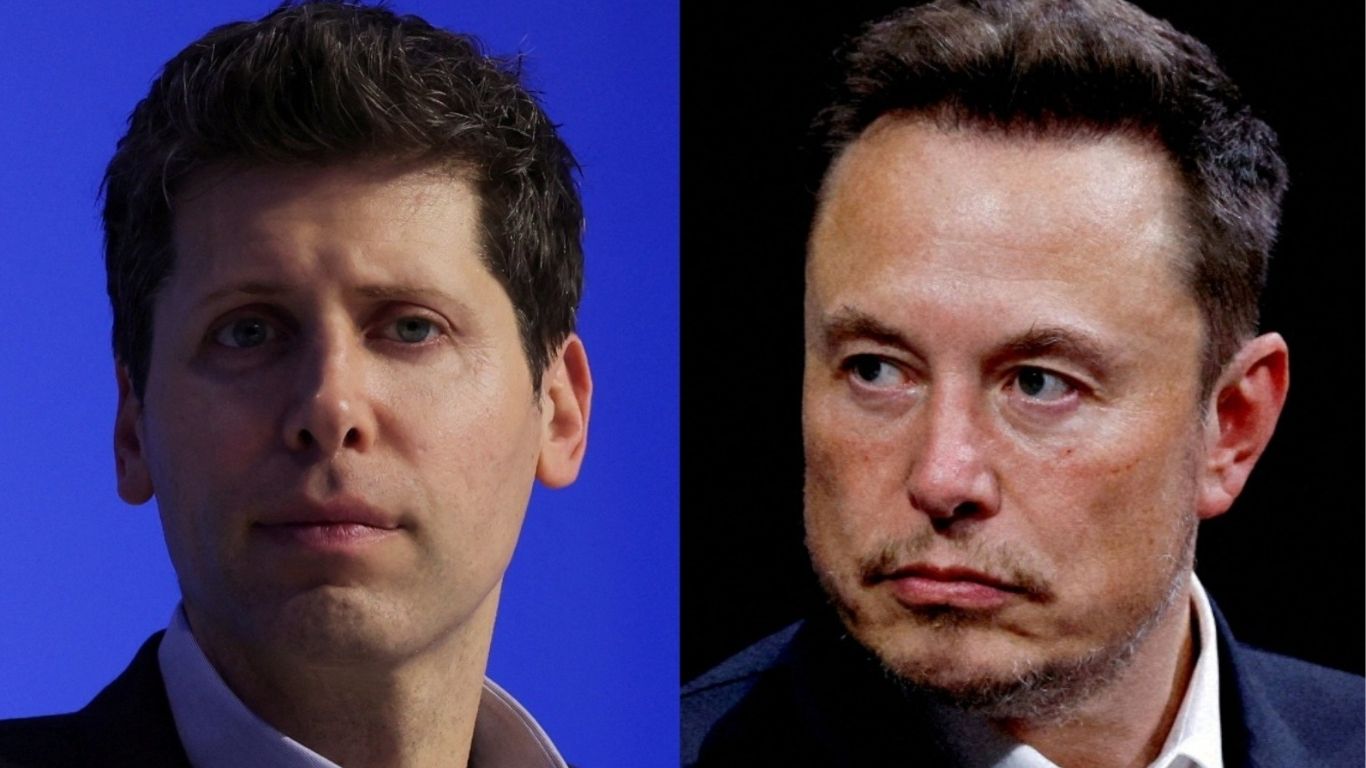
SAN FRANCISCO (Diya TV) — A high-stakes legal battle between Elon Musk and Sam Altman has exposed deep tensions inside the artificial intelligence industry and raised major questions about the future of OpenAI.
The closely watched federal court trial centered on Musk’s claim that Altman and OpenAI abandoned the company’s original nonprofit mission and turned it into a profit-driven business. Musk argued that the shift betrayed the founding vision he helped create. Altman denied the allegations and defended OpenAI’s growth strategy.
After weeks of testimony, a jury retired to consider the case. The final decision, however, will rest with the judge overseeing the trial.
Musk accused Altman of turning OpenAI away from its original purpose of developing artificial intelligence for the public good. He claimed Altman “stole a charity” by transforming the company into a business tied closely to major corporate investors.
The lawsuit also targeted Microsoft, which invested billions into OpenAI and became a co-defendant in the case. Musk argued Microsoft helped support Altman’s alleged efforts to commercialize the company.
Several high-profile witnesses challenged Musk’s claims during the trial.
OpenAI co-founder Ilya Sutskever testified that he never heard Musk discuss a permanent nonprofit structure for the company. Former OpenAI board member Tasha McCauley also said she saw no evidence supporting Musk’s central argument.
Microsoft CEO Satya Nadella testified that Microsoft conducted extensive research before investing in OpenAI. Nadella said the company believed OpenAI operated legally and transparently. Their testimony weakened Musk’s effort to prove that OpenAI violated a formal commitment.
Although several witnesses supported OpenAI, Altman faced tough scrutiny during the proceedings. Musk’s attorney repeatedly questioned Altman’s credibility during cross-examination. The questioning followed renewed public attention from a recent magazine profile that described Altman as dishonest and manipulative. When asked directly whether he considered himself “completely trustworthy,” Altman initially answered, “I believe so,” before later clarifying his response to “yes.”
Former OpenAI executives and board members also described moments when they believed Altman withheld important information from colleagues. The trial highlighted Altman’s financial investments outside OpenAI, including his ties to nuclear energy startup Helion Energy. Lawyers questioned whether Altman’s role with Helion created conflicts of interest because OpenAI signed a power agreement with the company.
Altman reportedly owns a stake in Helion worth more than $1.5 billion.
The trial also drew attention because of the strict management style of Judge Yvonne Gonzalez Rogers. She enforced tight schedules and limited breaks to keep the proceedings moving quickly. Lawyers, journalists, and courtroom observers all faced warnings when they ignored courtroom rules.
At one point, technical problems interrupted the courtroom audio system. The judge joked about the situation by blaming federal funding limitations, drawing laughter inside the courtroom. Since cameras were not allowed during the trial, courtroom sketch artist Vicki Behringer documented the proceedings through detailed watercolor illustrations.
The case also revealed personal details about Musk’s life and leadership style.
Musk testified early in the trial and appeared confident for much of his testimony. However, he became visibly uncomfortable while discussing his relationship with Shivon Zilis, an executive at Neuralink and the mother of four of his children. Zilis testified that Musk once offered to donate sperm after learning she did not have children. She also explained why she eventually left OpenAI’s board after Musk launched his competing artificial intelligence company, xAI.
Private text messages shown during the trial revealed tensions, loyalty struggles, and internal conflicts among Silicon Valley leaders. Some messages focused on Altman’s reaction after OpenAI briefly removed him as CEO in 2023. Others showed executives discussing leadership changes and internal disagreements in unusually casual language.
Lawyers described alleged efforts to gain loyalty, influence colleagues, and control company leadership. Musk’s legal team argued Altman used powerful connections to strengthen his public image and business position.
Altman countered by accusing Musk of seeking too much control over OpenAI.
The courtroom battle gave the public a rare look inside the culture of Silicon Valley’s most powerful companies.