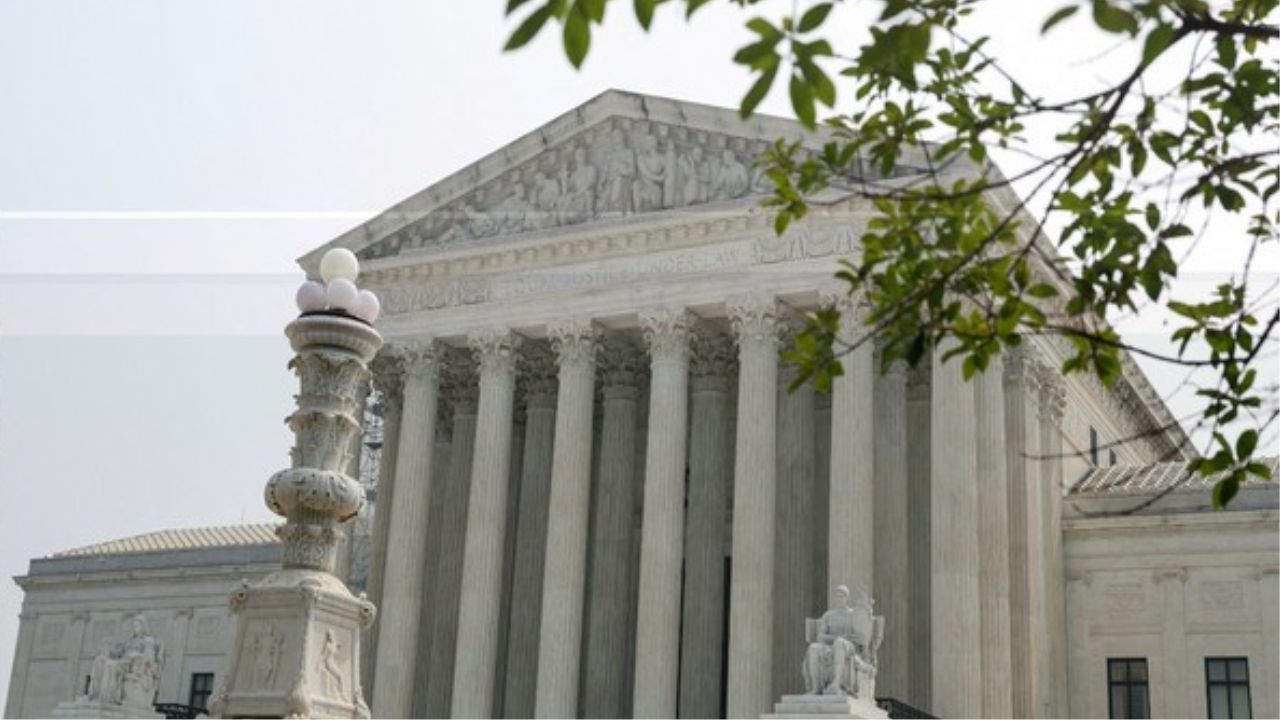
WASHINGTON (Diya TV) — The Supreme Court on Monday allowed parts of President Donald Trump’s executive order on mail voting to move forward for now.
The decision gives the Trump administration more room to pursue changes that could affect how states handle mail ballots.
The justices issued an unsigned order over the objections of the court’s three liberal members. The ruling allows the Department of Homeland Security to work on state-specific voter lists under Trump’s March executive order. The order also gives the U.S. Postal Service a larger role in mail voting.
Trump’s executive order seeks new requirements for states that use mail ballots. Under the plan, states would provide lists of eligible voters to the Postal Service. They would also add information to ballot envelopes so officials could track mailed ballots.
The Supreme Court allowed the Postal Service to proceed with that part of the plan. However, a lower court has already blocked the effort nationwide in a separate case. As a result, the Postal Service cannot simply put the new requirements into effect.
A Massachusetts federal court could consider whether to block the underlying Postal Service rule.
Steve Vladeck, a CNN Supreme Court analyst and Georgetown University Law Center professor, said the ruling gives Trump a temporary win. Still, he said the decision does not clear the way for the mail voting restrictions to take effect.
The Supreme Court also stressed that Monday’s decision did not decide whether Trump’s executive order violates the law. The justices said future court decisions could determine whether individual steps taken by the administration remain lawful.
Democratic-led states that challenged Trump’s plan warned that they may need to spend more time and resources responding to the new requirements.
In April, the court’s conservative majority issued a major ruling involving Louisiana’s congressional districts and the Voting Rights Act.
Justice Sonia Sotomayor, joined by Justice Elena Kagan, said lower courts should have been able to consider the states’ challenges now. Sotomayor stressed that the court had not ruled on whether Trump’s election directives were lawful.
Justice Ketanji Brown Jackson issued a separate dissent. She argued that the ruling could create confusion as the November election approaches. Jackson also criticized what she viewed as conflicting Supreme Court standards for deciding when election cases can reach the courts.
The dispute now moves back to the lower courts.