SAN JOSÉ, Costa Rica (Diya TV) — The United States has revoked visas for top executives of Costa Rica’s leading newspaper, La Nación, in a move that has raised concerns about press freedom and political pressure in the region. The decision follows years of tension between the newspaper and Costa Rican President Rodrigo Chaves, a close ally of U.S. President Donald Trump.
The U.S. State Department barred five of seven board members of La Nación from entering the United States. The newspaper said officials provided no clear explanation for the decision. The move marks an unprecedented step against a major media organization in Costa Rica.
In an editorial, La Nación said the visa revocations appear to punish its editorial stance. The paper described the action as a direct threat to press freedom. It also noted that such a measure against a media outlet’s leadership is rare in democratic nations. The State Department has not publicly commented on the decision.
The dispute dates back to 2022, when La Nación published reports on a sexual harassment investigation involving Chaves. At the time, he worked at the World Bank. An internal probe led to his demotion. Despite the controversy, Chávez won the presidency. Since taking office, he has frequently criticized the newspaper. He has accused his journalists of trying to weaken his administration. He has also framed the outlet as a political opponent.
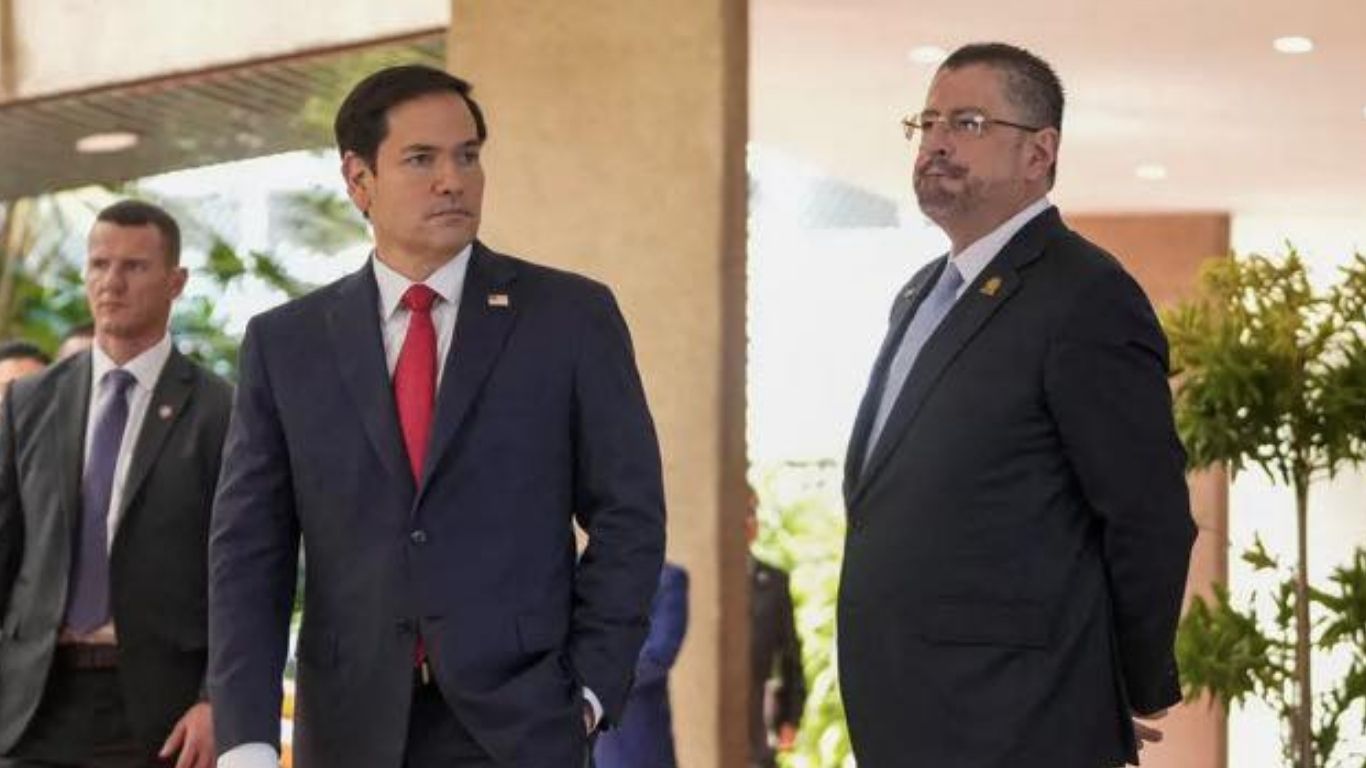
Chaves has strengthened ties with Trump-era officials. During a visit to Costa Rica, U.S. Secretary of State Marco Rubio praised the country as a regional model. He also supported Costa Rica’s decision to ban Chinese 5G companies such as Huawei. The U.S. has since taken several actions against Costa Rican figures seen as critical of this policy. Officials revoked visas for opposition lawmakers who opposed the 5G ban. They also targeted prominent leaders with ties to China.
The visa cancellations extend beyond journalists. The U.S. has revoked entry privileges for at least 15 Costa Rican officials and citizens. These include former President Óscar Arias, a Nobel Peace Prize winner, and his brother, legislative leader Rodrigo Arias. A report by the Congressional Research Service said officials cited unspecified ties to China in many cases. However, analysts argue that the pattern suggests political motives.
Felipe Alpízar, a researcher at the University of Costa Rica, called the situation serious. He said the U.S. appears to use immigration policy to pressure political opponents. He added that many targeted individuals pose no security risk. Media experts warn that the move against La Nación could weaken democratic institutions. Critics say it sends a message that governments may punish journalists for critical reporting.
Mauricio Herrera, a former communications minister, said the decision benefits only the president. He argued that intimidating the press undermines transparency and accountability. Pedro Abreu, president of La Nación’s board, said the newspaper will not change its editorial approach. He reaffirmed its commitment to independent journalism and freedom of expression.
Chaves’ term ends this week, but his influence may continue. His chosen successor, Laura Fernández, recently won the presidential election. Observers expect her administration to maintain close ties with Washington.
Costa Rica has also agreed to accept deportees from the United States. The policy has drawn criticism, especially after reports that migrants were temporarily housed in poor conditions. Analysts say these developments highlight a complex relationship between Costa Rica and the United States. While cooperation has increased, concerns about political pressure and democratic norms continue to grow.