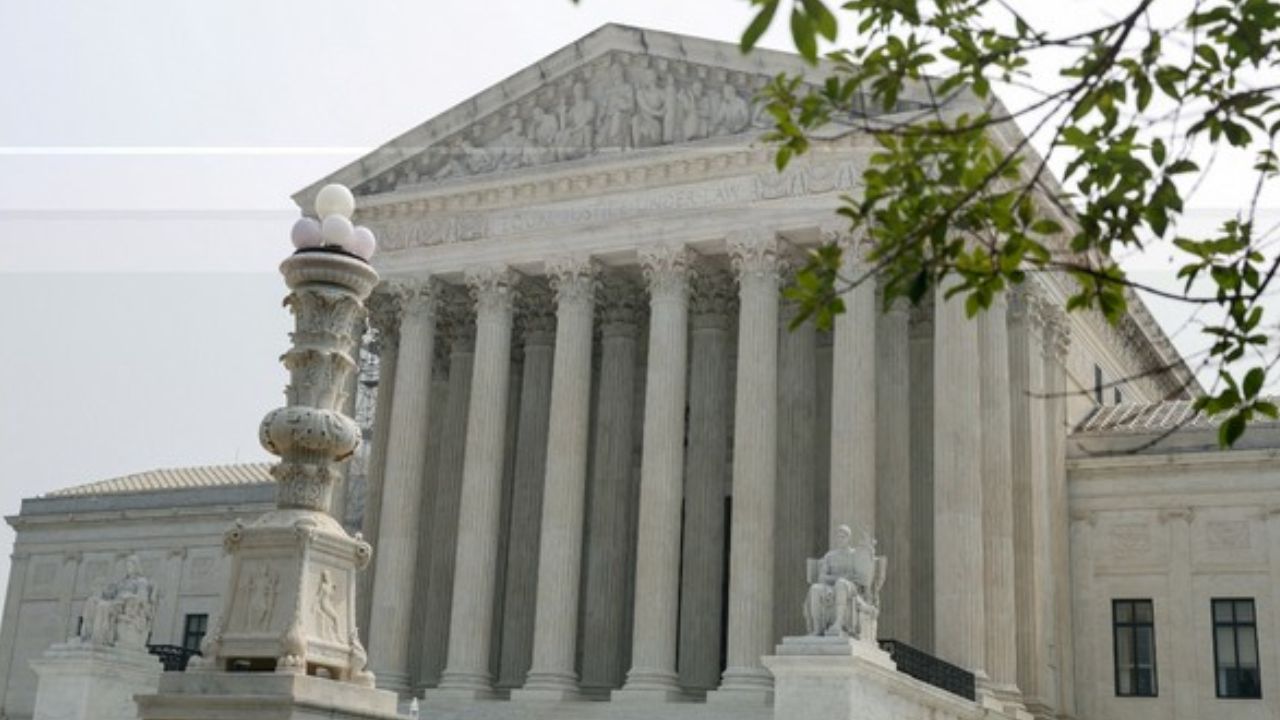
WASHINGTON (Diya TV) — A coalition of immigration and civil rights organizations has filed a Supreme Court brief supporting bond hearings for certain noncitizens held for prolonged periods under federal immigration law.
The American Immigration Council, American Immigration Lawyers Association, Asian Law Caucus, RAICES, Sikh Coalition and South Asian American Justice Collaborative filed the amicus brief Sept. 8 in Genalo v. Black.
The case concerns detention under Section 1226(c) of the Immigration and Nationality Act, which requires the detention of certain noncitizens facing removal proceedings based on specified criminal convictions or terrorism-related grounds. The law does not provide a general right to a bond hearing during that detention.
The Supreme Court will consider whether detention under the provision can become unreasonably prolonged under the Fifth Amendment’s Due Process Clause and, if so, whether a bond hearing is required. The justices will also consider whether the government must justify continued detention by clear and convincing evidence.
The Court is also considering whether the claims involving respondent Keisy G.M. remain legally active after changes in his custody status.
The dispute follows a 2024 ruling by the U.S. Court of Appeals for the Second Circuit involving Carol Williams Black and G.M., two lawful permanent residents detained under Section 1226(c). Black was detained for about seven months without a bond hearing, while G.M. was detained for about 21 months.
The Second Circuit ruled that due process requires an individualized bond hearing when detention becomes unreasonably prolonged. In Black’s case, the court also upheld a requirement that the government prove by clear and convincing evidence that continued detention was necessary.
The federal government is asking the Supreme Court to overturn that ruling. In its brief, the Justice Department argues that Section 1226(c) detention does not create a constitutional right to a bond hearing based on the length of detention. It also argues that, even if a hearing is required, the Constitution does not require the government to meet the clear-and-convincing-evidence standard.
The six organizations supporting G.M. argue that prolonged detention can affect access to attorneys, evidence and family support. The brief also cites concerns involving religious accommodations, dietary restrictions and language access for some detainees, including South Asians.
The Supreme Court has scheduled oral arguments for Oct. 13.