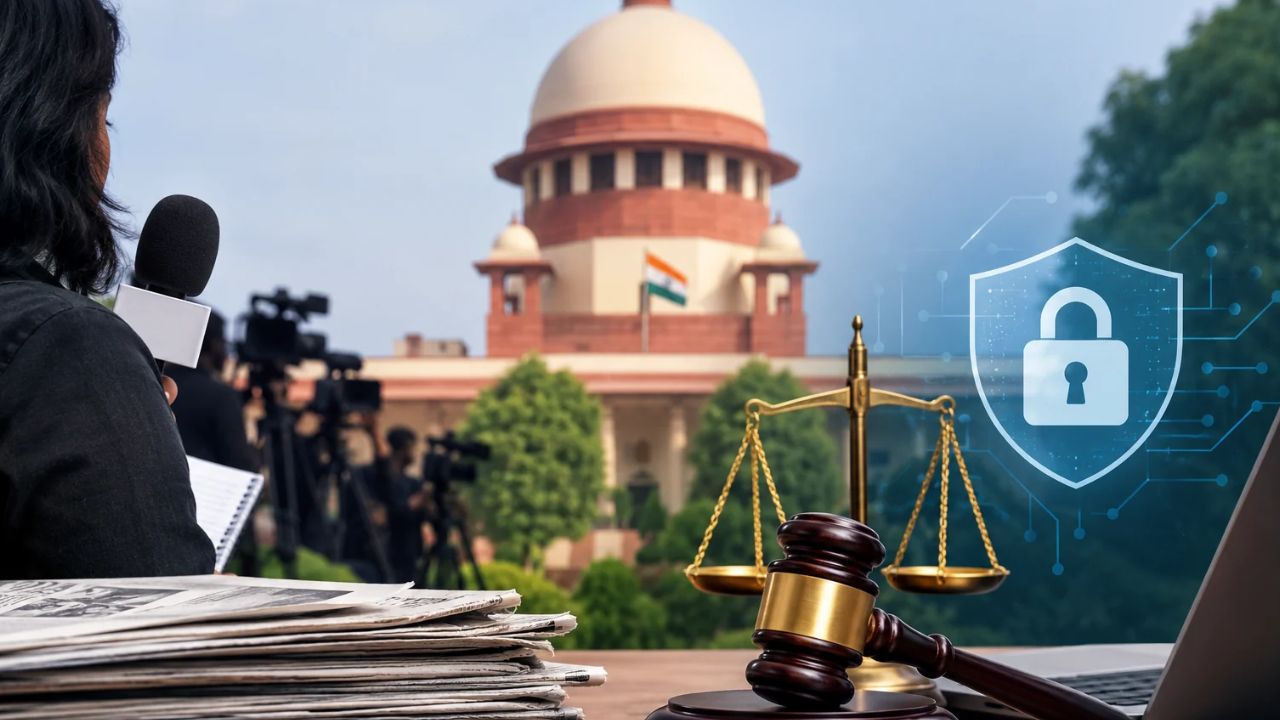
NEW DELHI, India (Diya TV) — India’s Supreme Court has asked the government to respond to a challenge by 21 news publishers who argue that the country’s digital privacy law could obstruct investigations, expose confidential sources and make routine reporting difficult.
The case pits privacy protections against the press’s ability to gather information about people without their consent. The publishers say the law could require journalists to seek permission from the people they cover, even when they investigate public officials or report on matters of public interest. The government has not yet filed its response in court.
The Digital News Publishers Association (DNPA) filed the challenge on behalf of 21 publishers. Its members include Network18, NDTV, The Indian Express and Times Internet, as well as other major news organizations. The association has asked the court to strike down several provisions of the Digital Personal Data Protection Act, passed in 2023, and the rules adopted in 2025.
At Tuesday’s hearing, senior lawyer Madhavi Goradia Divan argued that the law’s consent requirements could let the subjects of reporting control whether journalists can investigate them. She said earlier versions of the legislation exempted journalism, but the final law did not. Without that exemption, she warned, publishers could face what she called “a complete regime of pre-censorship.”
The publishers say the rules could reach beyond consent. They argue that government powers to demand information could expose confidential sources, while data-erasure requirements could force outlets to remove published stories. The group says these obligations could affect reporters, editors, ground journalists, whistleblowers and others who contribute to public-interest reporting.
The DNPA has also challenged an amendment to India’s Right to Information Act. The amendment changes the rules for disclosing personal information. The publishers argue that it could restrict access to information about public officials and weaken public scrutiny.
The Supreme Court did not grant an immediate stay of the disputed provisions. Chief Justice Surya Kant said the court would not issue an order without hearing the government and asked the publishers to suggest safeguards against misuse. The three-judge bench issued notice to the Centre and scheduled the next hearing for Nov. 17.
That exchange underscored the competing interests before the court. The DNPA says the law could make time-sensitive reporting, including live television coverage, difficult if journalists must first obtain consent. The chief justice framed the issue as a balance between media rights and citizens’ privacy rights, and asked the publishers how they would prevent misuse of personal data.
India enacted the privacy law to regulate how organizations collect and use digital personal data. The disputed provisions are scheduled to take effect in May 2027, giving the court several months to consider the case before the main requirements begin. The publishers say the law lacks the written journalism exemption found in data-protection frameworks in places such as the European Union, Singapore and the United Kingdom.
The government previously assured media companies that it would protect press freedom, the publishers said in their filing. But they argue that verbal assurances cannot replace a clear legal exemption. A ruling could determine whether news organizations must follow the same data-consent rules as other entities when they collect and publish personal information.
The court has not decided whether the law violates press freedom or privacy rights. For now, the government must answer the publishers’ claims, and the DNPA must offer the safeguards the court requested.