
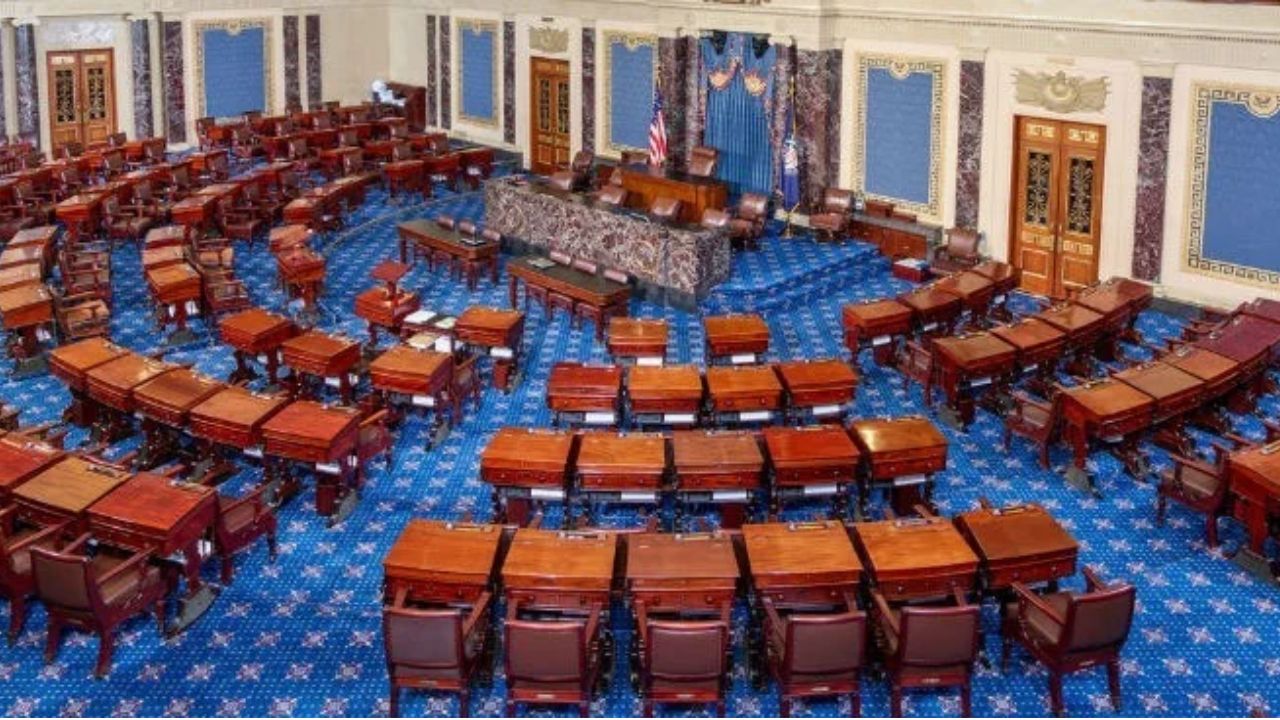
WASHINGTON (Diya TV) — The Senate passed a sweeping bill Thursday to speed federal reviews for energy and infrastructure projects, backing changes that supporters say could help the country build power lines and other major facilities faster. The vote sends the measure to the House, where lawmakers must decide whether to accept the Senate’s version.
The Senate approved the Bipartisan American Affordability and Jobs Act of 2026 by a 62-33 vote. Fifteen senators in the Democratic caucus joined nearly all Republicans in supporting it. Thirty-one Democrats and two Republicans, Josh Hawley of Missouri and Mike Rounds of South Dakota, opposed it. Five senators did not vote.
The bill would change how federal agencies review projects under laws including the National Environmental Policy Act, the Clean Water Act, the Endangered Species Act and the National Historic Preservation Act. It would set tighter schedules for some reviews and approvals, shorten the window for certain legal challenges and give project developers new ways to challenge federal delays. It also addresses federal authority over interstate power lines and requires large data centers to cover the added grid costs of serving them.
The sponsors say the changes would make the process more predictable for projects ranging from natural gas pipelines to renewable energy and transmission lines. Republican Sens. Shelley Moore Capito of West Virginia and Mike Lee of Utah negotiated the measure with Democratic Sens. Sheldon Whitehouse of Rhode Island and Martin Heinrich of New Mexico.
Supporters point to projects that faced years of reviews, route changes and lawsuits. The SunZia wind and transmission project in New Mexico came online this year, 18 years after developers applied for federal approval. The 303-mile Mountain Valley Pipeline through Virginia and West Virginia began operating in 2024, about a decade after developers introduced it. Those projects illustrate the delays that supporters want to reduce, though the bill’s effects would depend on how agencies apply its new rules.
Environmental groups and tribal leaders warn that faster reviews could leave less time to assess a project’s effects and challenge agency decisions. They have raised concerns about protections for tribal sovereignty, ancestral lands and cultural sites. The All Pueblo Council of Governors, which represents 19 New Mexico Pueblos, has opposed the legislation and said tribes were not adequately consulted during its development.
The Senate’s vote followed months of negotiations and changes to the proposal. Lawmakers used a House-passed bill as the vehicle for the permitting measure, replacing its original text. Because the Senate amended the House measure, the House must now consider whether to approve the Senate version. House Minority Leader Hakeem Jeffries has said he supports permitting reform but believes the Senate bill needs further work.
President Donald Trump has backed the legislation. It cannot become law unless the House approves the Senate’s version and sends it to the president. Until then, the debate will center on whether the bill can shorten federal delays while preserving meaningful environmental review and tribal consultation.