
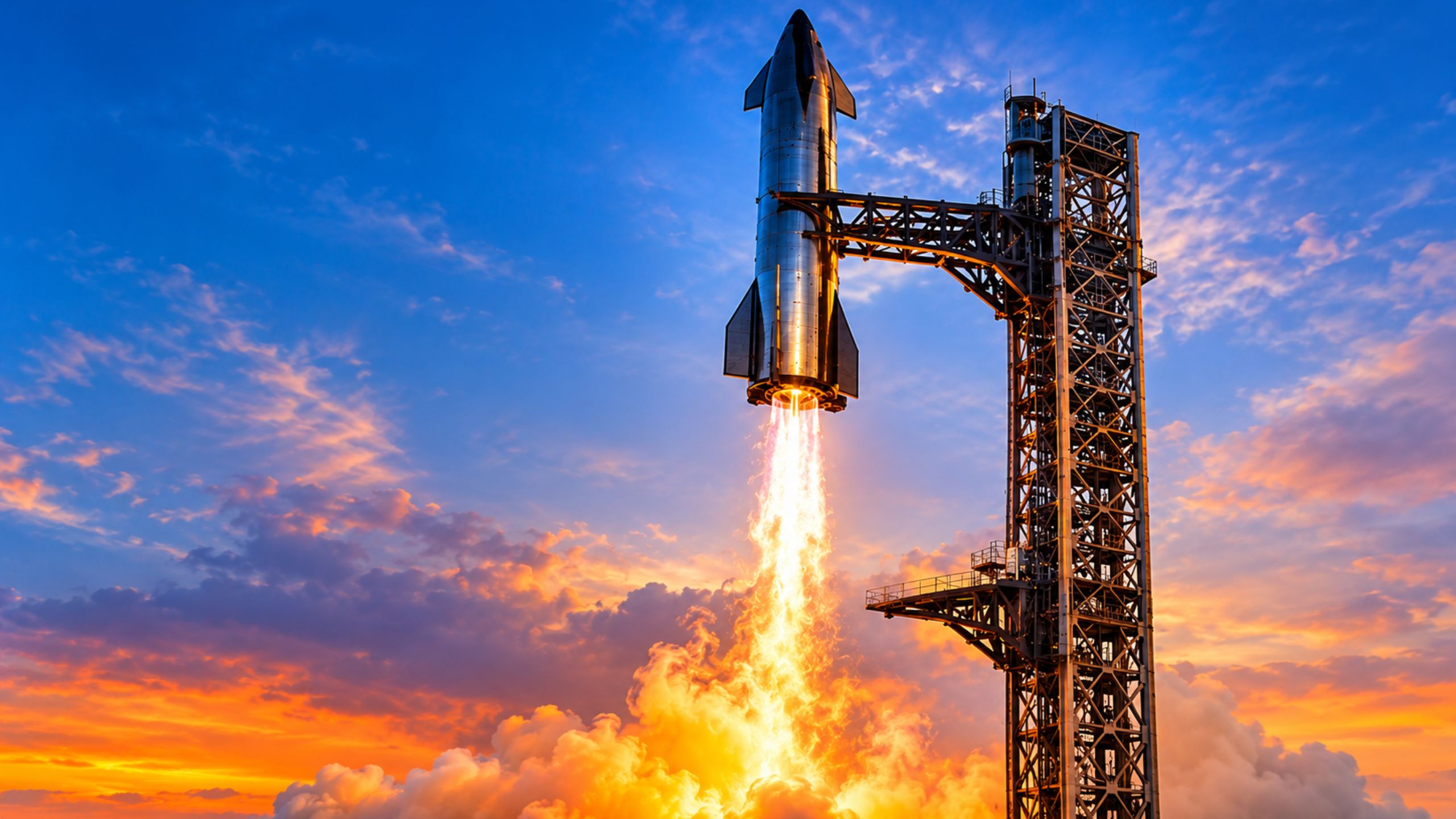
STARBASE, Texas (Diya TV) — SpaceX has achieved a major milestone in its Starship program by catching the rocket’s upper stage with its launch tower for the first time. However, the historic achievement also highlights the work the company must complete before it can operate the massive rocket at a rapid pace.
The company conducted its 15th Starship test flight on Friday, Nov. 13. The mission aimed to bring both parts of the rocket, the Super Heavy booster and the Ship upper stage, back to the launch site in Texas. SpaceX planned to catch both vehicles using the giant mechanical arms attached to its launch tower.
Although the mission did not achieve both catches, it delivered an important breakthrough. The Ship upper stage returned safely and settled into the tower’s arms on Saturday, Nov. 14, about 22.5 hours after liftoff.
SpaceX had already demonstrated its ability to catch the Super Heavy booster during earlier test flights. The company completed three successful booster catches before Flight 15. However, catching the Ship upper stage presented a much greater challenge.
The booster failed to return to the launch tower during the latest mission. Instead, it diverted toward a planned splashdown in the Gulf of Mexico after a low-fuel warning interrupted its recovery attempt.
Meanwhile, the Ship upper stage completed its return journey and reached the launch tower successfully. The vehicle moved into position before the tower’s two mechanical arms, commonly known as chopsticks, caught it.
The achievement marked the first time SpaceX had successfully caught a Starship upper stage. It also represented a significant step toward the company’s goal of making the rocket reusable.
SpaceX spokesperson Dan Huot described the moment as a breakthrough during the company’s landing webcast.
“That was the holy grail of spaceflight, plummeting through fire to be snatched out of the air by steel,” Huot said. “We caught a Starship, and now everything changes.”
The successful Ship catch offers a glimpse of how SpaceX wants to operate Starship in the future. The company plans to recover both rocket stages at its Texas launch facility during regular missions.
This recovery method could reduce the time and expense required to prepare rockets for another flight. Instead of building new vehicles for every mission, SpaceX wants to inspect, repair, and reuse existing hardware.
Moreover, rapid recovery could help the company increase its launch frequency. However, SpaceX still needs to improve its recovery systems and demonstrate consistent results before it can reach that goal.
The Flight 15 mission showed both the promise and the challenges of this approach. While the Ship catch succeeded, the Super Heavy booster could not complete its planned return.
Therefore, the company must continue testing its fuel systems, guidance technology, and recovery procedures to make both catches reliable.
SpaceX founder Elon Musk has outlined an ambitious vision for the rocket. He has said the company wants to achieve 10,000 Starship launches annually by 2030.
That target would require more than one launch per hour on average. Reaching such a pace would demand major improvements in rocket manufacturing, launch infrastructure, vehicle recovery and maintenance.
SpaceX also needs this high launch capacity to support its plans for massive satellite networks in Earth’s orbit.
The company wants to expand its Starlink broadband service with a next-generation network called Starlink V3. Its proposed system could eventually include 100,000 satellites, far exceeding the size of today’s satellite networks.
In addition, Musk has discussed an ambitious space-based artificial intelligence project called Starmind. The proposed network could include up to 1 million satellites designed to support AI-related computing infrastructure in space.
However, these plans remain ambitious long-term goals. Their success will depend on Starship’s ability to carry large payloads into orbit and return for repeated flights.
SpaceX’s current Starlink network already represents the largest satellite constellation in orbit. It has around 11,000 satellites operating in low Earth orbit, according to the figures cited in the report.
Nevertheless, expanding that network to 100,000 or even 1 million satellites would require a dramatic increase in launch capacity.
That is where Starship could play a central role. Its massive size and reusable design could allow SpaceX to transport large numbers of satellites during individual missions.
The latest test flight brings the company closer to that vision. Still, one successful upper-stage catch does not mean the rocket is ready for routine commercial operations.
SpaceX must prove that it can recover both stages safely, prepare them quickly, and launch them repeatedly. The company also needs to address technical problems that could interrupt future missions.
The first successful Ship catch marks a defining moment for Starship. However, turning that achievement into a dependable launch system will require many more successful tests.