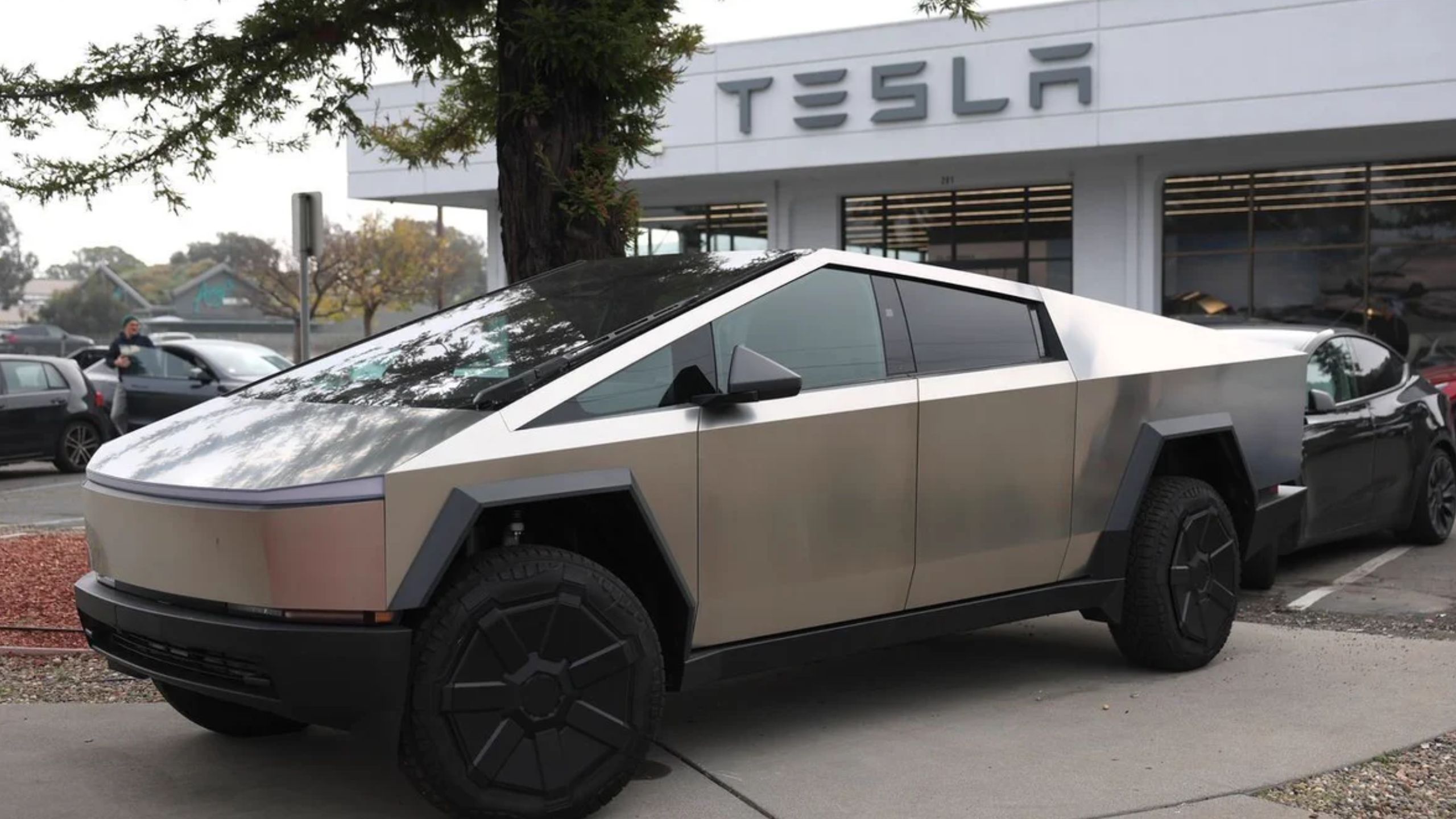
AUSTIN, Texas (Diya TV) — Tesla appears ready to end production of its Cybertruck pickup, marking a major shift for the electric vehicle maker. CEO Elon Musk recently indicated that the company plans to wind down Cybertruck production at its Texas factory around the middle of 2027. The announcement raises questions about the future of the electric pickup, which once attracted significant attention but has struggled to maintain strong sales.
Musk shared the update in a post on his personal X account. His comments suggest that the 2027 model year could mark the final chapter for the Cybertruck. However, Tesla has not ruled out every possible option for the vehicle. The company could move production to another facility, although current sales figures make that possibility appear less likely.
The Cybertruck first attracted global attention when Tesla introduced its prototype in 2019. Its unusual design, stainless steel exterior, and bold performance claims quickly made it one of the most discussed electric vehicles. After several delays, Tesla finally began delivering production models in late 2023 for the 2024 model year.
Despite the early excitement, the electric pickup has struggled to reach the sales targets Musk once predicted.
When Tesla first presented the Cybertruck, Musk discussed an ambitious annual production target of 250,000 vehicles. However, actual sales have remained far below that figure. Moreover, recent numbers show that demand has weakened since the truck entered the market.
Tesla sold 38,965 Cybertrucks in 2024, its first full sales year. However, sales dropped sharply to 20,237 units in 2025. That represented a decline of nearly 48% compared with the previous year.
The downward trend continued in 2026. Tesla sold only 11,586 Cybertrucks during the first three quarters of the year. These figures point to a significant gap between the company’s original expectations and actual customer demand.
Furthermore, the declining sales raise concerns about the long-term commercial prospects of the electric pickup. Although the Cybertruck generated considerable public interest, that attention has not translated into the sales volume Tesla initially expected.
The Cybertruck’s high starting price may also have affected its market performance. Tesla currently limits new Cybertruck orders to its Premium All-Wheel Drive and Cyberbeast versions.
The Premium All-Wheel Drive model costs about $90,000. Meanwhile, the Cyberbeast version carries a price above $100,000. These prices place the electric pickup in an expensive segment of the market.
Tesla still lists the Dual-Motor All-Wheel Drive version on its website. That model costs more than $80,000. However, the company has not reopened orders for this version.
The lower-priced configuration could attract more buyers if Tesla makes it available again. Nevertheless, the company has not confirmed whether it plans to accept new orders before production ends.
Price remains an important factor for electric pickup buyers. Customers often compare vehicle costs, driving range, performance, and practical features before making a purchase. Therefore, the Cybertruck’s premium pricing may have limited its appeal among buyers looking for a more affordable electric truck.
Musk’s statement also raises questions about Tesla’s broader electric vehicle strategy. Ending Cybertruck production at Gigafactory Texas would free up manufacturing capacity for other vehicles or production priorities.
However, Tesla has not announced a detailed plan for the factory after the proposed production shutdown. It also remains unclear whether the company will consider moving Cybertruck manufacturing to another location.
For now, the declining sales figures provide an important indication of the challenges facing the vehicle. The Cybertruck entered the market with significant attention and ambitious expectations. Yet, its high price and falling sales have made it difficult to achieve the scale Musk originally envisioned.
If Tesla follows through with the planned shutdown, the Cybertruck’s production run could end around mid-2027. That would bring an early close to one of the company’s most high-profile vehicle projects.