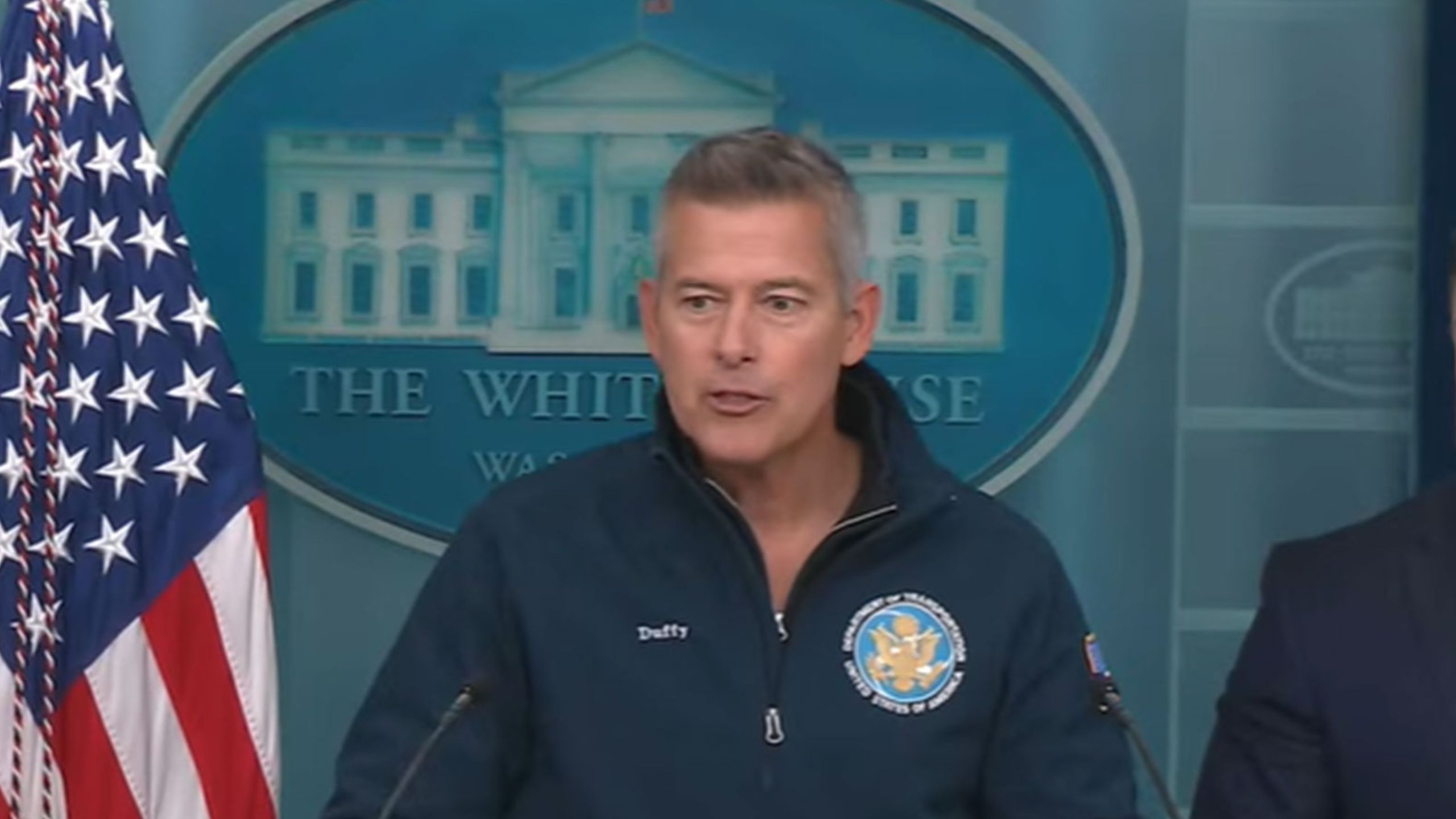
WASHINGTON (Diya TV) — A technical problem during an upgrade to the U.S. air traffic control system triggered a nationwide flight ground stop, disrupting thousands of flights and leaving millions of travelers facing delays. Transportation Secretary Sean Duffy said a router malfunction during work to replace old copper wires with fiber-optic cables caused communication problems across the aviation network.
The Federal Aviation Administration (FAA) ordered airlines to suspend takeoffs for four hours Friday after the technical issue affected air traffic control communications. Although officials lifted the restriction Friday evening, the disruption continued Saturday as airlines worked to clear a growing backlog of flights.
Duffy said investigators were examining whether faulty equipment or mistakes by the contractor caused the problem. The investigation also aims to determine whether the copper wire replacement played a direct role in the failure.
Speaking at a news conference, Duffy explained that the United States still relies on an aging telecommunications network. He said officials had started replacing outdated copper wires with modern fiber-optic cables to improve air traffic communications.
Technology company L3Harris received the contract to carry out the upgrade work. However, a router involved in the maintenance process began sending excessive data to other air traffic control systems.
As a result, the affected systems experienced communication problems with aircraft. Officials then ordered the nationwide ground stop as a safety measure.
Duffy said the government was investigating whether the wire replacement triggered the issue or whether the router itself had a technical fault. He also raised concerns about possible mistakes during the upgrade work.
Meanwhile, officials said they had found no evidence that a cyberattack or artificial intelligence system caused the disruption.
The FAA ordered the ground stop at 3:54 p.m. EST Friday. The restriction lasted approximately four hours, making it the longest such incident since the Sept. 11, 2001, terrorist attacks.
According to flight-tracking data, airlines reported more than 15,000 delayed or canceled flights on Friday. The disruption affected an estimated 1.5 million passengers across the country.
The situation continued Saturday as airlines struggled to restore normal operations. More than 5,900 flights faced cancellations, while around 7,000 experienced delays.
In addition, some passengers remained trapped inside aircraft on airport runways and taxiways. They could neither take off nor return to airport gates while crews waited for further instructions.
The disruption also affected international travel. Several flights departing from the United Kingdom and Europe faced cancellations or schedule changes because of the problems in the United States.
However, the FAA said it expected the national flight schedule to return to normal by the end of Sunday.
FAA Administrator Bryan Bedford joined Duffy at the news conference and addressed concerns about the cause of the technical failure.
Bedford said investigators had found no evidence of suspicious activity or artificial intelligence involvement. He stressed that officials continued to examine the technical problem.
Similarly, Duffy said the investigation remained ongoing and that authorities wanted to identify the exact cause before concluding.
L3Harris also confirmed that it was cooperating with the FAA. The company said it had completed more than 70% of the work assigned to modernize the country’s air traffic communications infrastructure before the shutdown.
Furthermore, the company acknowledged the disruption’s impact on passengers, airlines, and aviation operations.
Duffy warned that similar problems could happen again unless Congress approves major investments in the country’s air traffic control infrastructure.
President Donald Trump has requested $30.1 billion for modernization efforts. Meanwhile, Duffy previously estimated that the United States needed around $50 billion to overhaul the aging system.
Both chambers of Congress currently have Republican majorities. However, lawmakers must still address the funding requirements and determine how to move forward with the upgrades.
Former Transportation Security Administration Administrator John Pistole also expressed concerns about the system’s reliability.
Pistole said the relatively quick restoration of operations showed that the aviation network could recover from disruptions. Nevertheless, he questioned whether another technical failure could occur without warning.
The nationwide flight disruption has renewed concerns about the condition of America’s air traffic control infrastructure. Although the FAA restored operations after the four-hour shutdown, the incident exposed the risks of maintaining aging technology while upgrading critical systems.
The government now faces pressure to identify the technical failure, strengthen communication networks,s and prevent similar disruptions.
As the investigation continues, passengers and airlines await clearer answers about what caused the nationwide ground stop. Meanwhile, the incident has highlighted the need for reliable air traffic control systems to protect travelers and maintain smooth aviation operations.