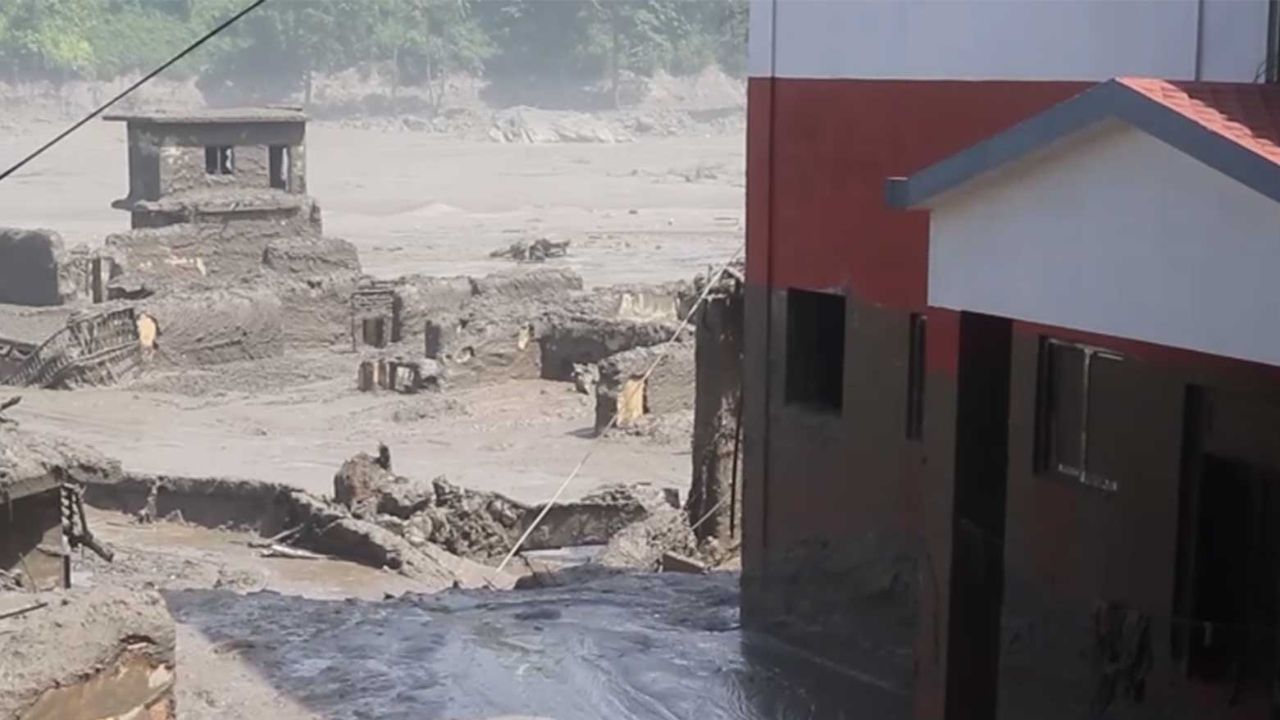
KATHMANDU, Nepal(Diya TV) — A massive flash flood in central Nepal has killed at least 157 people and left hundreds missing after torrents of water, rocks and debris swept through towns near the Nepal-Tibet border. The disaster also stranded tourists, damaged bridges and disrupted major hydropower projects.
Nepal Police reported the death toll as rescue teams continued searching for survivors. Officials said around 500 people remain missing in Nepal. China’s state-run media reported three deaths and 265 missing people on the Chinese side of the border.
The flood began after an earthquake struck the Tibet region at 8:37 a.m. local time. Nepal Foreign Minister Shisir Khanal told Parliament that officials reported the flash floods just three minutes later. The timing raised concerns that tremors may have triggered a glacial outburst or a related landslide.
The disaster began near Timure, a border town in Nepal’s Rasuwa district. According to Nepal’s National Disaster Risk Reduction and Management Authority, a rockslide and swelling of the Lhende River sent a huge surge into the Trishuli River through the Bhote Koshi. The water then moved downstream across several districts.
The flooding affected Rasuwa, Nuwakot, Chitwan, Gorkha, Tanahu and Nawalparasi East. Some affected areas lie nearly 200 kilometers from the capital, Kathmandu. As a result, the disaster reached communities far beyond the initial border region.
Videos from the area showed muddy water carrying large rocks and debris through roads and settlements. The powerful flow also swept away bridges and damaged infrastructure.
Rescue teams have saved about 100 people from different locations. Meanwhile, 30 survivors are receiving treatment at Tribhuvan University Teaching Hospital in Kathmandu. Nepalese Army personnel, the Armed Police Force and Nepal Police have deployed across affected areas to continue rescue and relief operations.
The disaster has also raised concern in India because many Indian nationals remain unaccounted for. More than 750 people, including 133 Indian nationals, reportedly remain missing across the affected region. At least 50 missing Indians were pilgrims traveling for the Kailash Manasarovar Yatra.
Prime Minister Narendra Modi spoke with Nepalese Prime Minister Balendra Shah and offered India’s full humanitarian support. Shah thanked Modi for the assistance and expressions of solidarity. New Delhi has already sent an initial shipment of relief supplies to Nepal.
The Indian Embassy in Kathmandu has issued emergency contact numbers for Indians seeking help or information. The Nepal Tourism Board has also released emergency and tourist assistance numbers. The Indian Embassy in Beijing has issued another helpline for people seeking information about those missing near the border.
The missing foreign tourists come from more than two dozen countries. Those countries include the United States, Malaysia, the United Kingdom, South Africa, Australia and the Netherlands. Khanal also told the House of Representatives that 80 security personnel have gone missing. That number includes 44 Nepal Army personnel.
The floods caused major damage to Nepal’s power infrastructure as well. Eight operating hydropower projects with a combined capacity of 354 megawatts suffered damage. Five more projects under construction also sustained damage in Nuwakot and Rasuwa. In addition, the flood washed away 19 motorable bridges, creating further challenges for rescue teams and residents.
China has also launched a major search and rescue effort along the border. President Xi Jinping ordered authorities to make every effort to find missing people and assist those affected. China sent 145 officers and soldiers from the People’s Armed Police to the affected border port.
Xi also called for stronger monitoring and early warning systems. He urged authorities to conduct scientific rescue operations and prepare for possible secondary disasters.
Nepalese President Ramchandra Paudel expressed sorrow over the loss of lives and property. As rescue operations continue, authorities face a difficult task. They must find missing people, provide medical care and restore damaged roads, bridges and power facilities. Meanwhile, families across Nepal, India and other countries continue to wait for information about their loved ones.