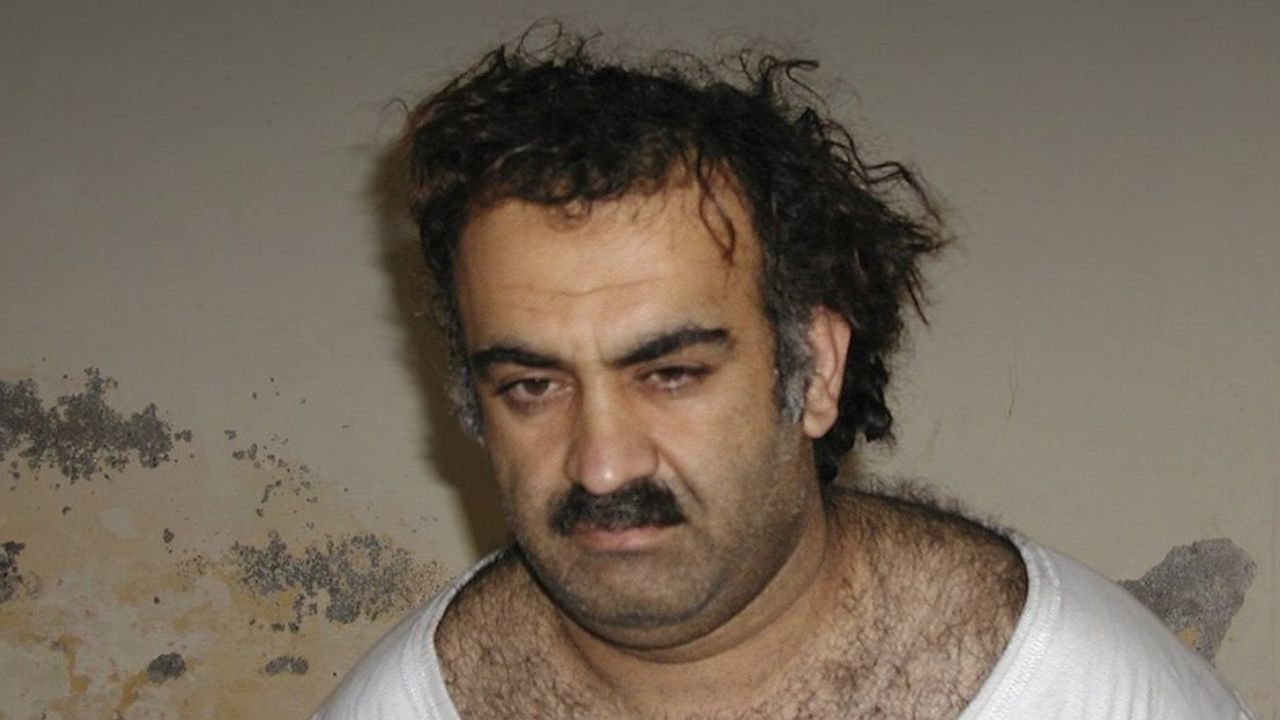
GUANTANAMO BAY, Cuba(Diya TV) — Khalid Sheikh Mohammed, the man accused of masterminding the Sept. 11, 2001, terrorist attacks, will face trial in June 2028, a military judge ruled Wednesday.
The decision sets a new timeline for one of the longest-running cases tied to the 9/11 attacks. Mohammed and three other defendants will stand trial at the U.S. naval base at Guantánamo Bay, Cuba.
Air Force Lt. Col. Michael Schrama, who serves as a military commissions judge, rejected prosecutors’ proposed January 2027 trial date. Instead, he set the proceedings for about 18 months later.
Mohammed will stand trial alongside Walid bin Attash, Ali Abdul Aziz Ali and Mustafa Ahmed al-Hawsawi. Prosecutors accuse the four men of helping plan and support the attacks that killed nearly 3,000 people.
Mohammed faces charges that include war crimes and murder. Authorities accuse him of organizing the plot to hijack four commercial planes.
Two planes struck the World Trade Center in New York. Another plane hit the Pentagon near Washington, D.C. The fourth aircraft crashed into a field in Pennsylvania after passengers fought back against the hijackers.
The attacks changed U.S. national security policy and led to major military operations overseas. However, the legal case against Mohammed and his co-defendants has moved slowly for more than a decade.
The new trial date follows a major legal dispute over a proposed plea agreement.
Mohammed and other defendants had reached a deal that would have allowed them to plead guilty. In return, prosecutors would not seek the death penalty.
However, a split federal appeals court later rejected the agreement. That decision cleared the way for prosecutors to continue toward a trial.
As a result, the military court must now prepare for a lengthy proceeding. The June 2028 date also gives both sides more time to address unresolved legal issues.
Defense lawyers have long argued that the government’s handling of detainees has slowed the case.
They have focused on interrogation methods used by the CIA before the defendants reached Guantánamo Bay. The lawyers say the government has not fully disclosed information about alleged torture at secret CIA detention sites.
A 2014 Senate report documented the CIA’s use of what it called enhanced interrogation techniques against Mohammed. The report said CIA officers waterboarded him 183 times.
Those allegations remain important to the legal proceedings. Defense attorneys argue that evidence connected to the interrogations could affect the prosecution’s case.
U.S. authorities captured Mohammed in Pakistan in 2003. They later transferred him to Guantánamo Bay in 2006.
He has remained at the U.S. naval base since then. Prosecutors formally charged and arraigned him in 2008.
The case has faced repeated delays because of disputes over military commission rules, evidence and interrogation practices. Consequently, the trial has remained unresolved for years.
The 2028 trial date now gives the military commission a clearer path forward. Still, further legal challenges could affect the schedule.
For families of the 9/11 victims, the decision marks another major step in a case that has lasted nearly two decades. The upcoming trial will focus on whether Mohammed and the other defendants bear legal responsibility for the attacks.
The proceedings will also test how the military commissions handle evidence connected to CIA detention and interrogation programs. Therefore, the case could have lasting implications for the U.S. approach to terrorism prosecutions and national security cases.