WASHINGTON (Diya TV) — Two of the nation’s top attorneys, Neal Katyal and Pratik Shah, are set to take center stage before the U.S. Supreme Court in a case that could redefine presidential power over trade. The high-stakes hearing challenges former President Donald Trump’s authority to impose sweeping tariffs under a decades-old law, with arguments scheduled to begin Wednesday morning.
The Supreme Court will decide whether the president can use the 1977 International Emergency Economic Powers Act (IEEPA) to unilaterally impose tariffs or whether that power belongs to Congress. The outcome could have lasting effects on U.S. trade policy, executive authority, and global markets.
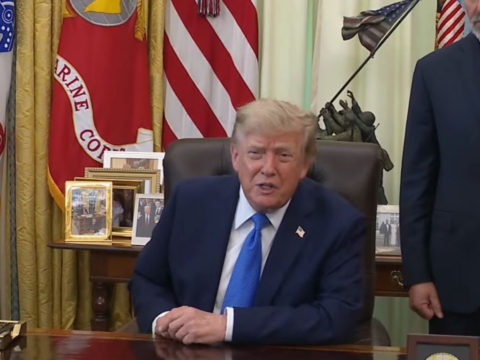
Trump himself called the case “one of the most important in the history of the country.” In a post over the weekend, he warned that if the court rules against him, the United States could face “almost Third World status.” He added that he would not attend the hearing to avoid being distracted from “the importance of the decision.”
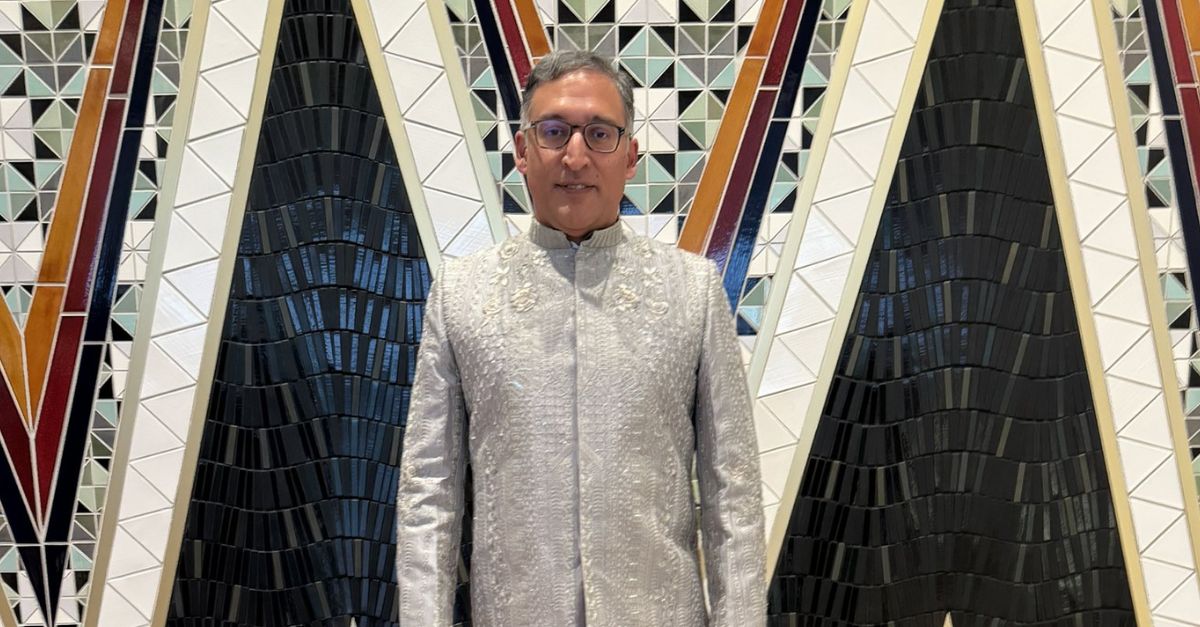
The court has allotted 80 minutes for oral arguments, 20 minutes longer than usual — a sign of the case’s significance. The courtroom is expected to be packed, with widespread public and media attention. Neal Katyal, 54, will argue for a coalition of small businesses challenging Trump’s tariffs. A coin toss determined that Katyal, rather than co-counsel Pratik Shah, would lead the private parties’ arguments, according to Bloomberg News.
Katyal, one of the most recognized names in American law, has argued more than 50 cases before the Supreme Court. He previously served as acting U.S. solicitor general under President Barack Obama and first gained national prominence as co-counsel for Vice President Al Gore in the 2000 Bush v. Gore election case. A Chicago native and Yale Law School graduate, Katyal studied under constitutional scholar Akhil Amar. His sister, Sonia Katyal, is a law professor and co-director of the Berkeley Center for Law & Technology at the University of California, Berkeley.
Katyal has built a reputation as one of Trump’s most persistent legal adversaries, having argued against the administration’s travel bans and fast-track deportation efforts. In this case, he represents the Liberty Justice Center, which successfully argued before the U.S. Court of Appeals for the Federal Circuit that the president exceeded his authority under IEEPA. The appellate court’s 7-4 decision now faces review by the nation’s highest court.
Also appearing in the consolidated case is Pratik Shah, head of Akin Gump’s Supreme Court and Appellate practice. Shah represents Learning Resources and hand2mind, two educational toy companies that joined the challenge to Trump’s tariffs. A graduate of UC Berkeley, Shah clerked for Supreme Court Justice Stephen Breyer and Ninth Circuit Judge William A. Fletcher. He has also taught constitutional law and now serves as an adjunct professor at Georgetown University Law Center.
Shah and Katyal are long-time colleagues and two of the most prominent Indian American attorneys in the U.S. legal community. Their arguments will test the limits of executive power in an area that affects billions of dollars in trade. The case centers on whether the IEEPA, designed for national security emergencies, gives presidents the right to impose tariffs for economic reasons. Trump used the law to levy wide-ranging tariffs on imports, citing threats to U.S. industry and national interests.
Katyal will argue that Congress never intended the IEEPA to grant the White House broad tariff powers. “The power to tax and set tariffs belongs to Congress,” he has said in past statements, emphasizing the constitutional separation of powers. Supporters of Trump’s position claim the president must retain flexibility to act quickly in a global economy. Critics warn that unchecked executive power could undermine Congress and destabilize trade relations.
Wednesday’s arguments will not only shape the future of U.S. trade policy but also spotlight the rising influence of Indian-American lawyers in the nation’s top courts. Both Katyal and Shah have carved distinguished careers in appellate advocacy and constitutional law.
For Katyal, the hearing marks yet another defining moment in a career built around major constitutional battles. For Shah, it continues a long record of leading complex Supreme Court cases. As the justices prepare to hear arguments, the nation — and much of the world — will be watching. The decision, expected next year, could set a powerful precedent for how much authority future presidents hold over trade, taxation, and national security.