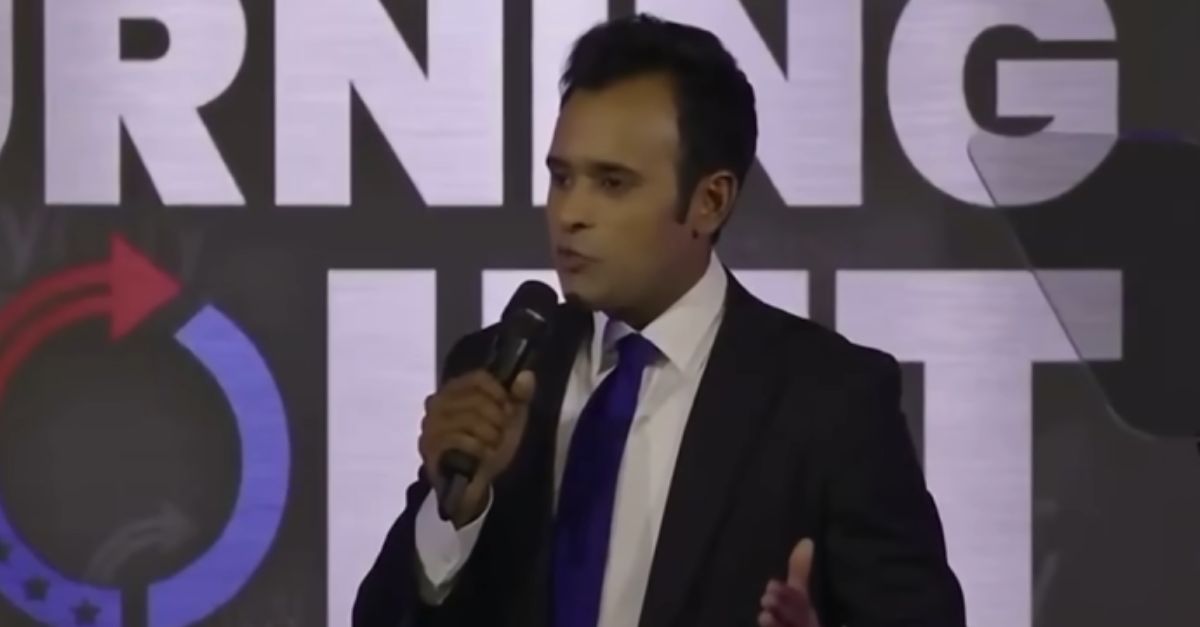
CINCINNATI, Ohio (Diya TV) — Republican leader and Ohio gubernatorial candidate Vivek Ramaswamy sparked a new debate inside the GOP after posting a short message on X : “End identity politics.” The three-word post came as both he and Usha Vance, the Hindu wife of Vice President J.D. Vance, faced mounting online criticism from conservative circles over their religion and cultural background.
Ramaswamy’s post went viral almost immediately. Many saw it as a call to move beyond divisions of race, religion, and ethnicity in American politics. But others accused him of hypocrisy, pointing to his past remarks about immigration and work ethic that, critics say, contributed to the same divisions he now condemns.
The timing of the message amplified its impact. It came just days after J.D. Vance told a podcast audience that he hoped his wife, Usha, would one day embrace Christianity — a comment that set off intense discussion about faith and family in conservative circles. Ramaswamy’s tweet reignited those debates, bringing religion and cultural identity back to the center of the GOP conversation.
For Ramaswamy, the controversy wasn’t new. The Indian American entrepreneur and former presidential candidate has long faced attacks from some members of the Christian right. His critics have targeted his Hindu faith and Indian heritage, often telling him to “go back to India” on social media.
The latest wave of criticism began when Ramaswamy shared Halloween photos with his children. The family post drew hundreds of hostile comments. Some users accused him of not representing “American values.” Others mocked his faith.
Just days later, Ramaswamy’s call to “end identity politics” reopened old wounds. One user replied, “We tried. But last Christmas, an Indian man said that natives don’t work as hard as immigrants. Now we’re forced to compare outcomes for each group to see if he was right.”
Some conservative figures defended Ramaswamy. Dinesh D’Souza, a right-wing commentator and filmmaker, condemned the online abuse, saying it exposed a larger problem within the GOP. “Look at the abuse Vivek is getting for posting an innocuous photo with his boys,” D’Souza wrote on X. “This is the chaos that Heritage and Tucker have brought upon us. If this continues, don’t be surprised if minorities desert the GOP.”
Laura Loomer, a far-right activist, also came to his defense. She argued that some factions inside the conservative movement were trying to turn J.D. Vance against his wife. “These people want to turn Vance against his own family because of his wife’s Indian heritage,” she said.
D’Souza’s son-in-law, Rep. Brandon Gill, has also drawn criticism for remarks seen as dismissive of Indian culture. His past comments have added more tension to an already divided conservative base.
The controversy has highlighted an uncomfortable truth within the Republican Party — a growing divide over religion, culture, and what it means to be American. Ramaswamy’s Hindu identity, combined with his outspoken policy positions, has made him both a symbol of diversity and a target of suspicion within some MAGA circles.
Ramaswamy has repeatedly said that his goal is to build unity through shared American values. He has supported increasing skilled immigration, strengthening merit-based systems, and reforming education. These positions, while popular among moderates, have often clashed with nationalist factions inside the GOP.
Political observers say his message reflects a broader struggle inside the party — one between inclusion and tradition. As Ramaswamy pushes for a merit-focused America, others continue to emphasize Christian conservatism as the GOP’s foundation.
Ramaswamy’s “End identity politics” post was likely meant as a unifying message. Yet it revealed deep fractures within America’s conservative movement. While some supporters praised his courage for addressing the issue, others viewed the statement as tone-deaf in light of his own experiences.