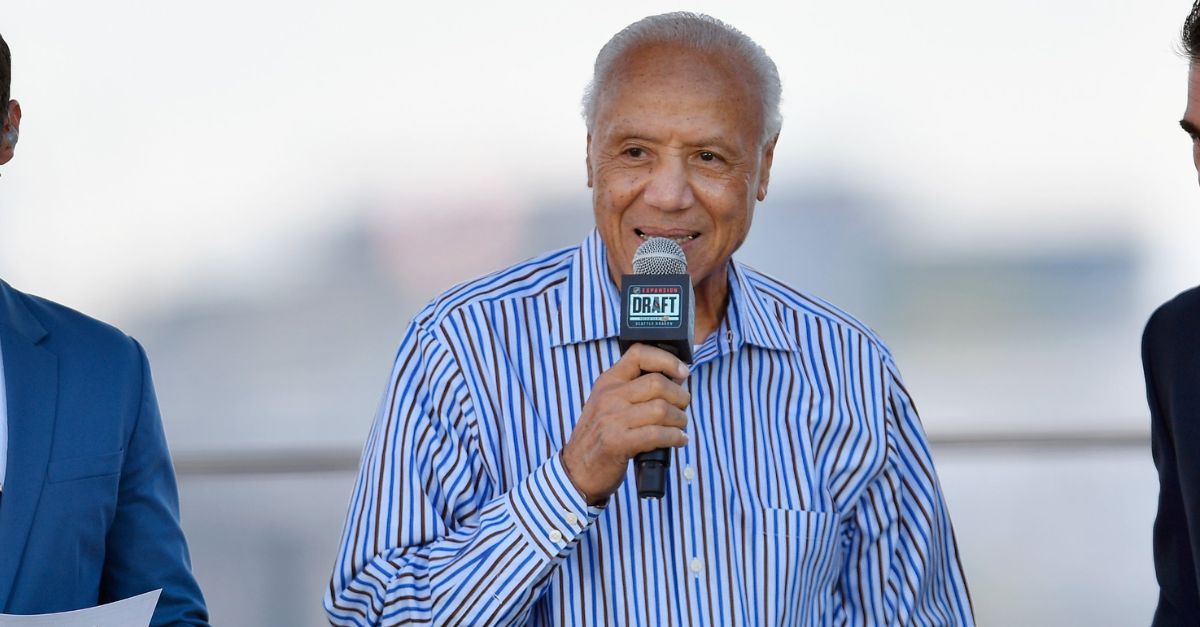
SEATTLE (Diya TV) — Lenny Wilkens, a Hall of Fame player and coach who guided the Seattle SuperSonics to their only NBA championship and became a beloved ambassador for basketball in the Pacific Northwest, has died at 88. Wilkens passed away Sunday at his home, leaving behind a legacy that spanned more than five decades in Seattle and across the NBA. The Brooklyn native was one of the most respected figures in basketball history — a man whose impact reached far beyond the court.
Although Wilkens was not born in Seattle, he became one of its greatest sports icons. From his first days as a SuperSonics player in 1968 to his years as coach and community leader, he embodied the spirit of Seattle basketball. His influence continues to resonate in the city he made his home.
NBA Commissioner Adam Silver praised Wilkens’ lifelong contributions to the sport and the community. “Even more impressive than Lenny’s basketball accomplishments, which included two Olympic gold medals and an NBA championship, was his commitment to service — especially in his beloved community of Seattle,” Silver said in a statement. “He led with integrity and true class.”
Wilkens earned induction into the Naismith Memorial Basketball Hall of Fame twice — as a player in 1989 and as a coach in 1998 — a rare honor shared by only a few in NBA history. His playing career was marked by nine All-Star selections, a second-place MVP finish in 1968, and inclusion on the NBA’s 75th Anniversary Team.
As a player, Wilkens averaged 16.5 points and 6.7 assists over 15 seasons. He played for St. Louis, Seattle, Cleveland, and Portland, earning a reputation as one of the smartest and most unselfish point guards of his era. Wilkens transitioned from player to coach in 1969, becoming one of the first player-coaches in league history. His leadership and deep understanding of the game quickly became his trademark.
Wilkens’ greatest coaching achievement came in Seattle. After taking over a struggling SuperSonics team in the 1977–78 season, he turned them into contenders almost overnight. The Sonics went 42–18 after his midseason promotion and reached the NBA Finals that year, falling to the Washington Bullets in seven games.
The following season, Wilkens and the Sonics returned to the Finals — this time defeating the Bullets to capture the 1979 NBA Championship. It remains the franchise’s only title and a defining moment in Seattle sports history.
“It lets people know Seattle has a rich history,” Wilkens said in a 2022 interview marking “Lenny Wilkens Day.” “I’m so happy to be a part of that history. This is basketball country. We should have never lost our team, and I hope that this helps in some way to get another team back.”
Wilkens’ influence extended well past basketball. He was a fixture in Seattle’s community life, using his platform to promote youth programs, education, and charitable initiatives. A statue of him stands outside Seattle’s Climate Pledge Arena — a permanent reminder of his impact on the city.
His career numbers speak volumes. In 32 seasons as an NBA head coach, Wilkens recorded 1,332 regular-season wins, a .536 winning percentage, and 20 playoff appearances. At one point, he was the winningest coach in NBA history. He coached six franchises, including Seattle, Portland, Cleveland, Atlanta, Toronto, and New York.
But for Seattle fans, his name will forever be linked with the green and gold of the SuperSonics and that magical 1979 championship season. Throughout his life, Wilkens championed the return of the NBA to Seattle. He often spoke of the city’s deep basketball roots and the passion of its fans. Many of his former players, including Jack Sikma, Gus Williams, and Fred Brown, still live in the area — a testament to the community he helped build.
“It was a wonderful time,” Wilkens once said, reflecting on the Sonics’ title run. “Everywhere I go, people talk about the Sonics and about that time when we won a championship.”
Wilkens’ passing marks the end of an era for Seattle basketball. His leadership, humility, and devotion to the game made him more than a Hall of Famer — he was the heart of the city’s basketball story. As Seattle continues to push for the return of an NBA team, Wilkens’ legacy will remain a guiding light. His name, his character, and his championship spirit will forever define what Seattle basketball means.