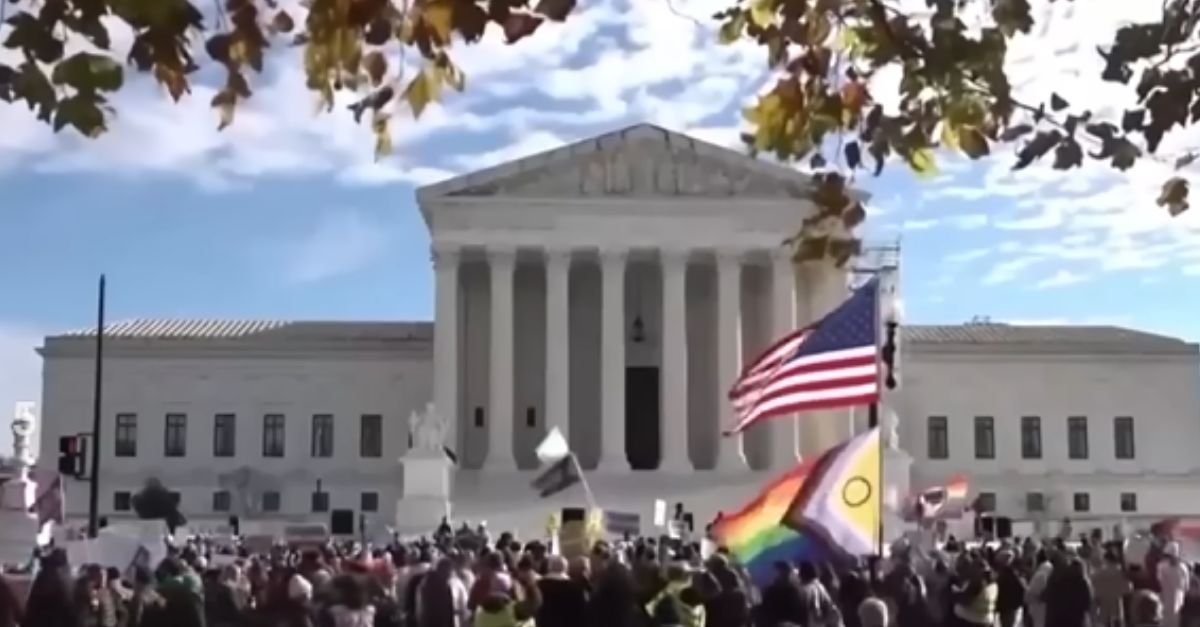
WASHINGTON (Diya TV) — The Supreme Court on Monday refused to overturn its landmark decision recognizing a constitutional right to same-sex marriage, calming fears among LGBTQ advocates that the conservative-majority court might revisit the issue. The court declined to hear an appeal from Kim Davis, the former Kentucky county clerk who refused to issue marriage licenses to same-sex couples after the 2015 Obergefell v. Hodges ruling.
Davis’ case drew national attention after she defied the Supreme Court’s ruling in 2015, citing her religious beliefs. She stopped issuing marriage licenses altogether rather than grant them to same-sex couples. Her refusal led to multiple lawsuits, and a jury later ordered her to pay about $360,000 in damages and legal fees. The Supreme Court did not explain why it rejected her appeal. This decision leaves in place the lower court’s ruling against Davis, which found that she violated couples’ constitutional rights.
Mat Staver, chairman of Liberty Counsel, the group representing Davis, criticized the ruling. He said Davis now faces “crippling monetary damages based on nothing more than purported hurt feelings.” Staver added that his group will continue to fight to overturn Obergefell v. Hodges, calling it “egregiously wrong from the start.”
Advocates for marriage equality celebrated the court’s move. “Today, love won again,” said Kelley Robinson, president of the Human Rights Campaign. “When public officials take an oath to serve their communities, that promise extends to everyone, including LGBTQ+ people.”
Civil rights attorney Mary Bonauto, who argued the original Obergefell case, said the decision to reject Davis’ appeal affirms how marriage equality strengthens American families. “People across the country have seen how marriage equality protects families and children,” she said. “All families deserve equal rights under the law.”
Since Obergefell legalized same-sex marriage nationwide in 2015, nearly 600,000 same-sex couples have married, according to the Williams Institute at UCLA School of Law. The ruling was celebrated across the country. On the night of the decision, the White House was lit in rainbow colors to mark the historic moment.
While some conservative activists hoped the Supreme Court would revisit the marriage equality ruling, recent comments from justices suggested otherwise. Justice Amy Coney Barrett told The New York Times last month that same-sex marriage involves “very concrete reliance interests,” indicating reluctance to overturn Obergefell.
Justice Samuel Alito, who dissented in Obergefell, has also acknowledged that it remains a binding precedent. Chief Justice John Roberts and Justices Clarence Thomas and Alito were all in dissent in the 2015 decision.
The Obergefell majority opinion, written by Justice Anthony Kennedy, described marriage as a profound commitment rooted in love and family. “No union is more profound than marriage, for it embodies the highest ideals of love, fidelity, devotion, sacrifice, and family,” Kennedy wrote. Kennedy retired in 2018 and was replaced by Justice Brett Kavanaugh. Justice Ruth Bader Ginsburg, another supporter of Obergefell, died in 2020 and was succeeded by Barrett.
Despite Monday’s reassurance for same-sex couples, LGBTQ advocates remain cautious. The Supreme Court has recently issued rulings that limited protections for transgender Americans. In recent months, the court allowed states to ban puberty blockers for transgender youth, upheld restrictions on transgender military service, and supported policies requiring passports to match sex at birth.
These moves have raised concerns that broader LGBTQ rights could face new challenges. However, Monday’s decision signals that the court, for now, is unwilling to reopen the fight over marriage equality. The Supreme Court’s refusal to hear Davis’ case does not set a new precedent, but it does reinforce Obergefell’s stability. If future challenges arise, the court would evaluate them independently.
For now, LGBTQ advocates and families across the nation are pleased with the decision. The right to marry remains protected, and the promise of equality under the law stands firm. “Love won again today,” Robinson said. “And it will keep winning as long as our courts honor the Constitution and the rights it guarantees to every American.”