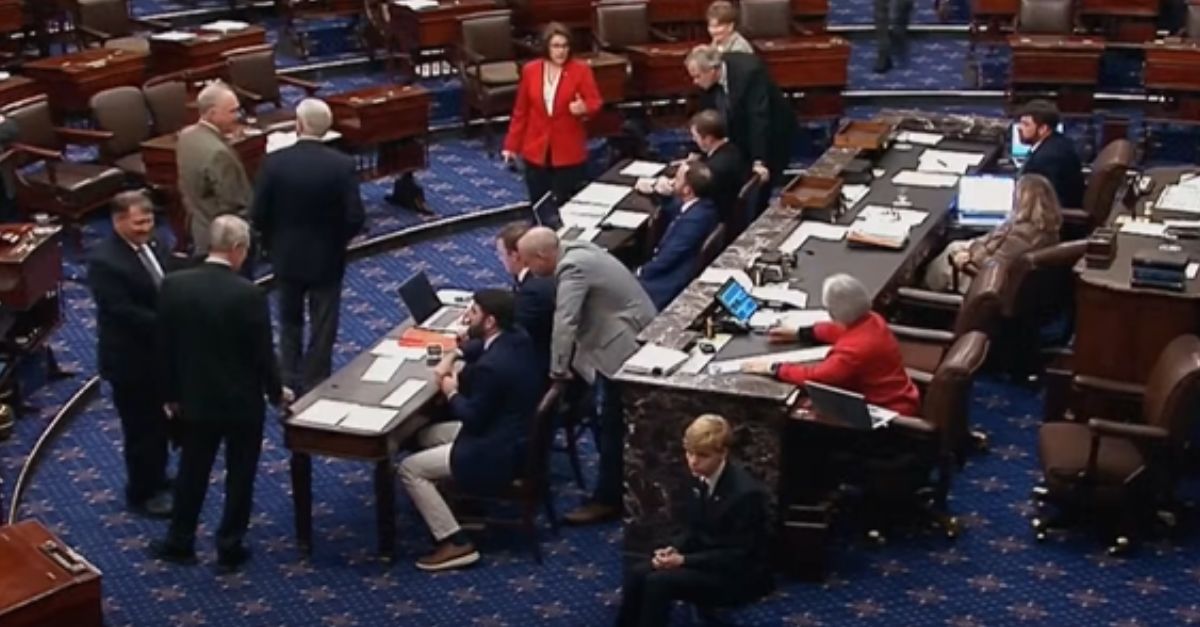
WASHINGTON (Diya TV) — Senators reached a tentative deal Sunday to end the weeks-long U.S. government shutdown, a move that could bring relief to millions of federal workers and families feeling the strain. The bipartisan agreement, if approved, would still need to clear the House and gain President Donald Trump’s signature before becoming law — a process that could take several days.
The Senate voted 60-40 late Sunday night to advance the proposal after intense negotiations between Democrats and Republicans. The deal was brokered by Sens. Jeanne Shaheen, D-N.H., Maggie Hassan, D-N.H., and Angus King, I-Maine, with support from Senate Majority Leader John Thune, R-S.D., and the White House.
The agreement includes a “minibus” — three full-year appropriations bills that will fund key agencies like the Agriculture Department through next fall. It also contains a continuing resolution to keep the rest of the government funded at current levels through Jan. 30.
“This deal gives us a path forward,” Thune said on the Senate floor. “After 40 long days, I’m hopeful that we can finally bring this shutdown to an end.”
The proposal would fully fund the Supplemental Nutrition Assistance Program (SNAP), also known as food stamps, through next September. It also reverses Trump’s attempted layoffs of federal employees during the shutdown through “reduction in force” notifications, or RIFs.
However, Democrats conceded one major issue: the deal does not include an extension of the expiring Affordable Care Act (ACA) subsidies. Those subsidies help millions of Americans afford health insurance. Without them, insurance premiums are expected to rise sharply unless Congress acts before year’s end.
In exchange, Democrats secured a promise that the Senate will vote on a bill to extend the ACA subsidies by mid-December. The outcome of that vote, however, remains uncertain.
House Speaker Mike Johnson, R-La., has already said he will not guarantee a House vote on extending the subsidies.
The compromise has divided Senate Democrats. Senate Minority Leader Chuck Schumer, D-N.Y., opposed the measure, blaming Republicans for risking higher healthcare costs.
“Because of Republicans, Americans are going to suffer immensely as this health care crisis gets worse,” Schumer said before voting no.
Sen. Chris Murphy, D-Conn., also voted against the deal, saying it failed to address what he called a growing “health care catastrophe.” Sen. Ruben Gallego, D-Ariz., agreed, arguing the agreement “abandons” 24 million Americans who could see their premiums double.
Other Democrats backed the deal despite its flaws. Sen. Tim Kaine, D-Va., said he supported it because it ensures a future vote on ACA subsidies and protects federal workers. “Lawmakers know their constituents expect them to vote for it,” Kaine said. “If they don’t, they could very well be replaced at the ballot box.”
Shaheen defended the compromise as the only realistic option to reopen the government. “This was the best chance to end the shutdown and begin negotiations to extend the ACA tax credits,” she said.
The deal now heads to the House of Representatives, which has been on recess since September. Its fate there is uncertain. Some House Democrats have already criticized the agreement, calling it a step backward on healthcare funding.
Rep. Ro Khanna, D-Calif., wrote on X that Schumer “is no longer effective and should be replaced.” Rep. Mikie Sherrill, D-N.J., who was recently elected governor, warned the deal would lead to higher health care costs for families in her state.
Despite the backlash, Senate leaders hope the agreement will be enough to reopen the government and restore essential services. The shutdown, now in its 40th day, has delayed paychecks for hundreds of thousands of federal employees, slowed airport operations, and disrupted food assistance programs.
If the Senate passes the bill, the measure will move to the House for a vote. Even then, it could take several days before reaching Trump’s desk. Only after he signs it will the government fully reopen.
The tentative agreement marks progress after weeks of stalemate. Yet, it also highlights the deep political divisions over healthcare, spending, and leadership in both parties.
As King noted, Democrats adjusted their strategy because the shutdown approach “wasn’t working.” The next test will be whether both chambers can pass the bill — and whether the promise of an ACA vote later this year will be enough to hold the fragile bipartisan coalition together. For now, Americans waiting for paychecks and basic services will have to keep waiting — at least a few more days — to see if Washington can finally end the shutdown.