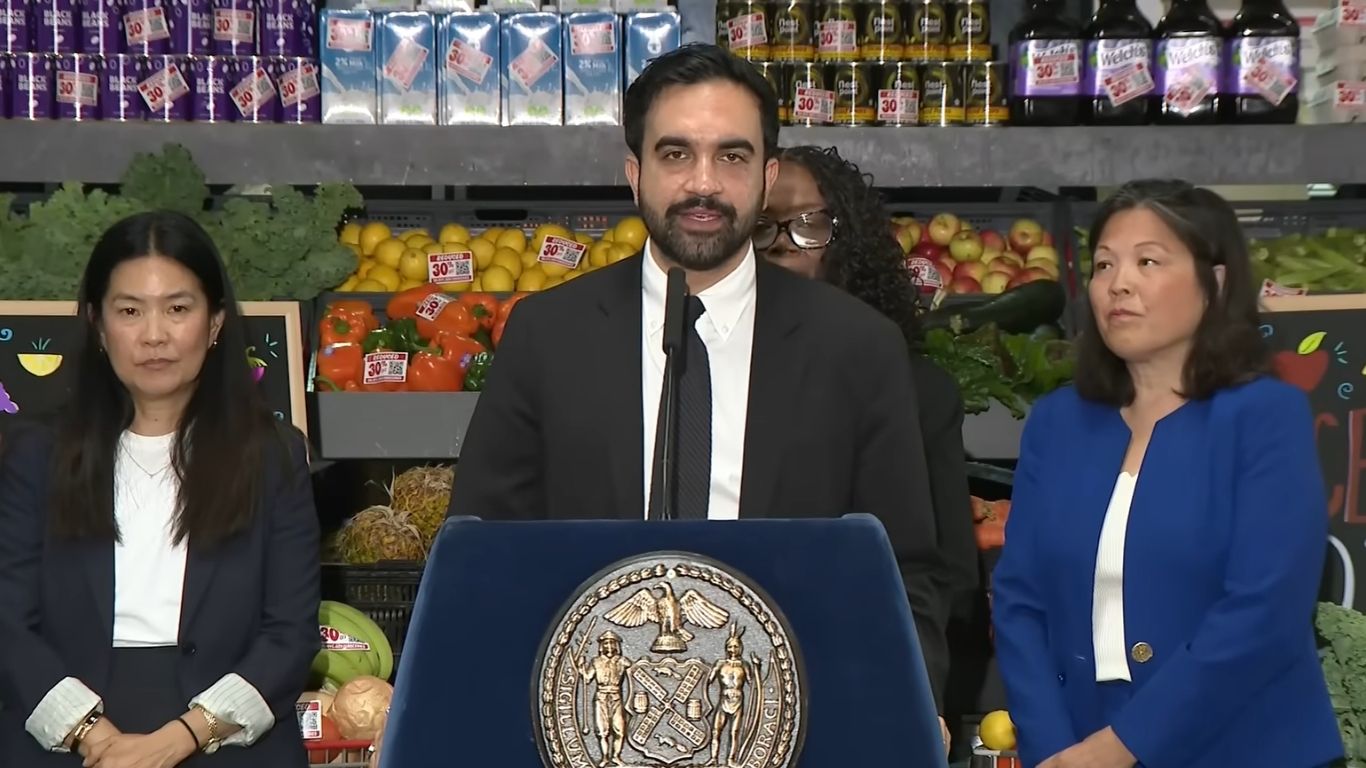
NEW YORK (Diya TV) — New York City Mayor Zohran Mamdani has shared new details about his plan to launch five city-owned grocery stores across the city’s five boroughs. The proposal aims to lower food costs for residents by offering discounts on everyday grocery items. However, the plan continues to draw debate over its long-term impact on local businesses and taxpayers.
Mamdani said the city will open its first grocery store in Hunts Point in the Bronx by the end of next year. A second location will follow in East Harlem by 2029. The city plans to invest $70 million in capital funding for the project. That amount includes $30 million for the construction of the East Harlem store.
Under the proposal, New York City will own the properties and cover rent and property taxes for all five locations. Private operators will manage the stores through city contracts. However, those operators must pass savings on to customers by offering lower prices on selected grocery items.
Mamdani said the stores will sell a basket of essential products at prices that are 30% below typical retail rates. The discounted items will include fresh produce, meat, seafood, milk, bread and about 20 other basic grocery products. He said the city selected the 30% discount because food prices have increased by about the same amount since 2019.
The mayor said the stores will provide affordable food without relying on special promotions or temporary offers. Instead, shoppers will receive consistent discounts on the selected products.
At the same time, Mamdani rejected concerns that the city-run stores could hurt nearby businesses. He said the stores will not sell hot food or cigarettes, which often generate significant income for neighbourhood bodegas and convenience stores. As a result, he argued that the new locations will serve a different purpose rather than directly competing with existing retailers.
Still, some economists remain unconvinced. Critics argue that city-owned grocery stores may not provide the most effective way to help families struggling with higher food prices.
Daniel Muñoz, a philosophy and economics professor, questioned whether the proposal would achieve its stated goal. He argued that the stores would allow anyone to receive discounted groceries, regardless of income. Therefore, he believes the programme would not focus assistance on lower-income households.
Muñoz also pointed to existing government programmes, such as food assistance benefits, as a more direct method of helping families afford groceries. In his view, those programmes target people with greater financial need while avoiding possible disruptions to the retail market.
Meanwhile, Mamdani defended the idea by pointing to New York City’s history. He said former Mayor Fiorello La Guardia supported municipally owned markets after witnessing food shortages and unrest decades ago. According to Mamdani, La Guardia believed government should take practical steps to improve daily life for residents.
However, historical records show another reason behind those markets. During the late 1930s, La Guardia promoted covered municipal markets to move street vendors from crowded sidewalks into cleaner and more organised spaces. Markets such as Essex Market continue to operate today. Yet those locations differ from the current proposal because independent businesses still run the stalls while paying below-market rent.
Critics also warn about possible unintended effects if the city-operated stores expand over time. Some believe lower prices could place additional pressure on privately owned grocery stores. Others say the discounts could encourage resale activity or distort local competition.
Supporters, however, argue that the stores could provide meaningful savings for households facing rising food costs. They believe the programme could increase access to affordable groceries in neighbourhoods where residents often pay higher prices for basic items.
The debate is likely to continue as New York City prepares to move forward with the first location. City officials expect construction and planning work to begin before the Hunts Point store opens next year. As additional details emerge, residents, business owners and policy experts will continue to watch whether the city-run grocery store model delivers lower prices without creating broader economic challenges.