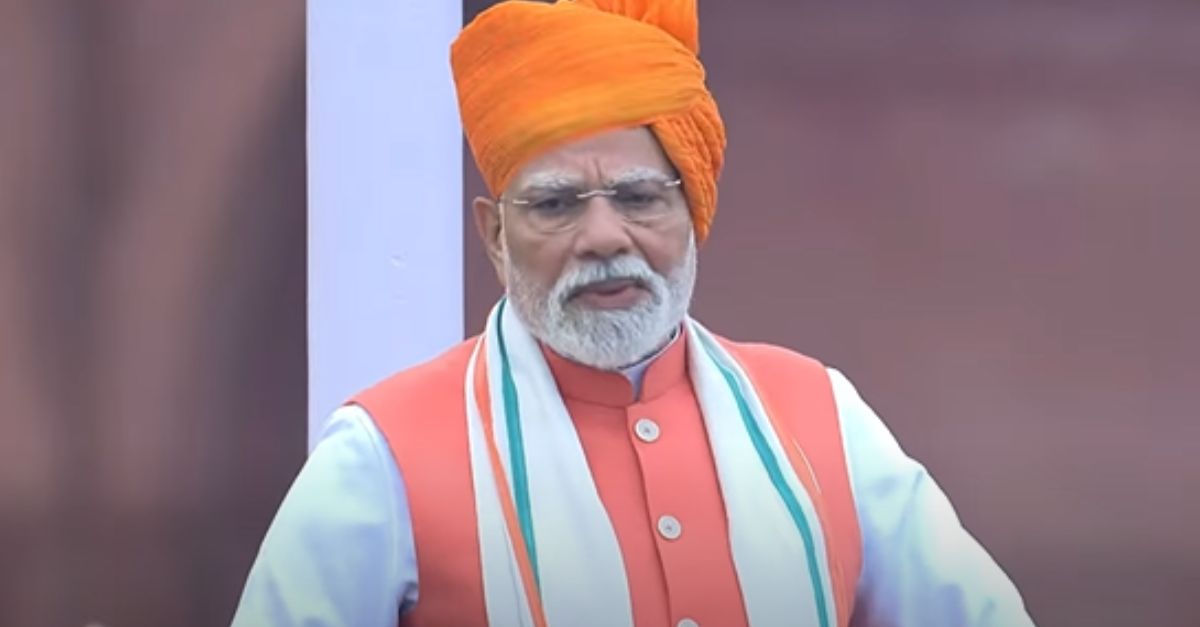
NEW DELHI (Diya TV) — Indian Prime Minister Narendra Modi warned Pakistan that India will strike back if future attacks take place on its soil, as the country marked 78 years of independence from British colonial rule.
The warning came three months after India and Pakistan, both nuclear-armed rivals, fought their worst clash in decades. Modi’s strong remarks underscored rising tensions between the two nations, which share a violent history since their partition in 1947.
Speaking from the historic Red Fort in New Delhi, Modi said India has created a “new normal” in its fight against terrorism. He declared that India would not distinguish between militants and those who shelter or support them.
“For a long time, nuclear blackmail had been going on, but this blackmail will not be tolerated now,” Modi said. He accused Pakistan of using nuclear threats to shield militant groups, warning that such tactics would no longer succeed.
Pakistan has long rejected India’s claims as inflammatory. But Modi’s speech signals New Delhi’s intent to take a hard line against future threats.
Pakistan’s Prime Minister Shahbaz Sharif delivered his own Independence Day message a day earlier. In his remarks, he announced the creation of a new “Army Rocket Force Command” to strengthen Pakistan’s defense. He offered no details, but the move appeared aimed at sending a message of deterrence to India.
India and Pakistan gained independence one day apart in August 1947, following the bloody partition of British India. The division triggered communal violence that killed hundreds of thousands and displaced millions. Since then, the two nations have fought multiple wars and continue to clash over Kashmir.
The latest round of fighting broke out after a massacre in Indian-controlled Kashmir in April that killed 26 people, mostly Hindu tourists. India blamed Pakistan-backed militants. Islamabad denied involvement and demanded a neutral investigation.
In response, India carried out strikes on Pakistani territory, claiming to destroy nine “terrorist infrastructure” sites. “Terror infrastructure was turned to rubble,” Modi told the crowd during his address.
Pakistan retaliated with drone attacks, missile strikes, and artillery fire. The exchange killed dozens on both sides. The violence pushed both countries to the brink of war before a U.S.-brokered ceasefire took hold on May 10.
The May clashes also included heavy aerial combat. Pakistan claimed it downed six Indian aircraft, including a French-made Rafale fighter jet. India acknowledged some losses but withheld details.
Last week, India’s air force chief stated publicly that Indian pilots shot down five Pakistani fighter jets and one other military aircraft. It marked the first such open claim from New Delhi. Pakistan immediately rejected the statement and challenged both sides to open their aircraft inventories for independent verification.
In his Independence Day speech, Modi also hinted that India would continue its suspension of the Indus Water Treaty. The agreement, signed in 1960, governs how the two countries share the waters of the Indus River system.
“Rivers from India were irrigating the lands of enemies while my country’s farmers and land faced a deficiency of water,” Modi said. “India has now decided that blood and water will not flow together.”
Pakistan has warned that any attempt to cut off or divert water supplies would be considered an “act of war.”
Modi avoided direct mention of U.S. President Donald Trump during his address. But he criticized tariffs that threaten Indian agriculture, a key sector of the economy. Earlier this month, Trump imposed a 25% penalty on India, adding to existing tariffs for buying oil and weapons from Russia.
“India will not compromise on the interests of farmers,” Modi said. His comments reflect his government’s resistance to U.S. pressure to open Indian markets to American agricultural goods. Farmers remain a powerful political base for Modi’s ruling Bharatiya Janata Party.
Modi also touched on domestic security concerns. He alleged that illegal immigration was changing India’s population balance. Without giving specifics, he announced a “high-powered demographic mission” to address the issue.
“No nation in the world can hand over itself to infiltrators,” Modi said. His government has repeatedly claimed that unchecked migration from Bangladesh is a threat to national security. Recent verification drives have led to the detention and deportation of many migrants, most of them Muslims.
India and Pakistan remain locked in a cycle of hostility marked by military strikes, air battles, and fierce rhetoric. While the latest ceasefire has held since May, Modi’s warning suggests India is preparing for stronger retaliation if violence flares again.