OTTAWA, Canada (Diya TV) — Canadian police have warned a prominent pro-Khalistan Sikh activist of a credible threat to his family’s life, right before Prime Minister Mark Carney is set to visit India to pursue new trade deals. The warning adds fresh tension to already strained Canada-India relations. It also raises concerns about foreign interference, Sikh activism for a so-called Khalistan nation-state carved out of India, and national security in Canada.
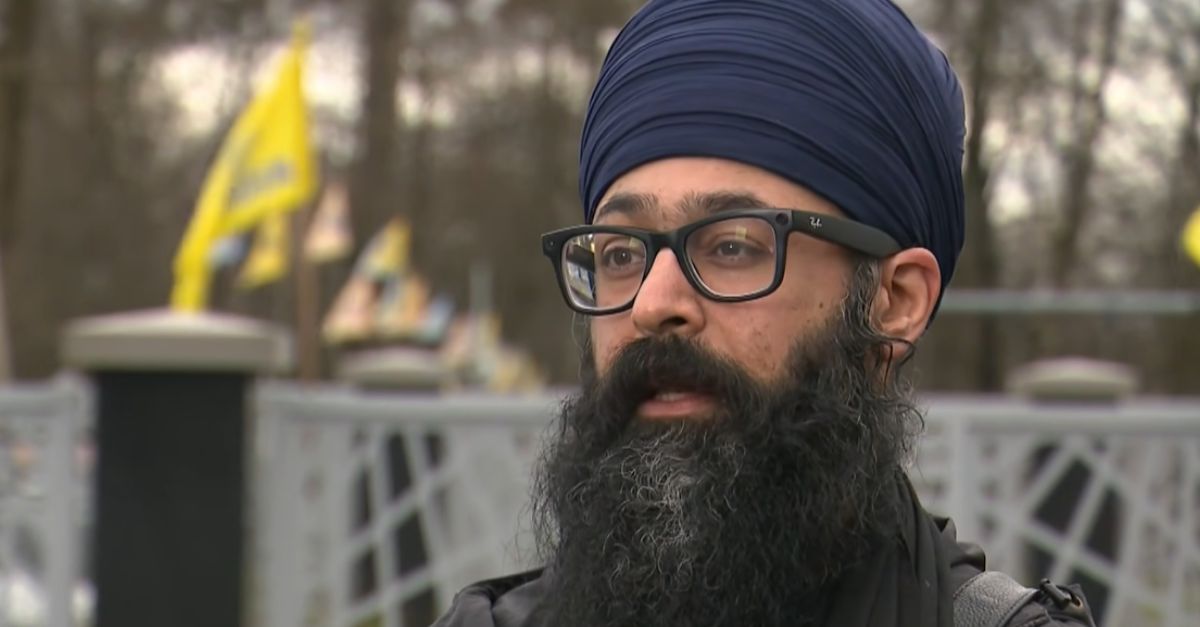
Moninder Singh (full name Moninder Singh Bual), head of the Sikh Federation of Canada, said officers came to his home on Sunday. They told him a confidential informant had shared information that he and his family faced a serious risk. In a recording shared with the Guardian, an officer tells Singh, “It kills me to know you’re in this position.” The officer appears to agree that the threat may stem from Singh’s outspoken criticism of India.
Singh said he believes the Indian government is behind the threat. India’s High Commission in Canada did not respond to a request for comment. Singh said he has received threats before. But this marks the first time anyone has threatened his wife and two children.
“I’m not going to be silent,” Singh said. “Silence is what they want.”
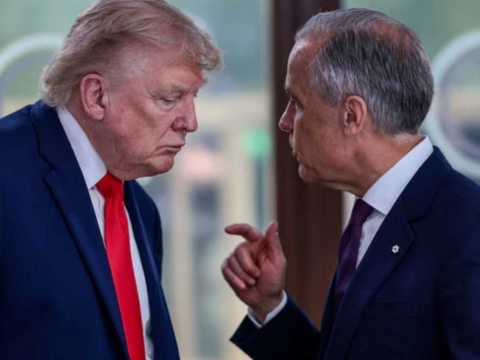
The warning comes as Prime Minister Mark Carney prepares to travel to India to strengthen trade ties. Canadian officials say they want to expand access to new markets. On Wednesday, a senior Canadian official told reporters the government feels “confident” that India’s alleged campaign of threats and violence in Canada has ended. The official said Carney would not make the trip otherwise. But Sikh activists say the visit sends the wrong message.
“It feels like a slap in the face,” Singh said. He questioned how Canada can pursue new trade deals while its own intelligence agencies warn of foreign interference and violence.
Tensions between the two countries escalated in 2023. Then-Prime Minister Justin Trudeau accused India of orchestrating the killing of Hardeep Singh Nijjar, a Canadian citizen and Sikh activist. Canada’s federal police and intelligence agency later supported the allegation. India denied involvement.
The accusations triggered a diplomatic crisis. Both countries expelled diplomats. Relations cooled sharply. In June, Canada’s spy agency said Nijjar’s killing marked a “significant escalation” in India’s repression efforts. The agency described what it called a broader transnational campaign targeting dissidents abroad.
Like Nijjar, Singh supports the movement for an independent Sikh homeland known as Khalistan. The Khalistan movement is banned in India. Indian authorities have long labeled it a security threat.
Canada’s intelligence service says Indian officials and proxy agents have tried to influence Canadian communities and politicians. The agency says these actions include deceptive and threatening tactics aimed at shaping Canada’s policies on Sikh activism and Khalistan supporters. Federal police say they have identified more than a dozen credible and imminent threats to life linked to foreign interference. In such cases, authorities issue what they call “duty to warn” notices to potential targets.
Investigators also said a suspect tied to the Indian government surveilled former New Democratic Party leader Jagmeet Singh. Police believe the suspect had links to both Indian officials and the Lawrence Bishnoi gang, which authorities have connected to Nijjar’s death. When the Royal Canadian Mounted Police determined there was a credible threat, officers placed Jagmeet Singh under police protection.
Carney has tried to reset Canada’s global trade strategy. He has also worked to stabilize relations with China. During a recent visit to Beijing, he signed agreements that included easing tariffs on canola and gradually allowing Chinese electric vehicles into Canada. Now, his planned India trip carries both economic promise and political risk.
Sikh activists worry that stronger trade ties could weaken Canada’s stance on human rights and national security. They fear economic interests may overshadow concerns about violence and foreign interference. Singh said he worries India could “wash their hands” of past accusations if Canada moves forward with new agreements.
“Putting trade before Canadian lives is what we’ve been worried about,” he said.
It should be noted that Moninder Singh Bual’s father-in-law is Avtar Singh Narwal, a known associate of the Babbar Khalsa International (BKI) militant group who had close ties to Talwinder Singh Parmar.
Parmar was Babbar Khalsa leader widely identified as the mastermind of the 1985 Air India Flight 182 bombing, the deadliest aviation terrorism incident before 9/11 in North American history.
Narwal was not one of the primary individuals charged in the main Canadian trial. Ripudaman Singh Malik and Ajaib Singh Bagri were acquitted and Inderjit Singh Reyat pleaded guilty to manslaughter. But Narwal was treated as a key suspect or associate in investigative contexts.
Indian government dossiers and reports have described Narwal as a “known terrorist” linked to BKI with direct connections to Parmar and the broader Khalistani network involved in the plot.
Narwal borrowed a car from accused Ajaib Singh Bagri shortly before the bombing, according to testimony in the 2004–2005 Malik-Bagri trial. His sister Jagdish Kaur Johal was a defense witness who confirmed this. Narwal reportedly faced Interpol red corner notices and was flagged in connection with extremist activities.
Singh is known for his deeply divisive rhetoric that many construe as threats. In a speech at a Khalistan United Front event in June 2025, Singh described the push for Khalistan as a “holy religious war, not a political fight, or some other fight. We are eager for religious war.”
Singh referenced Sikh gurus as providing both “pens as well as weapons” and historical figures like Sukha and Jinda (assassins of Indian figures), while questioning whether the community could defend “spectacular [acts]” if an “armed struggle arises organically in Punjab.”
He added: “If someone rises today & does a spectacular [terror] act… Can we defend him?”
Singh has not been officially designated as a terrorist by India under the Unlawful Activities (Prevention) Act, as his name is absent from the Ministry of Home Affairs’ list of 57 designated individuals, which includes figures like Gurpatwant Singh Pannun and Hardeep Singh Nijjar.
However, Indian officials have labeled him a “wanted terrorist” in dossiers shared with Canada, based on his support for BKI and association with the slain Nijjar.
The complexity and nuance of this matter, as Carney prepares for high-level meetings in New Delhi and Mumbai, underscores the fragile state of Canada-India relations.