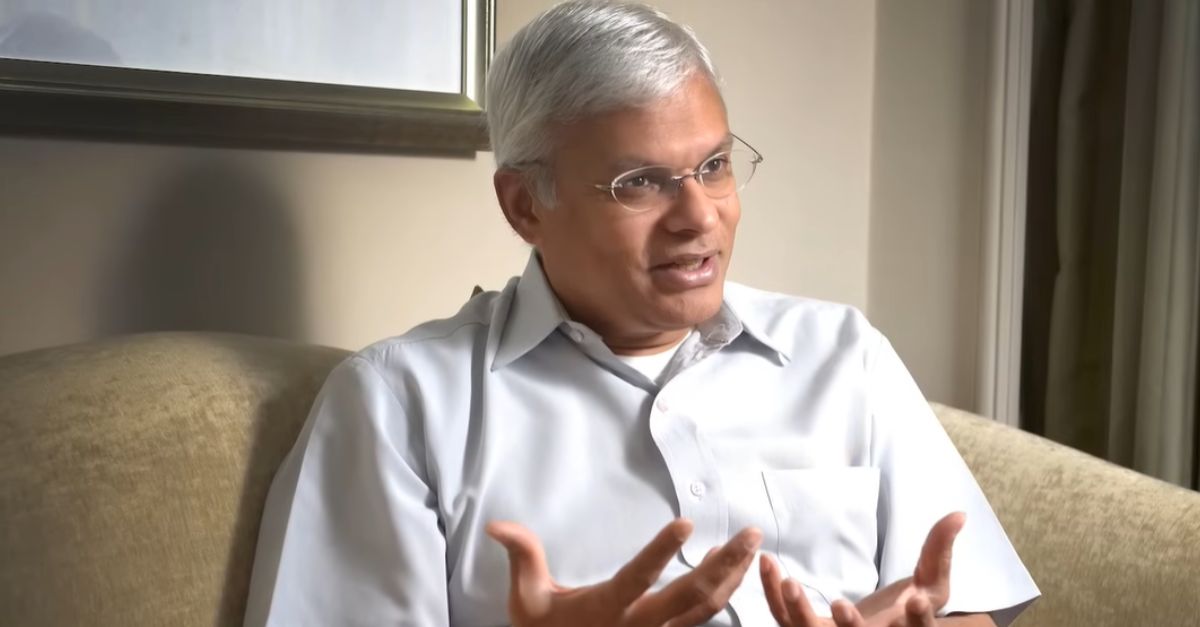
ALEXANDRIA, Va. (Diya TV) — A federal grand jury in Virginia has indicted Indian American scholar Ashley J. Tellis on 11 counts under the Espionage Act. Prosecutors accuse him of willfully retaining national defense information. Tellis remains innocent until proven guilty in court. The indictment adds a new chapter to a case that has drawn national attention. It centers on alleged unauthorized retention of classified documents. Prosecutors say the case does not involve allegations that Tellis shared the information.
A grand jury filed the indictment on Feb. 12 in the U.S. District Court for the Eastern District of Virginia. The new filing replaces an earlier criminal complaint that led to Tellis’ arrest in October 2025.
The charges fall under the Espionage Act. Prosecutors allege that Tellis kept 11 classified documents at his residence without authorization. The documents date from 2018 to 2025. Authorities say the materials include sensitive details about Chinese nuclear capabilities, foreign military forces, and vulnerabilities at a U.S. military facility. The indictment also references future nuclear projections of other countries.
Prosecutors claim Tellis did not deliver or attempt to deliver the documents to any authorized U.S. official. The charges focus on alleged unauthorized retention of national defense information, not on sharing classified material with foreign governments or other parties.
Ashley J. Tellis, 64, is a senior fellow at the Carnegie Endowment for International Peace. He is widely known as a scholar of international security and U.S.-India relations. Tellis worked at the U.S. Department of State from 2001 until Oct. 11, 2025, according to prosecutors. He also served as a contractor with the U.S. Department of Defense at various times since 2003.
Because of his roles, Tellis held a top-secret security clearance. He also had access to Sensitive Compartmented Information, known as SCI. Officials grant this level of access to individuals who handle highly classified intelligence and national security material. Tellis is currently out on bond as the legal process continues.
The Espionage Act governs the handling of national defense information. It makes it a crime to unlawfully retain or transmit such information. Prosecutors must prove that the defendant knowingly and willfully kept the materials without authorization. In this case, the indictment lists 11 separate counts. Each count relates to a specific document that authorities say Tellis retained.
The government alleges that Tellis removed the classified documents from secure locations and stored them at his home. The indictment does not allege that he sold, leaked, or transmitted the information. Legal experts say cases involving unauthorized retention often hinge on intent and knowledge. Prosecutors must show that the accused understood the classified nature of the documents and chose to keep them anyway.
The documents at the center of the case reportedly involve highly sensitive topics. These include Chinese nuclear capabilities and assessments of foreign military forces. The indictment also mentions vulnerabilities of a U.S. military facility and nuclear projections of other nations.