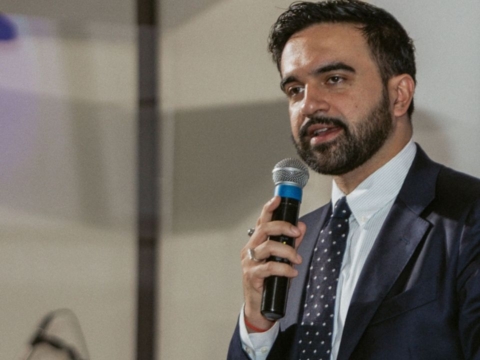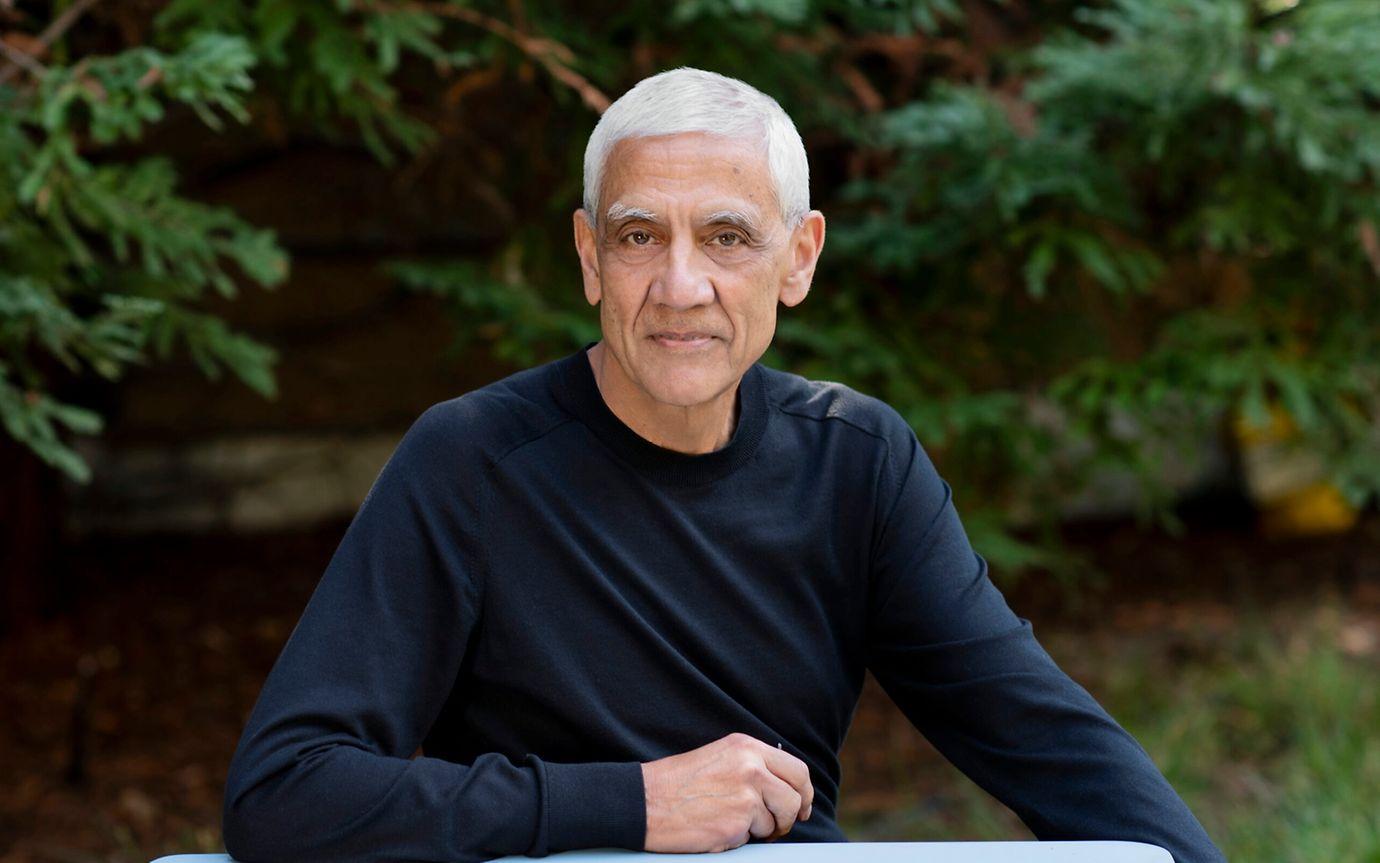
SAN FRANCISCO (Diya TV) — Venture capital legend Vinod Khosla sat down for a wide-ranging conversation at the Global Science Innovation Forum in Silicon Valley, moderated by Matthieu Soulé, Partner at Cathay Innovation. Held at the Computer History Museum in Mountain View, the discussion covered artificial intelligence, the transformation of global healthcare, and the technologies Khosla believes will define the future of energy and climate.
Khosla opened with a blunt assessment of AI. Most people today, he said, are using roughly 10% of what AI is currently capable of, and the technology is advancing faster than most realize. “My bet a year from now we will see AI more different from today than today is from three years ago. So we’ll see more incremental progress in AI than we’ve seen in the last three years.” When asked which industries people think are safe from AI disruption but actually are not, he was direct. Simple services like customer support and business process outsourcing will be gone within two to three years. He pointed to robotics as the next frontier, predicting it will have its “ChatGPT moment” soon, effectively reducing all human labor to the equivalent of a dollar or two an hour.
He was also bullish on AI scientists, systems capable of forming hypotheses, running physical experiments, analyzing results, and iterating, calling it one of the most exciting new areas for the near term. As an example of the technology’s current power, he described a researcher who, in a single weekend using an AI-driven approach, replicated two years of graduate student analysis on ME/CFS data and generated new insights the students had not found.
Khosla, who famously wrote in 2012 that AI would replace 80% of what doctors do, said that figure was too conservative. He now believes the number is higher and the timeline shorter. “In 2016 I wrote a 100-page document called ‘20% Doctor Included’ by 2040. Today I would say 10% doctor included by 2030.” He cited a recent Nature Medicine paper showing that 75% of AI-conducted mental health therapy sessions were rated at the quality level of the top 10% of human therapists, with concordance between AI and human therapists reaching 97%, higher than typical inter-human concordance. Kaiser nurses, he noted, are already striking over AI performing mental health therapy.
On drug development, Khosla sees AI enabling drugs designed for individual patients, a possibility he described as particularly significant for oncology, where every cancer is different. For the developing world, the implications are profound. He recounted a recent proposal to India’s Prime Minister to provide an AI doctor, available 24/7, to every Indian, including those in rural villages who currently may travel one to two days just to see a physician. In India specifically, Khosla’s team is combining leading western models with local models trained across 13 regional scripts and languages to provide nonprofit primary care services.
Turning to climate, Khosla pushed back against what he sees as misdirected effort across the sustainability sector. “I would venture to guess 90% of the plans I see in sustainability are irrelevant to sustainability and low-emission climate change even if they are successful,” he said, adding that only about a dozen technologies genuinely matter. His list includes fusion energy, super-hot geothermal, low-emission steel, low-emission cement, AI-based public transit, and better materials enabled by AI. On fusion specifically, he was optimistic. When Khosla co-founded Commonwealth Fusion in 2018, every person he spoke to, including the Department of Energy, told him it was a bad idea. Today there are a dozen serious fusion startups, and he believes the chances of them all failing are approaching single-digit percentages. “I don’t think five years from now we’ll be debating what’s the source of energy.”
He introduced the concept of the “Chindia price,” a term he coined in 2010 to describe the price point at which India and China will adopt a technology because it is cheaper than fossil fuel alternatives. That, he argued, is the real standard for sustainability. He cited green steel and low-emission cement as two areas where that threshold has already been reached. Electric aviation remains the one sector he sees no easy path forward for, given the capital costs of retiring existing fleets.
Asked what the audience should stop doing and start doing, Khosla’s answer was simple: stay at the forefront of AI, and work on harder problems. “Not all hard problems are valuable, but most valuable problems are very hard.” Fusion, he said, was the best example, a bet almost nobody believed in, now on the verge of changing the world’s energy equation entirely.