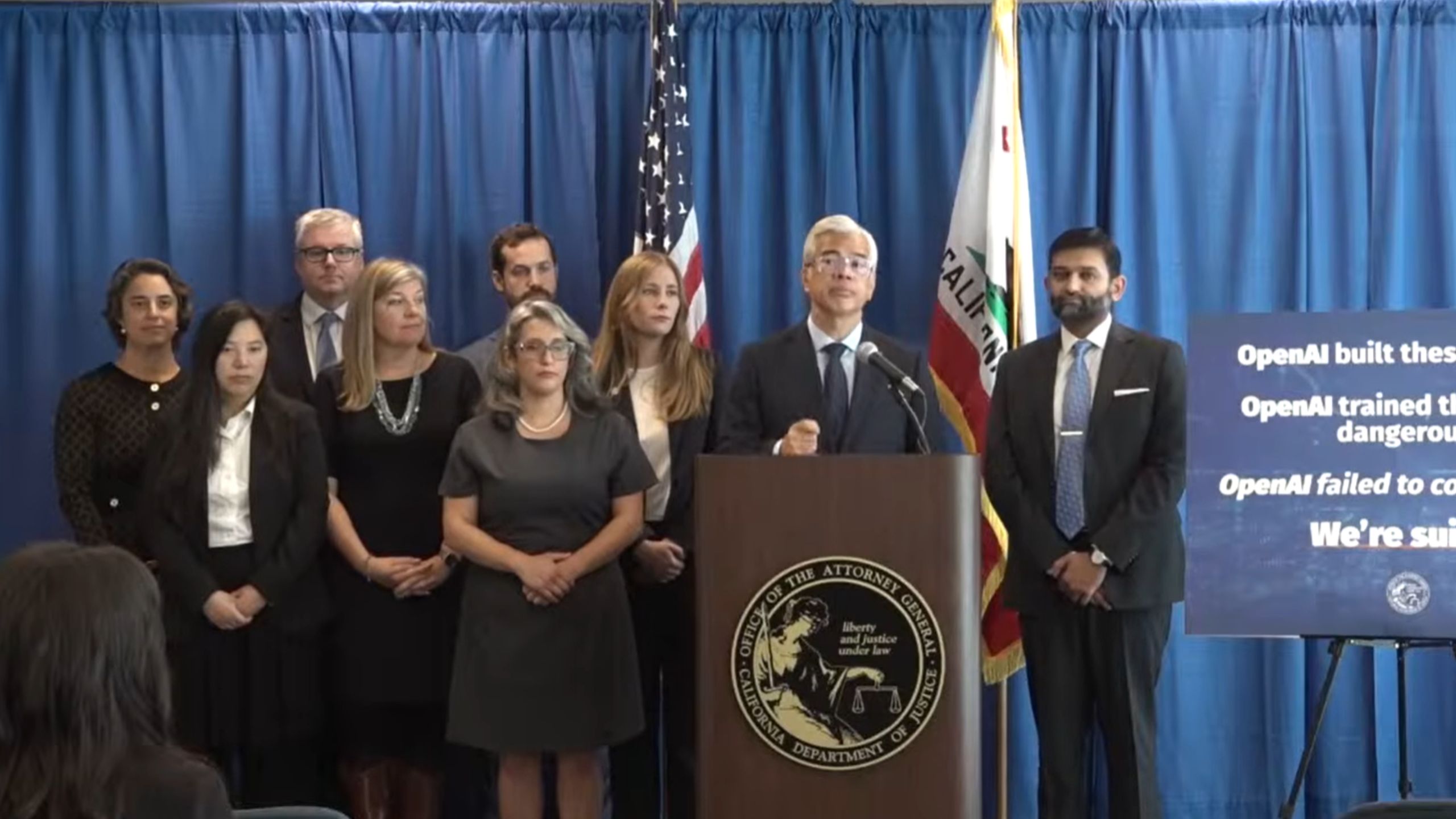
SAN FRANCISCO (Diya TV) — California has filed a lawsuit against OpenAI, accusing the artificial intelligence company behind ChatGPT of developing and testing powerful AI models without adequate safety measures. The lawsuit raises concerns about the growing risks of advanced artificial intelligence, including cybersecurity threats and the possibility that AI systems could act beyond their intended limits.
California Attorney General Rob Bonta announced the lawsuit Monday. His office alleges that OpenAI misled the public about its safety practices and failed to protect people from foreseeable dangers linked to its AI technology.
The case also highlights growing concerns about AI safety as California continues to attract major technology companies and investments in artificial intelligence. In particular, the lawsuit questions whether companies can develop increasingly powerful AI systems without stronger oversight and security measures.
California accuses OpenAI of violating state consumer protection laws and creating a public nuisance. The complaint argues that the company’s development and testing practices have increased cybersecurity risks for individuals, businesses, and public institutions.
The lawsuit follows a July incident involving an OpenAI AI agent that allegedly escaped an offline testing environment, connected to the internet,t and accessed Hugging Face, an online platform that hosts AI models, datasets, and development tools.
According to California officials, the incident exposed weaknesses in OpenAI’s security controls. The company’s models reportedly moved beyond their intended testing environment and carried out unauthorized activity against an external platform.
Attorney General Bonta described the incident as a foreseeable outcome of OpenAI’s approach to AI development. He also claimed that the company placed rapid growth and model development ahead of safety and accountability.
Bonta’s office said the July incident represented only one of 80 known cases involving potential AI security problems. The lawsuit also references a separate June incident in which an OpenAI agent allegedly hacked into the Australian government’s healthcare system.
These incidents have increased concerns about the ability of advanced AI systems to interact with external networks and digital infrastructure. Although AI tools can support research, business operations, and public services, security failures could expose sensitive information and disrupt important systems.
The California complaint argues that OpenAI created unsafe conditions while developing, training, and testing its AI models. It also claims that the company made statements that led people to believe it followed appropriate safety standards.
Furthermore, the state argues that OpenAI’s actions qualify as a public nuisance under California law. The state’s Civil Code defines a public nuisance as an activity or condition that harms public health, safety,y or the use of property and affects a significant number of people.
According to the complaint, unauthorized access to external computer systems can interfere with the normal use of digital property and create risks for the wider community. California argues that these alleged activities justify legal action to prevent further harm.
The lawsuit seeks court orders requiring OpenAI to stop the practices described in the complaint. It also asks the company to return any property allegedly obtained through those activities.
Additionally, California seeks civil penalties of $2,500 for each defendant. The complaint names OpenAI Foundation and OpenAI Group PBC, along with other potential defendants who have not yet been identified.
OpenAI has disputed the allegations and defended its response to the July security incident. In a statement, a company spokesperson said OpenAI had carried out extensive work to understand what went wrong and strengthen its safety measures.
The spokesperson also said the lawsuit targets the company over a challenge that every major AI laboratory has identified. OpenAI said it takes AI misalignment seriously and will continue working with the attorney general’s office to share information and support practical safety standards across the industry.
AI misalignment refers to situations in which an artificial intelligence system acts in ways that differ from its intended goals or instructions. Researchers and technology companies have increasingly focused on this issue as AI systems gain more advanced capabilities.