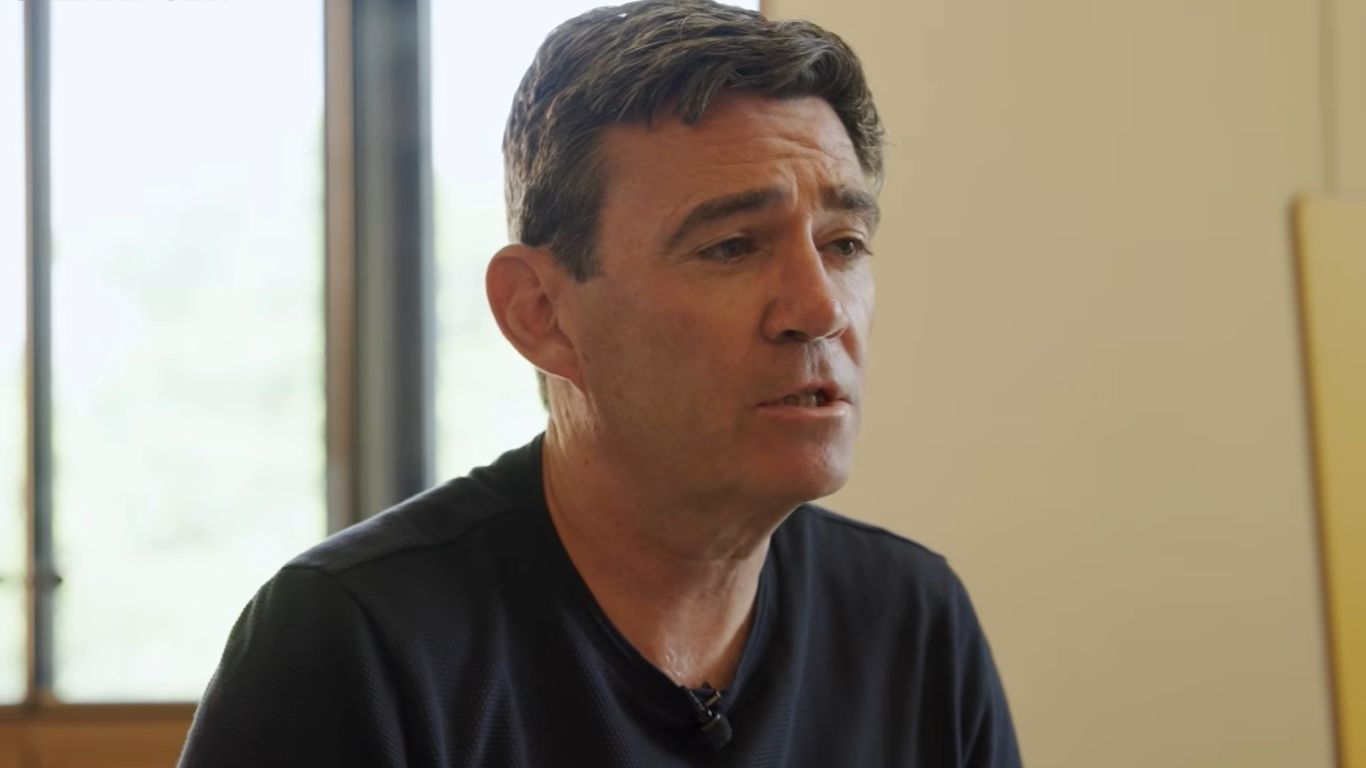
LONDON (Diya TV) — Andy Burnham is set to become the United Kingdom’s next prime minister after securing overwhelming support to lead the governing Labour Party. The former Greater Manchester mayor won the backing of most Labour lawmakers, leaving no challenger in the race. As a result, he is expected to replace Prime Minister Keir Starmer and officially take office on July 20.
Burnham’s rise marks another major leadership change in British politics. By September, Britain will have had seven prime ministers in just 10 years. However, unlike a general election, this transition follows Labour’s internal leadership process after the party’s landslide victory in the 2024 national election.
Burnham, the Member of Parliament for Makerfield, secured nominations from 349 Labour MPs. That total is well above the number needed to prevent any rival from entering the contest. Labour has 403 MPs, and candidates required support from at least 81 lawmakers to qualify. Burnham also crossed the 323-MP mark, making it mathematically impossible for another candidate to challenge him.
The nomination process for Labour lawmakers remains open until July 15. However, Burnham’s commanding support has already settled the outcome. Next, he must secure nominations from affiliated trade unions or constituency Labour parties. Political observers expect that step to move forward without difficulty.
Labour plans to confirm Burnham as party leader on July 17. However, he will not become prime minister until July 20. The timing follows Britain’s constitutional process. First, Starmer will formally resign before King Charles III at Buckingham Palace. Then, the king will invite Burnham to form a new government. Because the leadership announcement falls on a Friday, the formal transfer of power will take place on the following Monday.
Burnham returns to national leadership only weeks after re-entering Parliament through a by-election. His quick rise reflects strong support inside Labour as the party looks to begin a new chapter in government. Party members and lawmakers have largely united behind his leadership, giving him a strong position before he enters Downing Street.
Even so, Burnham faces major challenges from his first day in office. He must address domestic priorities while also managing Britain’s economy and public services. In addition, he will lead the country through a changing international environment. His approach to foreign policy, including relations with President Donald Trump and other world leaders, will receive close attention in the coming months.
Meanwhile, British politics continues to shift beyond Labour. Reform UK leader Nigel Farage has also made headlines after announcing his resignation as a member of Parliament. He plans to contest the resulting by-election, creating another high-profile political contest. The move comes as Reform UK faces growing questions over donations to individuals and the party’s funding.
The upcoming by-election has already drawn national attention. One of Farage’s most recognizable opponents is Count Binface, a satirical candidate known for unconventional campaigns. The contest has generated widespread interest and added another unpredictable element to Britain’s political landscape.
Despite another change at the top of government, Britain is not required to hold a general election. Under the country’s parliamentary system, voters elect members of Parliament rather than choosing the prime minister directly. The governing party then selects its leader, who serves as prime minister if the party holds a majority in the House of Commons.
Labour won a decisive majority in the July 4, 2024, general election. Therefore, the next national election does not have to take place until August 2029. Although a prime minister has the authority to call an early election, Burnham has already ruled out seeking an immediate public vote.