CHICAGO (Diya TV) — The American Association of Physicians of Indian Origin (AAPI) has launched its first-ever nationwide stem cell donor campaign. The initiative seeks to expand the pool of potential donors for Indian American patients battling blood cancers such as leukemia and lymphoma.
Stem cell transplants are often a patient’s last hope against blood cancers. However, finding a compatible donor depends on Human Leukocyte Antigen (HLA) markers, which are inherited and vary by ethnicity. Indian American patients face unique challenges because the existing Indian donor pool is extremely small.
Until now, many families were forced to organize donor drives on their own while also coping with the burden of treatment. AAPI’s campaign marks the first coordinated nationwide effort to fill this critical gap.
“This is a historic initiative,” said Dr. Amit Chakrabarty, president of AAPI. “Stem cell transplants save lives. I’m grateful to our members, chapters, and volunteers across the nation who are leading this cause.”
In 2024, AAPI partnered with the National Marrow Donor Program (NMDP), the world’s largest stem cell registry. Together, they launched the campaign to increase registrations among Indian Americans and to create a unified platform for awareness.
Dr. Satheesh Kathula, AAPI’s immediate past president, played a key role in initiating the drive. “This effort is long overdue. It will give patients new hope by increasing their chances of finding a match,” he said.
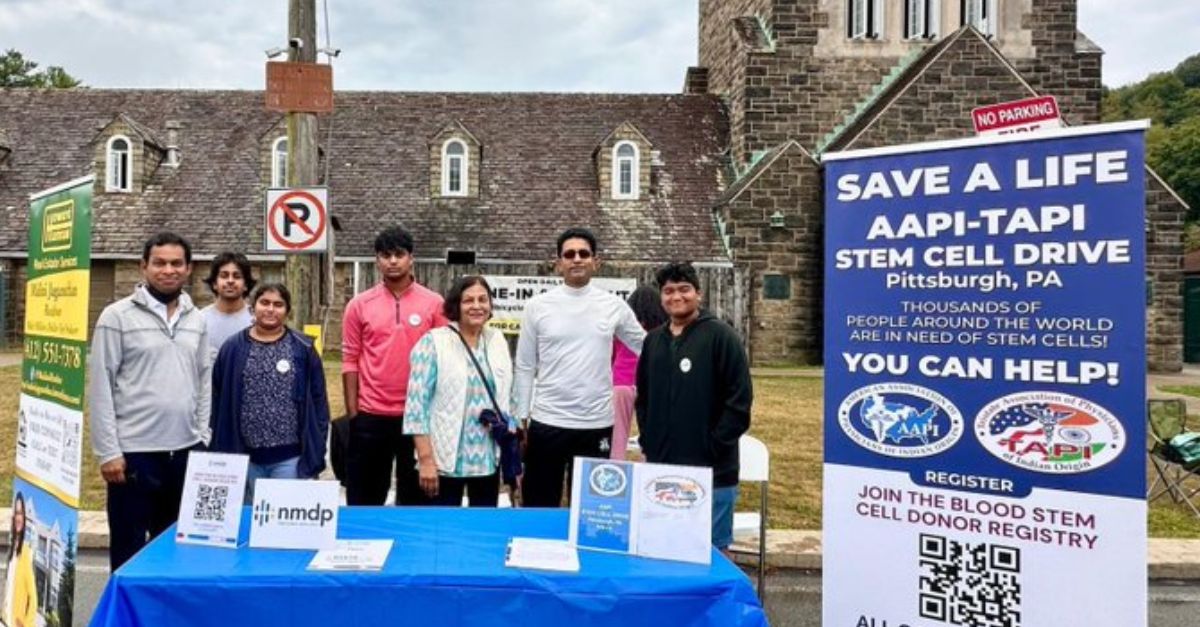
Since November 2024, AAPI has organized drives in more than 20 cities, including San Jose, Los Angeles, Houston, Chicago, Charlotte, Edison, Dallas, and Pittsburgh. Many of these events were led by local high school and college students, who also earned volunteer certificates from AAPI.
“The response has been tremendous,” said Dr. Sashi Kuppala, chair of the Stem Cell Drive. “Thousands of patients rely on transplants to survive. Every registration counts.”
Seventy percent of patients do not have a family match. For Indian patients, the odds are even lower due to ethnicity-specific HLA requirements. Patients of Indian origin have a higher chance of finding matches within their own community, but the donor base remains too small.
“Finding a match is especially difficult for South Asians,” said Dr. Soumya Nerevetla, AAPI treasurer. “Every new donor helps save lives.”
Dr. Hetal Gor, chair of the AAPI board of trustees, stressed the importance of commitment. “You could be someone’s only match—their only hope,” she said. “The process is safe and simple.”
AAPI leaders emphasized that registering as a donor is quick and secure. Volunteers receive a cheek swab kit after signing up online. The HLA data is stored confidentially. If a donor is matched, the process involves providing blood samples locally.
“Donation usually takes 20 to 30 hours over four to six weeks,” said Dr. Seema Arora, AAPI secretary. “All costs are covered, and travel may be required.”
Building on its U.S. success, AAPI plans to expand the campaign to India. The group has partnered with the Global Association of Indian Medical Students and DATRI, India’s stem cell bank. The first large-scale drives will take place during AAPI’s Global Health Summit in Bhubaneswar, Odisha, in January 2026.
“These efforts will soon reach medical schools across India,” said Dr. Meher Medavaram, AAPI president-elect. “Registration is as simple as scanning a QR code and submitting your kit.”
AAPI leaders encourage families, schools, and community groups to host local drives and spread awareness. “Together, we can change the future for thousands of patients,” said Dr. Krishan Kumar, AAPI vice president-elect.
Learn more about the campaign at www.aapiusa.org.