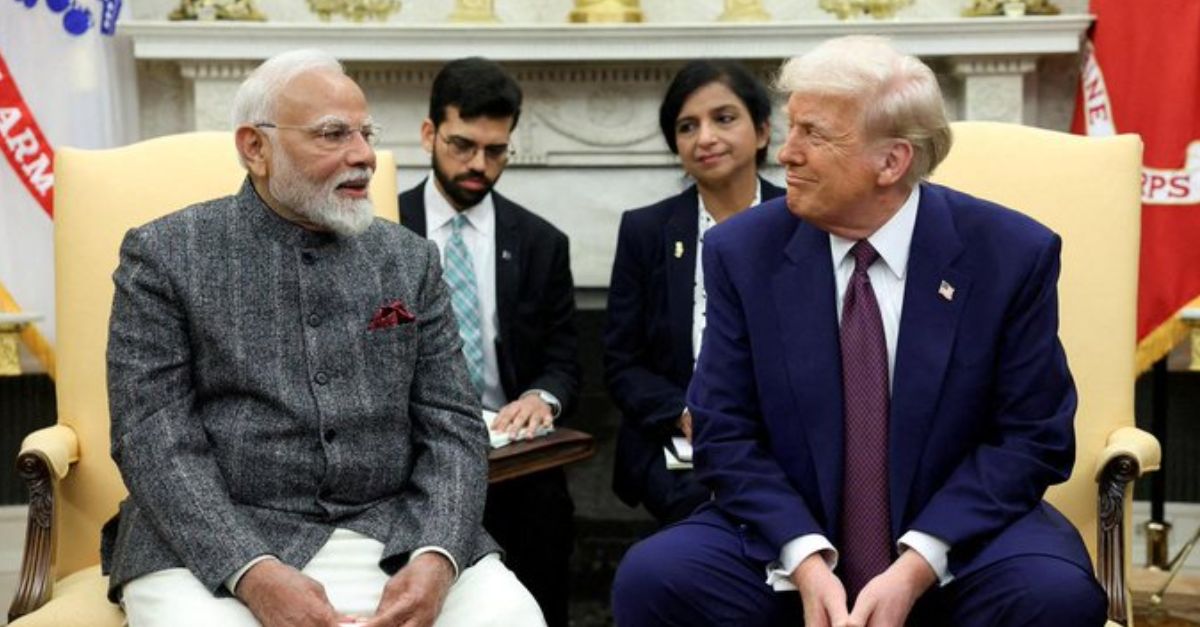
WASHINGTON (Diya TV) — Indian American advocacy groups welcomed recent remarks by President Donald Trump and Prime Minister Narendra Modi reaffirming the importance of U.S.-India ties during a time of rising uncertainty. Both leaders emphasized the strength of the partnership even as trade tensions deepen.
The U.S.-India Strategic Partnership Forum (USISPF) described the partnership as “the most significant geopolitical relationship of the 21st century.” The group noted that for more than 25 years, every U.S. president and Indian prime minister has worked to strengthen the relationship.
Trump and Modi “recognize that there is more that unites the two countries than divides them,” the forum said. It praised both leaders for investing “personal capital in fostering this unity” and for promoting peace and prosperity through their engagement.
The U.S.-India Business Council (USIBC) echoed those views. The council said it “applauds the recent positive remarks by President Trump and Prime Minister Modi” and stressed that the relationship must be protected “at a time of global uncertainty.”
USIBC urged both governments to deepen cooperation in trade and investment. It argued that the two countries have historically been able to resolve disputes through “private, mutually respectful discussion.” The group encouraged both sides to use the same approach again to avoid further friction.
“It’s time to double down on the U.S.-India partnership—for our economies, our people, and our shared values,” USIBC said. It called for “hard choices” to finalize a trade deal that would restore investor confidence and drive new growth.
The positive statements come as relations face strain over tariffs. The Trump administration has imposed sweeping duties on Indian goods, doubling them from 25 percent to 50 percent in August.
Officials linked the additional 25 percent penalty to India’s continued import of Russian oil, a move Washington opposes. The policy has raised alarm across India’s export sectors, including textiles, gems and jewelry, footwear, and chemicals.
Industry experts warn that the higher tariffs could affect more than half of India’s U.S.-bound exports, valued at approximately $87 billion. Analysts estimate up to 55 percent of those shipments may now face higher costs, making them less competitive in the American market.
Despite the trade tensions, Trump described his personal ties with Modi as a “very special relationship.” He downplayed the tariff conflict, calling it “moments on occasion” that will not define the overall partnership.
Modi responded with optimism. Writing on X, formerly known as Twitter, the prime minister said he “deeply appreciates and fully reciprocates” Trump’s sentiments. He emphasized that India and the United States share a “very positive and forward-looking Comprehensive and Global Strategic Partnership.”
Advocacy groups argue that the stakes are too high for the relationship to falter. They stress that cooperation between the world’s two largest democracies is vital for global security, economic growth, and stability. USISPF pointed out that both nations benefit from strong ties in technology, defense, energy, and people-to-people connections. The group urged leaders to build on the momentum created over the past two decades, even as they navigated differences.
Observers say the next phase of the partnership will depend on how both governments manage trade challenges. Business leaders want progress on a bilateral trade deal, which has been stalled for years. Such an agreement could expand opportunities in areas like digital trade, renewable energy, and defense cooperation.