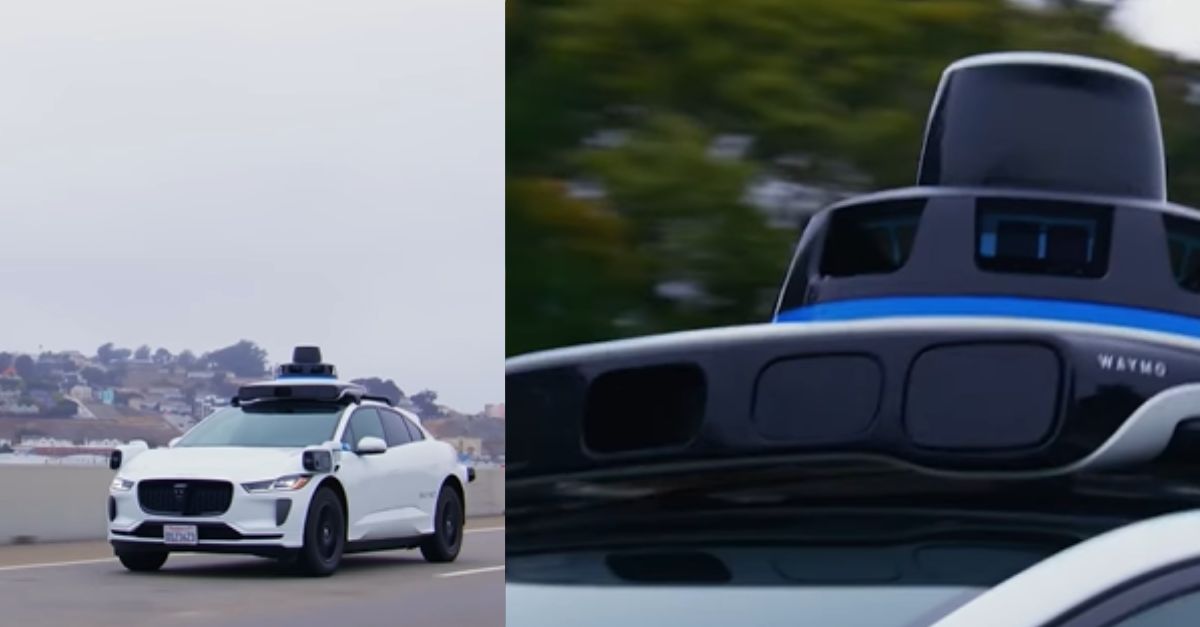
SAN FRANCISCO (Diya TV) — Waymo, Alphabet’s self-driving car division, is taking its biggest leap yet. The company announced Wednesday that its driverless robotaxis will now operate on freeways in San Francisco, Los Angeles, and Phoenix. This marks a major milestone for the company and the broader autonomous vehicle industry.
For the first time, paying passengers can take driverless freeway rides in Waymo’s all-electric robotaxis. The company said it will begin offering these trips “when a freeway route is meaningfully faster,” potentially cutting travel times by up to 50%.
This expansion connects more cities and suburbs across the Bay Area, Los Angeles, and Phoenix. It also allows Waymo to offer rides to and from San Francisco International Airport and San Jose Mineta International Airport, two key transportation hubs.
Waymo’s new service area now spans 260 miles across Silicon Valley, stretching as far south as San Jose. The company already offers curbside airport service in Phoenix and plans to roll out similar options in other cities soon.
Not all users will see freeway rides right away. Riders interested in the new feature can select a freeway preference in the Waymo app. When a route qualifies, it may be matched with a freeway-enabled vehicle.
Waymo has been preparing for this expansion for years. The company began testing freeway operations more than a decade ago, starting with early experiments on the same California freeways that connect Silicon Valley to San Francisco.
Over the past year, select Alphabet employees have been able to take test rides in San Francisco, Los Angeles, and Phoenix. Those tests helped refine Waymo’s self-driving system to handle the unique challenges of high-speed driving.
Freeway driving may seem easier because it involves fewer intersections and pedestrians. But it presents its own challenges, said Pierre Kreitmann, a principal software engineer at Waymo. He explained that because critical events happen less often on highways, it takes more testing to ensure the system can respond safely when rare scenarios occur.
To prepare, Waymo combined public road testing with closed-course trials and simulation-based scenarios. Engineers simulated everything from cars flipping over to motorcyclists lane-splitting in traffic. The goal was to make sure vehicles can safely merge, change lanes, and adapt to freeway speeds.
Waymo’s robotaxis typically travel at the posted speed limit—usually 65 mph—but may go slightly faster when necessary for safety.
Waymo emphasized that safety remains the top priority. The company expanded its operational protocols and now coordinates directly with agencies like the California Highway Patrol and the Arizona Department of Public Safety.
“We took time to do it properly, with a strong focus on system safety and reliability,” said Dmitri Dolgov, Waymo’s co-CEO. “Freeway driving is very easy to learn, but very hard to master when we’re talking about full autonomy without a human driver as a backup.”
Waymo also built new charging infrastructure to support its growing fleet of electric vehicles. The company said the freeway expansion required new logistics and energy planning to keep vehicles running longer distances.
Waymo’s progress doesn’t stop in California and Arizona. The company has already launched full commercial service in Austin, Texas, and plans to expand to Miami, San Diego, and Washington, D.C., by 2026.
The company is also testing vehicles in New York City, Tokyo, and London, with plans to launch public rides in the U.K. next year.
Waymo’s freeway launch underscores how far the company has come since its first tests 16 years ago under Google’s self-driving project. From cautious beginnings on small highways to offering rides on major interstates, the company is closing in on making fully autonomous travel an everyday reality.
While competitors like Tesla advertise “robotaxi” services, Tesla still relies on human drivers. Waymo remains the only U.S. company offering a commercial, fully driverless ride-hailing service on both city streets and freeways.