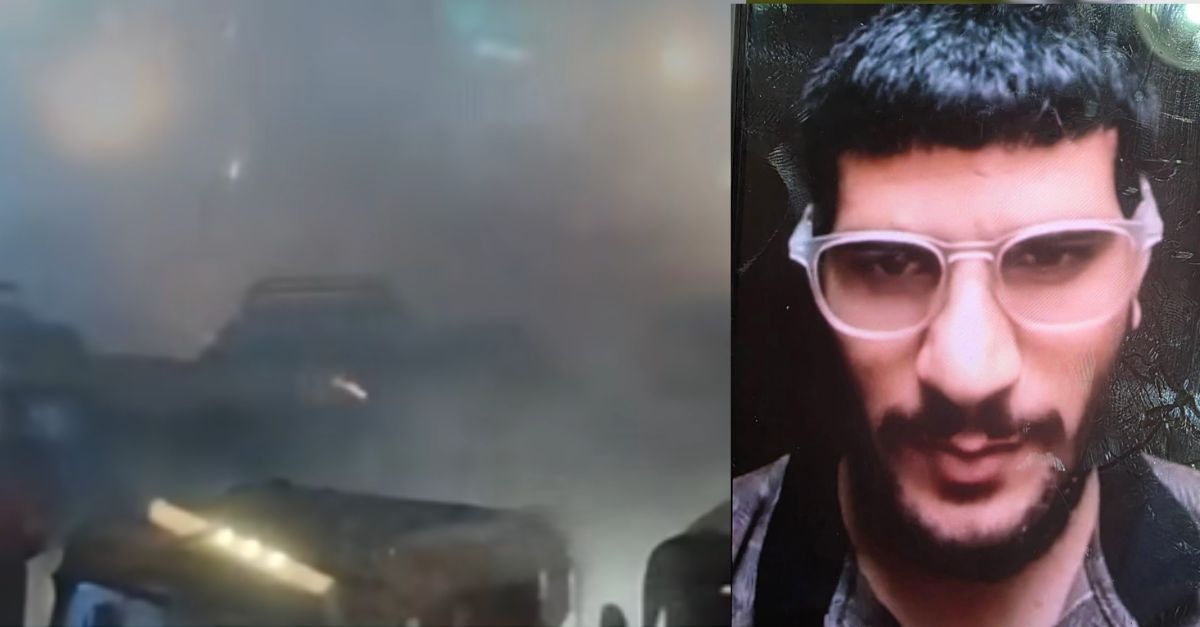
NEW DELHI (Diya TV) — Indian investigators have revealed that Dr. Umar Nabi was behind the explosives-laden car that blew up near Delhi’s Red Fort. He had planned a major terror attack around the Babri Masjid demolition anniversary on December 6. The 28-year-old doctor from Pulwama district in south Kashmir died in the blast, which killed 12 people on November 10.
Officials stated that Dr. Umar was part of a “white-collar” Jaish-e-Mohammed (JeM) terror network that spread across Kashmir, Haryana, and Uttar Pradesh. His plan reportedly fell apart after police arrested one of his key aides, revealing the group’s operations and large stockpile of explosives.
According to investigators, Umar and his associate, Dr. Muzammil Ahmad Ganaie, were both bright students who gravitated toward radical ideas after a 2021 trip to Turkey. During the visit, they allegedly met supporters of the banned JeM group. After returning, they started collecting explosive materials like ammonium nitrate, potassium nitrate, and sulphur. They stored these materials in and around the Al Falah University campus in Faridabad, where Ganaie taught and Umar pursued further studies.
Officials mentioned that Umar used online resources to learn how to build a vehicle-borne improvised explosive device, or VBIED. He began preparing for the attack in late October, telling friends and family in Kashmir he would be “unavailable for three months.” Investigators think this was part of his plan to go underground after carrying out the blast.
However, things fell apart when Faridabad Police announced on November 10 that they had seized 2,900 kilograms of explosives. This haul included 360 kilograms of ammonium nitrate taken from Ganaie’s rented apartment. The news reportedly sent Umar into a panic.
He hid in a mosque in Delhi’s walled city for several hours before leaving in his Hyundai i20, which was loaded with explosives. However, the device was not complete. Officials stated that the shrapnel meant to increase the blast’s impact had not been attached yet. As he drove away, the VBIED detonated prematurely, killing Umar instantly and claiming 12 other lives.
Investigators portrayed Umar as an intelligent but withdrawn young man who became increasingly isolated after returning from Turkey. “He was quiet, focused on his studies, and seldom interacted with others,” one official noted. His shift toward extremist views was sharp and intentional.
The Red Fort blast has led to a significant counterterrorism operation across three states. Police have arrested eight people connected to the JeM module. Seven are from Kashmir: Arif Nisar Dar alias Sahil, Yasir-ul-Ashraf, and Maqsood Ahmad Dar alias Shahid from Nowgam in Srinagar; Maulvi Irfan Ahmad from Shopian; Zameer Ahmad Ahanger alias Mutlasha from Ganderbal; Dr. Muzammil Ahmad Ganaie from Pulwama; and Dr. Adeel from Kulgam. The eighth accused, Dr. Shaheen Sayeed, is from Lucknow.
Investigations began when Srinagar Police found posters supporting JeM pasted around the city on October 19. CCTV footage led to Ganaie’s arrest, uncovering a larger interstate network. This breakthrough revealed several connections between Kashmir and the terror cells in Haryana and Uttar Pradesh.
Police have carefully reconstructed Umar’s last movements. On October 26, he returned to Kashmir, met with family and friends, and told them he would soon be unreachable. After returning to Faridabad, he reportedly began assembling the VBIED, which he intended to detonate near a busy Delhi landmark in early December.
Authorities believe the blast near the Red Fort was not meant to happen that day. Instead, the timing was supposed to align with the Babri Masjid demolition anniversary— a symbolic date often used by extremist groups to spark unrest. However, Umar’s miscalculation and growing fear after his associates’ arrests forced an early end to the plot.
Officials indicated that this case shows a worrying trend of educated individuals joining terror networks. “These are not traditional militants,” one investigator said. “They are educated professionals using their knowledge and resources to serve extremist goals.”
As the investigation continues, police are tracking financial and digital links tying the suspects to handlers abroad. They are also looking into whether other groups were planning similar attacks in northern India.
The Red Fort explosion, though unintentional, has revealed a complex web of radicalization spreading through academic and professional circles. Authorities claim that the swift response from multiple state agencies prevented one of the most devastating terror attacks in recent years.