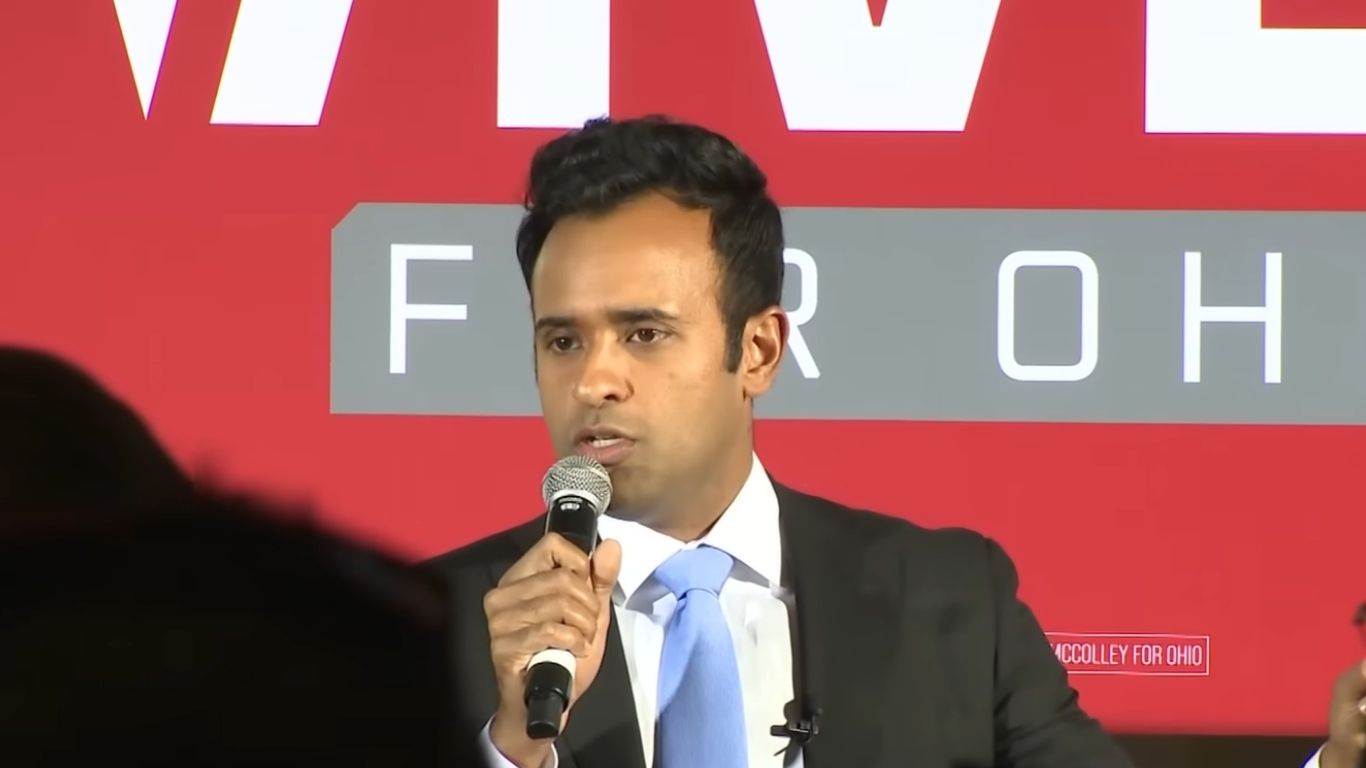
COLUMBUS, Ohio (Diya TV) — Republican gubernatorial candidate Vivek Ramaswamy and a super PAC backing his campaign spent nearly $9 million on advertising over six weeks, far outpacing Democratic rival Dr. Amy Acton and her supporters in Ohio’s race for governor.
The large spending gap highlights the different campaign strategies as both candidates prepare for the November election. While both campaigns reported strong fundraising numbers, Ramaswamy and his allies invested heavily in television, streaming, and digital advertising. Meanwhile, Acton’s campaign focused on a much smaller digital effort during the same period.
Campaign finance data shows that Ramaswamy’s campaign and V-PAC: Victors, Not Victims spent almost $9 million on advertising between May 15 and the end of June. According to News5 Cleveland, broadcast television received the biggest share of that spending. The campaign devoted more than $5 million to broadcast TV. It also spent about $1.9 million on streaming services and nearly $1 million on cable television.
In addition, the campaign invested more than $260,000 in digital advertising. It also spent about $130,000 on satellite television and more than $14,000 on radio advertising. As a result, Ramaswamy maintained a strong media presence across several platforms during the six-week period.
The advertising push came after Ramaswamy posted impressive fundraising numbers. By May, his campaign had raised about $50 million. Nearly half of that total came from Ramaswamy’s personal funds. The fundraising total ranks among the largest ever reported in an Ohio gubernatorial campaign.
Federal campaign finance reports also show that V-PAC received major financial support from several high-profile donors. Philadelphia investor Jeff Yass contributed $10 million to the group. Tech entrepreneur Elon Musk and software entrepreneur Ratmir Timashev each donated $5 million. In addition, hedge fund manager Bill Ackman and real estate developer Stephen Ross each gave $1 million.
Those large donations helped fuel the campaign’s aggressive advertising strategy. Consequently, Ramaswamy’s campaign dominated paid political advertising during the reporting period.
On the Democratic side, Acton’s campaign reported a much lower advertising budget. Data from AdImpact shows that Acton’s campaign and a supporting political action committee spent nearly $100,000 on digital advertising between mid-May and the end of June.
Acton’s campaign accounted for about $87,000 of that amount. Meanwhile, 314 Action, a political action committee that supports healthcare professionals running for public office, spent nearly $11,000 to support her campaign.
Even so, Acton has demonstrated strong fundraising strength. Earlier this month, she announced that her campaign had raised nearly $18.5 million. She described the total as a fundraising record for a Democratic candidate running for governor in Ohio.
Although Acton’s fundraising fell well below Ramaswamy’s total, it marked a significant milestone for a Democratic gubernatorial campaign in the state. Therefore, her campaign argues that financial support remains strong despite the advertising difference.
Ramaswamy’s campaign believes the fundraising success reflects growing voter enthusiasm. Campaign manager Jonathan Ewing said the numbers were unprecedented for an Ohio gubernatorial race.
“No gubernatorial campaign in Ohio history has ever put up numbers like this, and it sends a clear message: Ohioans are fired up for Vivek, our campaign is growing, and we will win big in November,” Ewing said in a statement.
However, Acton rejected the idea that advertising alone would decide the race. She said voters cannot be won simply through larger campaign spending.
“You can’t buy Ohio, and you can’t buy us,” Acton said.
The sharp contrast in advertising spending underscores the different approaches both campaigns have taken as the election season continues. Ramaswamy has relied on an expansive, multi-platform advertising campaign backed by substantial fundraising and outside support. In contrast, Acton has focused on a smaller digital strategy while highlighting her own fundraising achievements.
As the Ohio governor race moves closer to Election Day, both candidates are expected to continue building support across the state. Advertising, fundraising, and voter outreach will likely remain central to their campaigns. Ultimately, Ohio voters will decide whether a record-breaking advertising effort or a more measured campaign approach proves more effective in November.