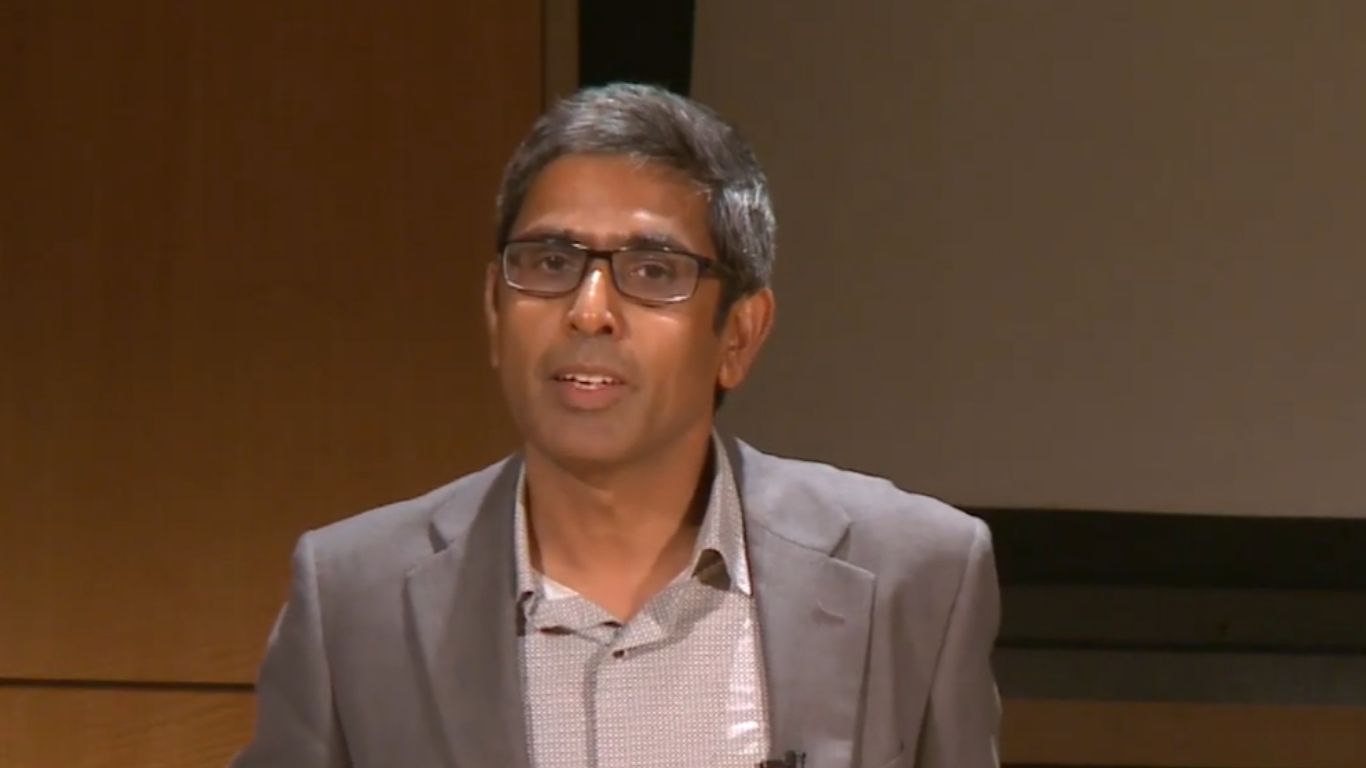
SAN DIEGO, Calif. (Diya TV)— Indian-origin biologist Satchin Panda will leave the Salk Institute for Biological Studies next month after a workplace misconduct investigation, ending a 22-year career at the respected California research center.
Panda’s resignation will take effect on Aug. 13. The move follows an internal investigation that began earlier this year after a female research assistant in his laboratory filed a workplace misconduct complaint. The San Diego Union-Tribune first reported the development.
The Salk Institute said the employee submitted the complaint through its official reporting system in March. Soon afterward, the institute placed Panda on administrative leave while it reviewed the allegations. At the same time, institute officials said they offered support to the employee and launched what they described as a prompt and impartial investigation.
However, the institute has not released the findings of the investigation. It also has not shared details about Panda’s departure or confirmed whether the review has officially concluded.
Panda has denied the allegations. In an email quoted by the journal Science, he said he remains committed to maintaining “a safe, respectful, and professional environment” in his laboratory and throughout the institute. Beyond that statement, he has not made additional public comments about the case.
Meanwhile, the research assistant, whose identity has not been made public, later left the institute voluntarily.
Panda built an international reputation through his research on circadian rhythms and time-restricted eating, commonly known as intermittent fasting. Over the years, his studies helped shape scientific discussions about how the body’s internal clock affects metabolism, sleep and long-term health.
His work also attracted major research funding and gained attention from both scientists and the public. As interest in meal timing and healthy lifestyles grew, Panda became one of the most recognized voices in circadian biology.
He joined the Salk Institute’s Regulatory Biology Laboratory in 2004. Later, the institute promoted him to professor in 2016. In addition, he served as an adjunct professor at the University of California San Diego.
Throughout his career, Panda often spoke about the influence of his childhood in India. According to interviews published by the Salk Institute, his early experiences inspired his interest in biological clocks and daily rhythms.
His laboratory also made significant contributions to research on melanopsin, a light-sensitive protein in the eye. Scientists widely cite that work because it improved understanding of how light helps regulate the body’s internal clock.
Furthermore, Panda published numerous scientific papers that explored how meal timing, sleep patterns and light exposure affect overall health. As a result, he became one of the best-known Indian-origin researchers in the field of circadian biology.
His departure also brings renewed attention to an earlier controversy involving another prominent Indian-origin scientist at the Salk Institute.
In 2018, researcher Inder Verma resigned after a separate investigation into allegations of sexual harassment. According to the New York Post, eight women, including six affiliated with the institute, accused Verma of harassment. Verma denied those allegations.
Although the two cases involve different circumstances, both have drawn attention to workplace conduct and institutional accountability at the research organization.
Even so, the Salk Institute has not linked the investigations. Instead, it has limited its public comments to confirming that it followed its internal reporting process and conducted an investigation after receiving the complaint against Panda.
The institute has also not disclosed any disciplinary findings or explained whether Panda’s resignation resulted from the investigation. Therefore, questions about the outcome remain unanswered.
For now, Panda’s resignation closes a chapter that spanned more than two decades at one of the nation’s leading biomedical research institutions. During that time, he earned international recognition for advancing research on circadian rhythms and intermittent fasting. At the same time, the unresolved details surrounding the investigation continue to leave key questions open as both Panda and the Salk Institute move forward.