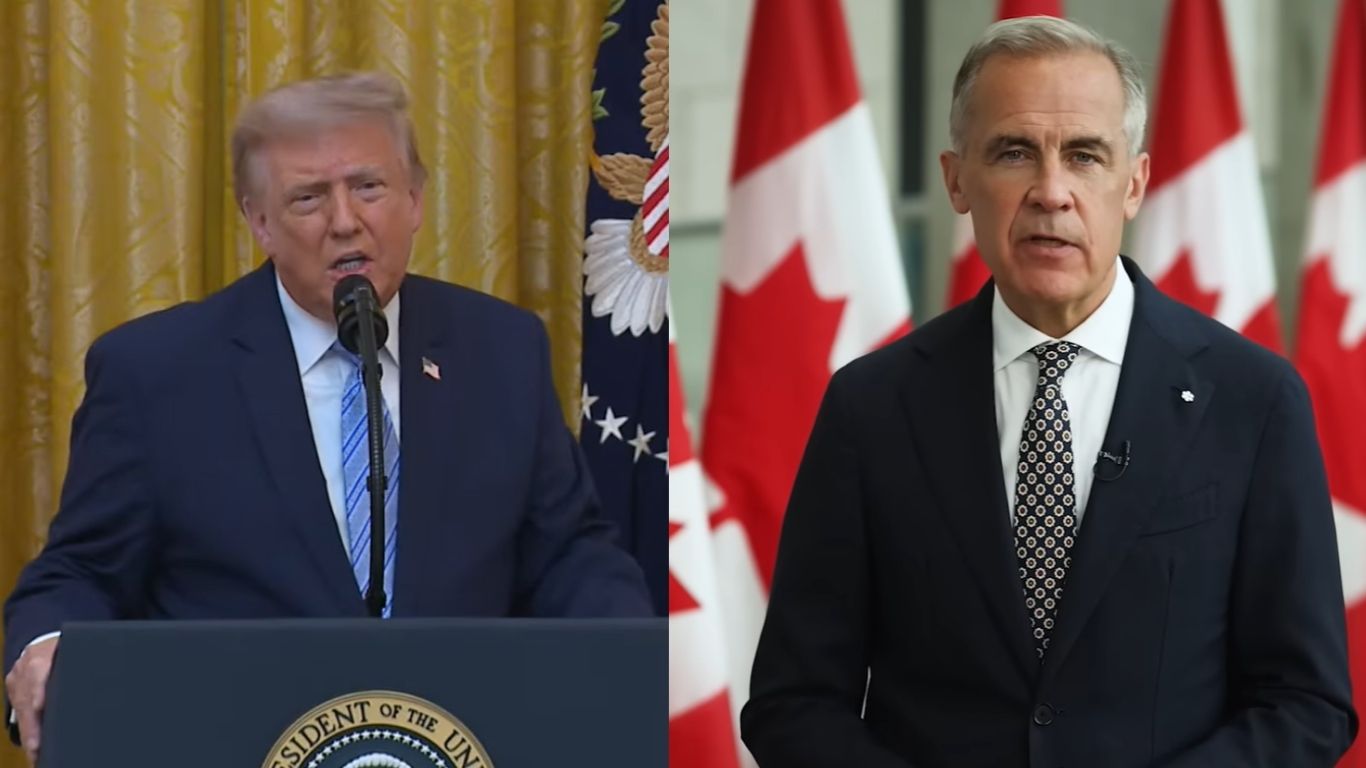
WASHINGTON (Diya TV) — The Trump administration announced Monday that it will impose an additional 50% tariff on selected Canadian goods, including hockey sticks, wine and cement. The move marks a major escalation in the growing trade dispute between the United States and Canada. Officials said the new duties will take effect next month and affect about $20 billion in Canadian imports each year.
The administration said it will use Section 338 of the Tariff Act of 1930 to impose the new tariffs. This authority has never been used before. Officials argued that Canada has taken unfair actions against U.S. exports and has responded to earlier American tariffs with its own trade measures.
A senior administration official said the new tariffs are separate from the wildfire-related tariffs that President Donald Trump mentioned earlier. However, the official added that the administration still has other options under review.
The latest tariffs increase pressure on one of America’s closest trading partners. In recent months, trade tensions between the two countries have continued to grow. As a result, businesses on both sides of the border now face greater uncertainty.
According to the administration, Canada is one of only two countries, along with China, that responded directly to Trump’s earlier tariffs with retaliatory measures. Officials pointed to decisions by several Canadian provinces to remove U.S. liquor products from store shelves. They also criticized Canada’s auto policies, saying they favor domestic production. In addition, officials argued that Canadian dairy rules give European cheese producers an advantage over American exporters.
Last week, Trump warned that more tariffs on Canadian products could follow. In a post on Truth Social, he said the economic costs linked to wildfire smoke should become part of the tariff discussion. The comment added another layer to an already tense trade relationship.
Meanwhile, Trump and Canadian Prime Minister Mark Carney met on Sunday during the FIFA World Cup final in East Rutherford, New Jersey. After the event, Trump told reporters the two leaders discussed possible responses to the wildfires. He also described his relationship with Carney as positive despite ongoing trade disagreements.
The new tariffs also raise fresh questions about the future of the U.S.-Mexico-Canada Agreement, known as the USMCA. Earlier, the Trump administration chose not to extend the trade agreement, leaving its long-term future uncertain. Unlike previous tariffs, the latest duties will also apply to products that currently qualify for duty-free treatment under the USMCA.
Many economists have said the USMCA has helped limit higher consumer costs by reducing tariffs on many products traded across North America. Therefore, the latest decision could increase costs for businesses that depend on cross-border supply chains. Even so, the administration excluded several key Canadian exports from the new duties. Those exemptions include potash, critical minerals and most energy products. As a result, some major industries may avoid the biggest economic impact.
Canada quickly rejected the U.S. decision. In a statement posted on X, Carney called the new tariffs a direct violation of the USMCA. He also said Canada would step up negotiations with the United States in the coming weeks in hopes of finding a solution.
Business groups also expressed concern. The Canadian Chamber of Commerce described the tariffs as a regrettable escalation in the trade dispute. The organization urged both governments to use the weeks before the tariffs take effect to continue negotiations and reduce tensions.
The latest action also reflects a shift in the administration’s legal strategy. Earlier this year, the U.S. Supreme Court limited the president’s emergency tariff powers. As a result, the administration began looking for other legal tools to support its trade agenda.
In addition to Section 338, officials have relied on temporary global tariffs under Section 122 of the Trade Act. However, that authority is scheduled to expire later this week. Therefore, the administration appears to be expanding its legal options as it continues to reshape U.S. trade policy.
The dispute now enters another critical phase. Both governments have several weeks before the new tariffs take effect. During that time, negotiations could ease tensions or deepen the disagreement. For now, businesses, exporters, and consumers on both sides of the border will closely watch the next steps in the evolving U.S.-Canada trade conflict.