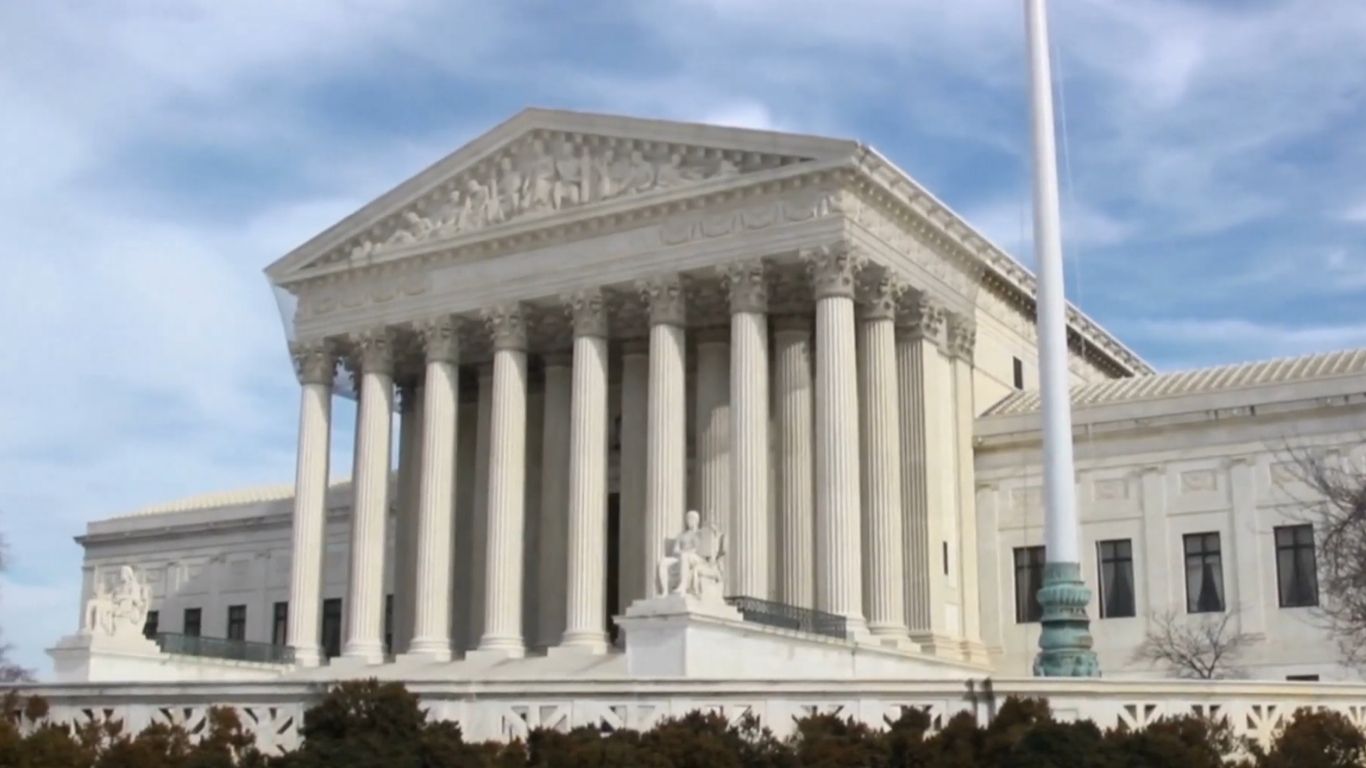
WASHINGTON (Diya TV) — The U.S. Supreme Court on Monday agreed to review a Colorado law that requires publicly funded preschools to admit children of same-sex couples. The move sets up a major legal clash between religious freedom and LGBTQ rights under the First Amendment. At the same time, the court declined to hear a separate case from Massachusetts involving parents who objected to how a school handled their child’s gender identity. Together, the actions highlight the court’s growing role in disputes over religion, education, and LGBTQ protections.
The Colorado case centers on a state-funded universal preschool program approved by voters in 2020. The law allows both public and private schools to receive taxpayer money. In return, participating schools must follow strict nondiscrimination rules.
These rules require schools to provide equal access regardless of sexual orientation, gender identity, religion, or race. Two Catholic parishes and a family sued the state. They argued the law violates the First Amendment’s Free Exercise Clause. That clause protects religious groups from government interference in their beliefs. The plaintiffs are represented by Becket, a legal group focused on religious freedom cases.
They pointed to the court’s 2015 ruling in Obergefell v. Hodges, which legalized same-sex marriage nationwide. In their argument, they said the court had promised to protect religious dissent. They also challenged a long-standing legal standard from 1990. That precedent allows laws to stand if they apply equally to religious and non-religious groups. The Catholic groups argued that Colorado’s law includes exceptions, making it unfair to religious schools.
Legal experts say the case could have a wide impact. The court has recently ruled in favor of religious institutions in several funding disputes. It has been said that states cannot exclude religious schools from public programs simply because of their beliefs. Now, the justices must decide how far those protections go when they clash with anti-discrimination laws.
The U.S. Department of Justice has weighed in. Earlier this year, it supported the religious groups. It warned that upholding the law could limit religious freedom in many parts of the country. Lower courts have already ruled against the Catholic plaintiffs. Both a federal district court and the 10th U.S. Circuit Court of Appeals rejected their claims. The Supreme Court will now review those decisions, with arguments likely in the fall.
In a separate move, the court refused to hear a case involving parental rights in Massachusetts schools. Parents Stephen Foote and Marissa Silvestri sued their school district. They said officials treated their middle school child as genderqueer without informing them. The school allowed the child to use a different name and choose among multiple bathrooms.
The parents objected. They said the school acted without their consent and violated their rights. Unlike the Colorado case, their claims focused on moral and scientific concerns, not religious beliefs. The court’s decision not to take the case leaves lower court rulings in place. It also avoids a direct ruling on parental rights in gender identity disputes.
The issue of gender identity in schools continues to spark debate across the country. Some states have adopted policies that protect student privacy. Others emphasize parental involvement. In one recent case, the Supreme Court addressed a California policy that limited when teachers could inform parents about a student’s gender identity. The court signaled support for parents seeking religious exemptions. The dispute reflects a broader tension. Schools aim to support students who may not feel safe sharing their identity at home. At the same time, many parents want more control over decisions affecting their children.
The Colorado case could reshape how courts balance religious freedom and anti-discrimination laws. A ruling in favor of the religious groups may expand exemptions for faith-based institutions. A ruling for the state could strengthen protections for LGBTQ families.