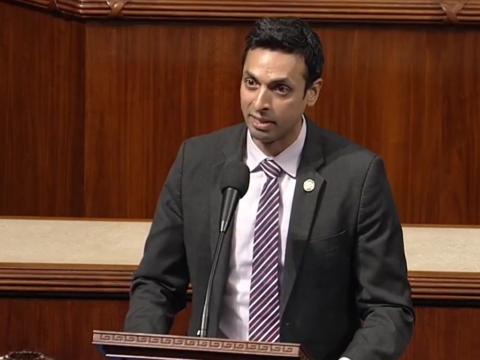
NEW YORK (Diya TV) — New York State Assemblymember Jenifer Rajkumar lost her bid for a fourth term on June 23, defeated by democratic socialist challenger David Orkin in the Democratic primary for Queens’ 38th Assembly District. With more than 94 percent of votes counted, Orkin took 58.8 percent to Rajkumar’s 40.9 percent — a decisive margin in a race that had been expected to be competitive. Rajkumar, the first South Asian woman and first Hindu ever elected to New York State office, had represented the district’s mix of South Asian, immigrant, and working-class neighborhoods since 2021.
During her time in office, Rajkumar built a profile as a moderate Democrat with deep roots in the South Asian diaspora. She positioned herself as a bridge-builder who elevated representation for communities long overlooked in Queens politics, drawing support from a range of Hindu, Sikh, Muslim, and other immigrant voters.

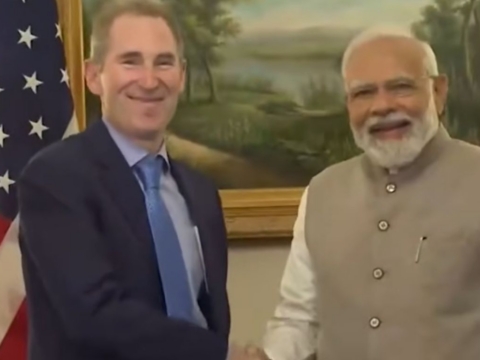
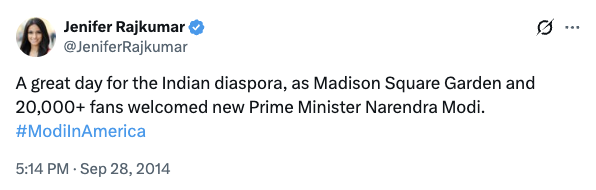
The campaign against her turned unusually personal and ideological. The Working Families Party’s super PAC ran a series of digital ads that directly tied Rajkumar to right-wing nationalist figures. One ad asked, “Modi’s best friend in Queens?” and spotlighted a 2014 social media post in which Rajkumar celebrated Indian Prime Minister Narendra Modi’s visit to Madison Square Garden. Another featured photos of Donald Trump, Modi, and Israeli Prime Minister Benjamin Netanyahu under the headline “Jenifer Works For Them,” citing more than $100,000 in donations from associated donors.

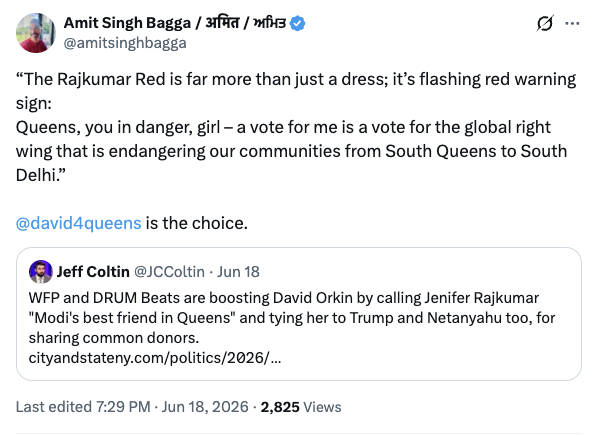
Progressive strategist Amit Singh Bagga, who advised on the effort, delivered one of the campaign’s harshest lines. Referencing Rajkumar’s signature red outfits, he wrote on X: “The Rajkumar Red is far more than just a dress; it’s flashing red warning sign: Queens, you in danger, girl — a vote for me is a vote for the global right wing that is endangering our communities from South Queens to South Delhi.”
The ads were funded through a Working Families Party independent expenditure committee and coordinated with input from South Asian advocacy group DRUM Beats. Critics argued that Rajkumar’s donor base and public associations placed her too close to networks they viewed as aligned with Hindu nationalism and conservative foreign policy.
Rajkumar’s campaign responded aggressively. Spokesperson Arvind Sooknanan called the ads “a product of desperation, hate, and religious bigotry,” arguing that the attacks were targeting Rajkumar because she is the first Hindu elected to state office in New York. Rajkumar herself posted on X that the “DSA Hate Machine” was spending the final days of the race “promoting racism and religious bigotry.”
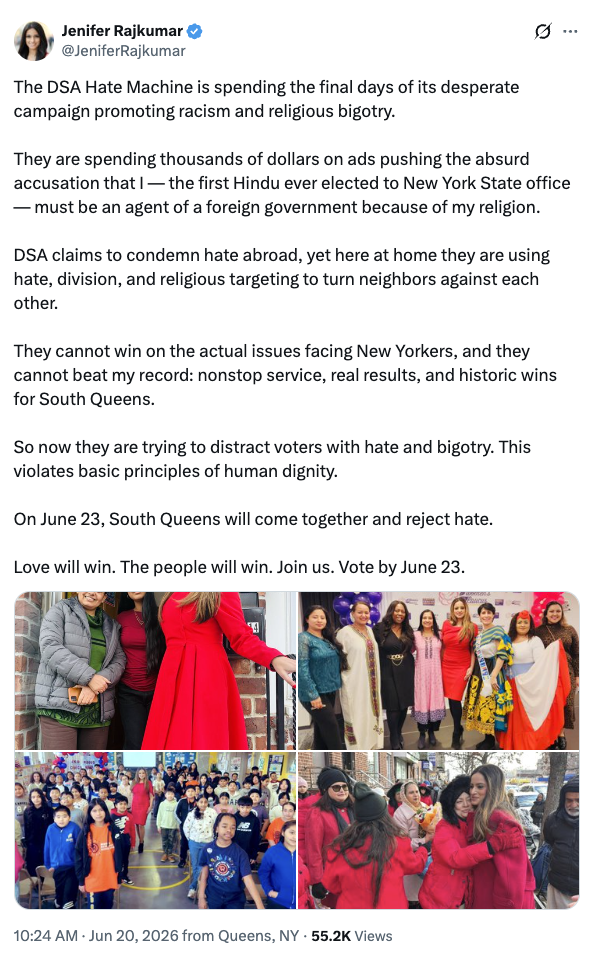
The Hindu American Foundation went further, condemning the ad campaign on X as “a shocking display of naked anti-Hindu hate & racism” and accusing opponents of deploying “dual loyalty slurs” and “discredited Wikipedia talking points.” Supporters saw the barrage as an attempt to weaponize Rajkumar’s identity and community leadership against her.
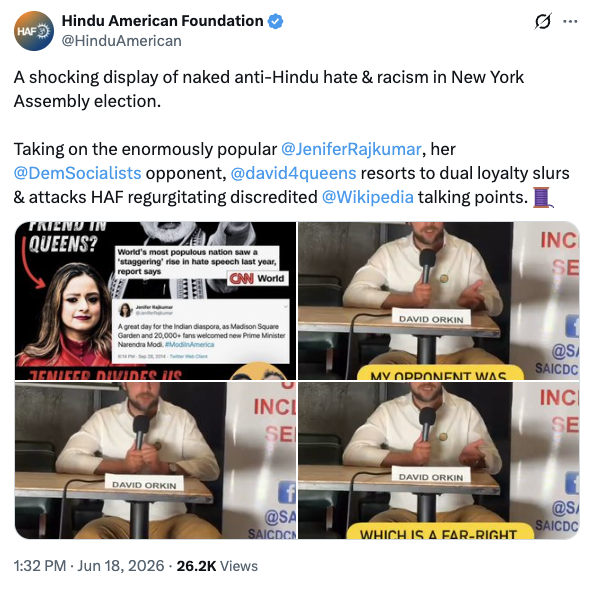
The race exposed a clear divide in South Asian and Hindu American political organizing. Progressive groups such as Hindus for Human Rights Action endorsed Orkin, an immigrant rights attorney and DSA member, and mobilized voters who viewed Rajkumar’s record through the lens of opposition to Hindu nationalism. Orkin’s backers argued the contest was fundamentally about ideology and progressive priorities, not religion.
Rajkumar’s allies countered that much of the opposition crossed from legitimate policy critique into ethnic and religious targeting. They noted that Hindu donors cited in the ads had given broadly across Democratic campaigns, yet Rajkumar appeared to be singled out.
The campaign also featured a legal front. In April, Orkin sued Rajkumar in Queens Supreme Court, alleging her campaign had forged petition signatures to secure ballot access. Rajkumar’s team called the suit meritless and an attempt to bully young South Asian and minority canvassers. A judge later dismissed the case on procedural grounds without ruling on the substance of the fraud claims. The allegations, however, remained visible in the final weeks through social media and news coverage.
Orkin’s victory, alongside other DSA-backed wins in Queens, marked a clear win for the progressive wing in this primary. Rajkumar, who had spent years cultivating support across marginalized communities in the district with particular attention to the South Asian diaspora, found that criticism of her donor ties and political associations had gained significant traction.
Whether the attacks represented fair scrutiny of her record or crossed into inflammatory and identity-based territory remains sharply contested. What is clear is that the race turned into one of the most contentious Assembly primaries in recent Queens history, with both sides trading accusations of bigotry, extremism, and political overreach.