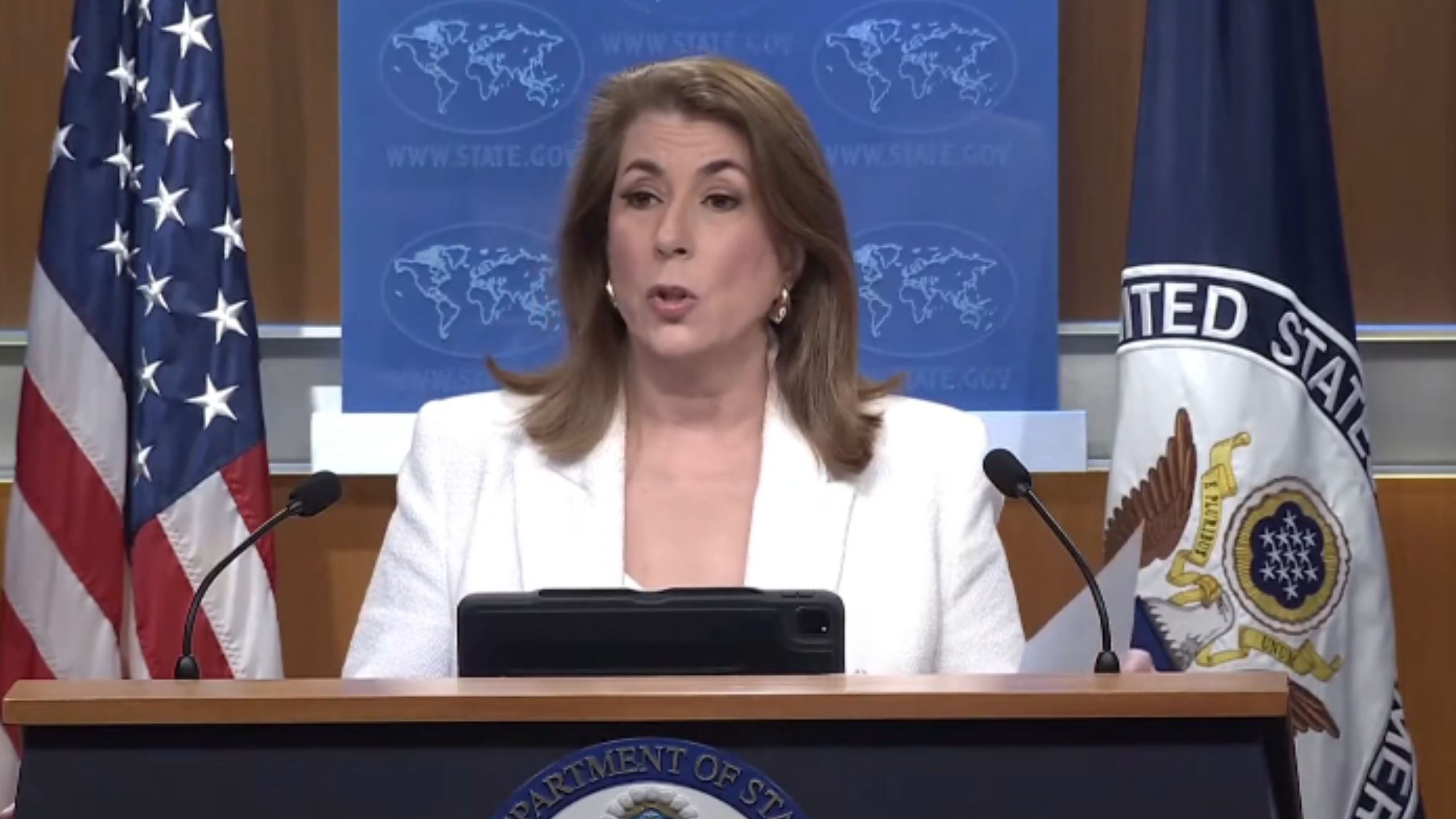
WASHINGTON (Diya TV) — The United States says its relationships with both India and Pakistan remain strong, despite recent tensions and sharp rhetoric from Pakistani military leadership. State Department spokesperson Tammy Bruce stressed that American diplomats remain “committed to both nations” during a press briefing on Wednesday.
Her comments came after Pakistan’s army chief, Gen. Asim Munir, reportedly made nuclear threats against India during a visit to Florida. According to reports, Munir warned that Pakistan could use nuclear weapons against India — and “half the world” — if faced with an existential threat. The remarks drew sharp criticism from U.S. analysts and reignited concerns about stability in South Asia.
Bruce referred to a past crisis between India and Pakistan that she said could have “developed into something quite horrible.” She credited swift diplomatic action by Vice President JD Vance, President Donald Trump, and Secretary of State Marco Rubio for helping to prevent escalation.
“We described the nature of the phone calls and the work we did to stop the attacks, bringing the parties together to create something enduring,” Bruce said. “It’s a very proud moment that Secretary Rubio, Vice President Vance, and our top leaders were involved in preventing a potential catastrophe.”
She made clear that the U.S. approach toward both countries has not shifted. “The relationship with both nations remains unchanged — good,” she said. “American diplomats are committed to both nations.”
The State Department remarks came at a time of evolving U.S. relations with both New Delhi and Islamabad. President Trump recently announced additional tariffs on India over its trade ties with Russia. Meanwhile, Pakistan and the U.S. have reached an agreement to develop oil reserves, signaling closer energy cooperation.
These developments come against the backdrop of Munir’s second visit to the U.S. in less than two months. He met with senior U.S. political and military officials after a private luncheon with Trump in June.
Bruce also highlighted the latest round of U.S.–Pakistan counter-terrorism dialogue, held Tuesday in Islamabad. She said both sides reaffirmed their “shared commitment to combat terrorism in all its forms and manifestations” and discussed ways to improve cooperation against terrorist threats.
“For the region and the world, the U.S. working with both these nations is good news and will promote a future that’s beneficial,” she said.
The talks underscored a longstanding pillar of the U.S.–Pakistan relationship: counter-terrorism cooperation. While Washington and Islamabad have faced tensions over security concerns in the past, both governments publicly pledged to strengthen their partnership on this front.
Gen. Munir’s nuclear threat comments drew immediate backlash from U.S. security experts. Michael Rubin, a former Pentagon analyst, said the rhetoric was “completely unacceptable” and compared it to statements from terrorist groups like ISIS and al-Qaida founder Osama bin Laden.
“Pakistan is raising questions in many people’s minds about whether it can fulfil the responsibilities of being a state,” Rubin said. “The field marshal’s rhetoric is reminiscent of what we’ve heard from the Islamic State.”
Rubin called for tough measures against Islamabad. He suggested stripping Pakistan of its status as a major non-NATO ally, designating it as a state sponsor of terrorism, and declaring Munir persona non grata to prevent him from receiving U.S. visas.
Despite the controversy, Bruce reiterated that Washington’s diplomatic stance toward India and Pakistan remains consistent. She stressed that the U.S. intends to maintain strong ties with both nations while working to reduce tensions and foster regional stability.
Her message emphasized the importance of continued engagement in South Asia, even when challenges arise. “For the region and the world, the U.S. working with both these nations is good news,” she said.
The latest developments suggest that Washington will continue balancing its relationships with New Delhi and Islamabad, even as political and security tensions simmer. With U.S. leaders seeking to prevent future crises, diplomacy remains at the center of American strategy in the region.