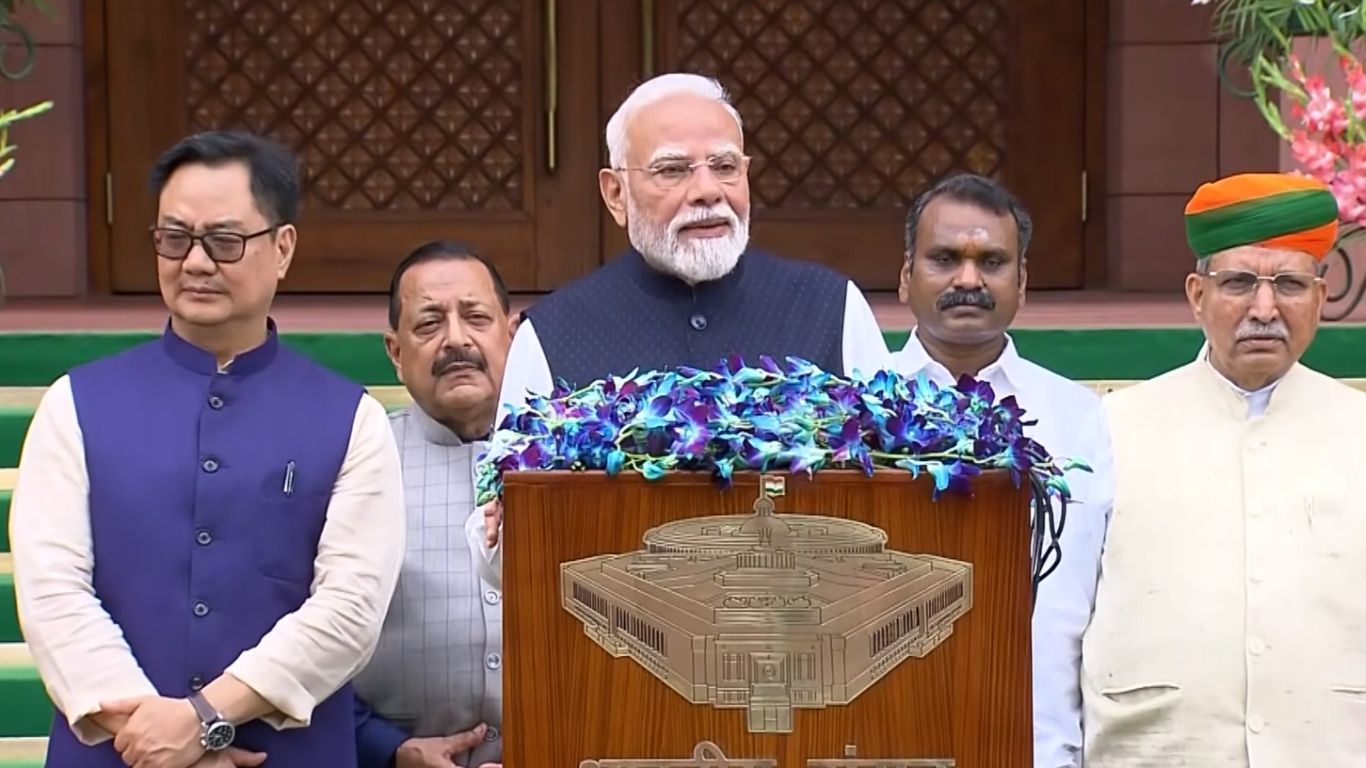
NEW DELHI, India (Diya TV) — Indian Prime Minister Narendra Modi on Thursday announced that the government will establish fast-track courts to handle examination paper leak cases. He said the move aims to deliver quick trials and strict punishment for those who damage the future of students. The announcement comes as public concern over exam integrity continues to grow after the alleged leak of the National Eligibility cum Entrance Test-Undergraduate (NEET-UG) 2026 question paper.
Modi shared the decision in a post on X. “Nothing is more important than the welfare and future of our youth,” Modi wrote. He added that the government will continue taking steps to protect the interests of students across the country. He also warned that those who try to harm the future of young people “will not be spared.”
The NEET-UG examination is one of India’s largest entrance tests for medical colleges. Nearly 2 million students appeared for the exam. However, authorities later canceled the test after allegations of a paper leak surfaced. Officials then conducted a fresh examination to ensure fairness.
Meanwhile, students and activists have continued demonstrations in New Delhi and several other cities. Many protesters have gathered at Jantar Mantar and nearby areas. They have demanded stronger action against those responsible for repeated examination paper leaks. In addition, they have called for greater accountability in the education system. Some protesters have also sought the resignation of Union Education Minister Dharmendra Pradhan.
Although Modi announced the creation of fast-track courts, the government has not yet released details about the plan. Officials have not confirmed how many courts will be established, where they will operate, or when they will begin hearing cases. In India, state governments usually set up fast-track courts in consultation with their respective High Courts.
Earlier this week, Modi reportedly described the alleged NEET-UG paper leak as a “grave sin.” He also said authorities had arrested 13 people in connection with the case and sent them to jail. According to the government, officials acted quickly after receiving information about the leak. They also decided to hold a fresh examination to reduce further disruption to students’ academic plans.
India already has legal provisions to deal with examination fraud. The Public Examinations (Prevention of Unfair Means) Act, 2024, makes question paper leaks and organized cheating criminal offenses. The law aims to strengthen the integrity of public examinations and discourage organized malpractice.
Under the law, people found guilty of using unfair means can face prison terms ranging from three to five years. They may also receive fines of up to 1 million rupees, or about $12,000. Those involved in organized examination crimes can face prison terms between five and 10 years. In addition, they can receive fines of at least 10 million rupees, or about $120,000.
Recently, the Supreme Court heard a public interest litigation seeking a standard operating procedure for investigating examination paper leaks. The petition also requested time-bound investigations and fast-track trials for such offenses. However, the court expressed reservations about the broad nature of the requests. It later postponed the matter for another week.
For now, the government’s latest announcement signals another effort to strengthen public confidence in India’s examination system. Students across the country continue to wait for more details about the proposed fast-track courts.