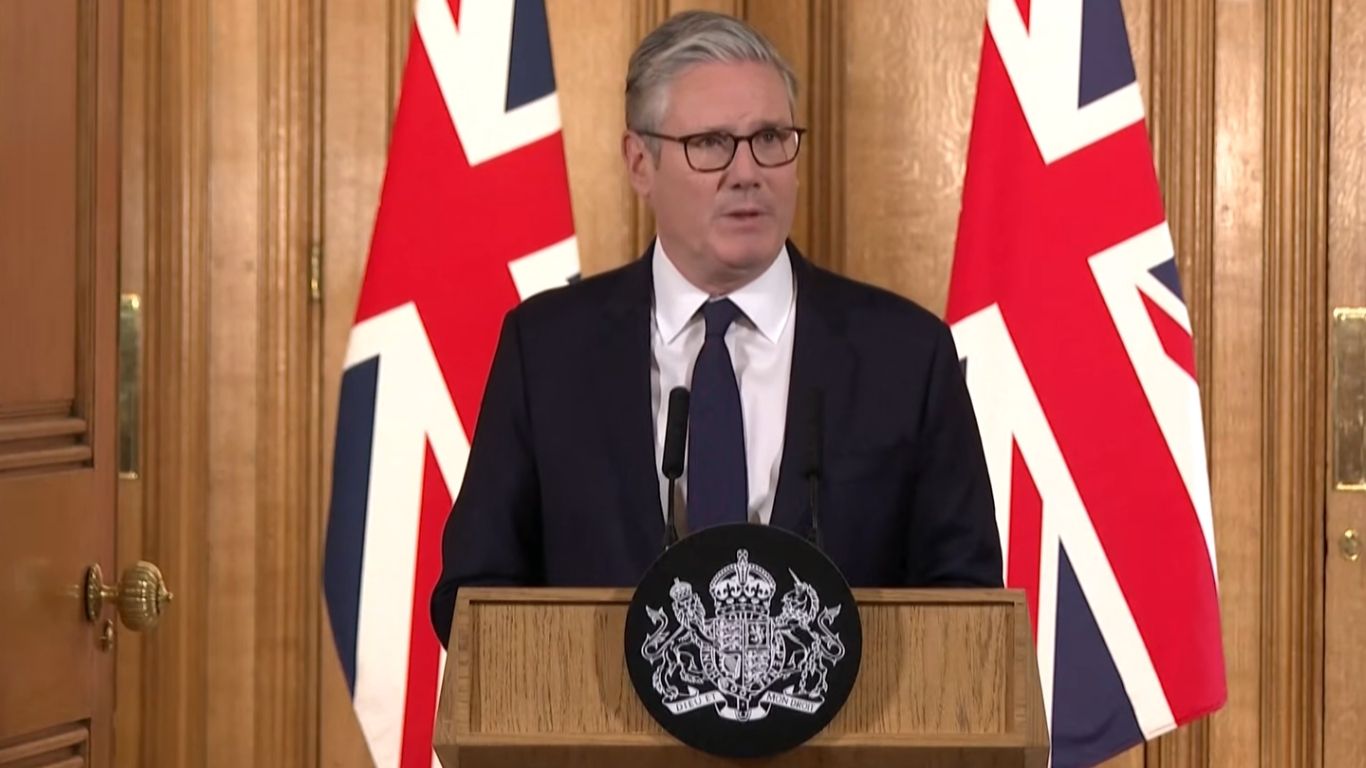
LONDON (Diya TV) — Britain will ban children under 16 from using major social media platforms, including TikTok, Snapchat, and YouTube, as part of a sweeping new online safety plan aimed at protecting minors from harmful content and excessive screen time. Prime Minister Keir Starmer announced the policy Monday, saying the government will hold tech companies responsible for enforcing the age limit.
The United Kingdom says the social media ban for under-16s will take effect early next year. Officials say the move targets platforms such as Instagram, Facebook, X, Snapchat, TikTok, and YouTube, while exempting services like YouTube Kids and messaging apps including WhatsApp and Signal. The government says it will fine companies that fail to take “reasonable steps” to block underage users.
Starmer said the decision responds to growing concerns from parents about children’s mental health and screen use. He said social media platforms often expose young users to harmful content and addictive algorithms. He argued the state must act when voluntary safeguards fail.
“Every parent can see it with their own eyes. Social media is making children unhappy,” Starmer said. He added that teens often find ways around rules but said enforcement remains possible if platforms comply with verification requirements.
The policy also expands restrictions beyond social networking apps. The government plans to restrict AI chatbots that simulate romantic or sexual relationships for users under 18. Officials are also considering additional tools such as nighttime usage limits and forced breaks from endless scrolling features.
The UK joins a growing international push to regulate teen access to social media. Countries including Australia, Canada, Brazil, and Indonesia have introduced or proposed similar age-based restrictions. France, Spain, Denmark, Thailand, and South Korea are also reviewing policies to limit children’s exposure to social platforms.
Australia became the first country to approve a full ban on social media accounts for users under 16. The UK government says it plans to follow a similar enforcement model, placing responsibility on platforms rather than parents or children.
Major technology companies have pushed back against the policy. YouTube, owned by Google, and Meta, the parent company of Facebook and Instagram, warned that strict bans could create new risks for children.
A YouTube spokesperson said blanket restrictions may push young users toward unregulated and less safe online spaces. Meta said its platforms already use teen safety features and account restrictions, arguing that outright bans could isolate teens from supportive online communities.
Meta said, “Like others, we don’t think bans will achieve this goal.”
Experts also raised concerns about enforcement. Critics argue that age verification systems can be bypassed and may not fully prevent underage access. Some researchers say stricter rules may simply shift children toward lesser-known platforms with fewer protections.
The government says enforcement will focus on technology companies, not children or parents. Platforms that fail to comply could face multimillion-dollar fines. Officials believe stronger legal pressure will force companies to improve age verification systems.
However, some experts question whether a full ban can work in practice. Jon Crowcroft, a professor at the University of Cambridge, said determined users can likely bypass restrictions. He also warned that enforcement could be technically difficult at scale.
Privacy advocates also raised concerns about the collection of sensitive data during age verification checks. Groups such as the Open Rights Group warned that stronger enforcement tools could increase risks to user privacy.
The UK government says more than 90% of respondents in a public consultation supported stricter age controls for social media use. Some parents and campaigners welcomed the decision, saying it could reduce exposure to harmful content. Others, including child safety researchers, argue the policy does not address the deeper issue of algorithm-driven content that can promote harmful material even for older users.
Despite criticism, Starmer defended the policy and said global leaders increasingly agree that governments must protect children online. He is expected to discuss the issue with international leaders at upcoming global meetings.