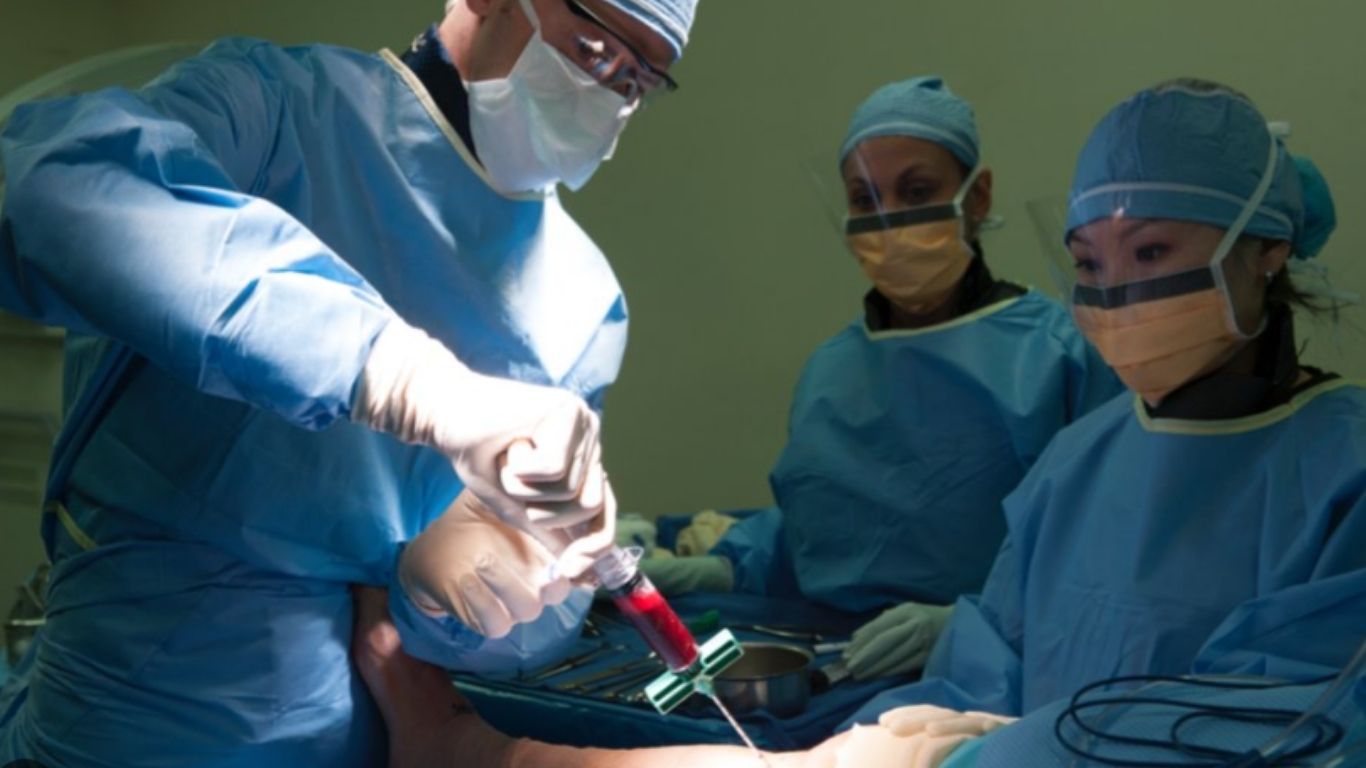
BETHESDA, Md. (Diya TV) — An Indian American Army surgeon has helped develop a groundbreaking way to remove certain brain tumors without opening the skull. The new technique allows doctors to reach tumors through the nose. As a result, many patients can recover faster and avoid more invasive surgery.
Maj. Jagatkumar Patel worked with Army neurosurgeon Lt. Col. Charles Miller to create the innovative procedure. The Pentagon said the technique offers a safer option for patients whose tumors are in the right location and size. Moreover, it reduces the need for traditional skull surgery in many cases.
Patel said doctors once relied on open surgery for most tumors at the base of the skull. That approach often required a long recovery and carried greater risks. However, advances in technology have changed how surgeons treat these cases.
“Today, if a tumor is the appropriate size and location, open surgery just isn’t necessary,” Patel said. “Through the nose, we get the best access and the best chance of complete removal.”
The team recently used the technique to treat Marine Staff Sgt. Andy Archer. He had lived with severe headaches for 15 years. Later, he also developed vision problems. Doctors ordered an MRI scan, which revealed a tumor measuring 4.4 centimeters. The growth sat near the pituitary gland and pressed against the optic nerve.
Soon afterward, Archer went to Walter Reed Army National Military Medical Center in Bethesda for treatment. Doctors determined that the tumor’s position made him a strong candidate for the minimally invasive procedure.
Patel carefully planned the surgical route through Archer’s nasal passages. He studied the patient’s anatomy and created a clear path to the tumor. Meanwhile, Miller prepared to remove the growth once the team reached the target area.
During the operation, Patel guided an endoscopic camera through the nose. The camera provided a bright, high-definition view of the tumor on a surgical monitor. Because of the close-up images, Miller could carefully separate and remove the tumor while avoiding nearby structures.
Patel said the camera allowed him to move closer whenever Miller needed a better view. That teamwork helped the surgeons complete the delicate operation with greater precision.
Even so, Patel credited Miller for the successful outcome. He said his ability to guide the camera only mattered because Miller had the expertise to remove the tumor safely.
“It is a true team effort,” Patel said.
The results quickly showed the benefits of the new approach. Just two days after surgery, Archer displayed no visible signs of major brain surgery. He sat up in the surgical intensive care unit, and his vision had already started to improve. Furthermore, his recovery moved much faster than many patients experience after traditional open procedures.
The Pentagon said the surgery highlights the growing role of minimally invasive techniques in modern medicine. Instead of opening the skull, surgeons can sometimes reach difficult areas through natural pathways. Consequently, patients may face less pain, fewer complications, and shorter hospital stays.
Still, Patel stressed that the procedure does not work for every patient. Doctors must first confirm that the tumor sits in the proper location. They also evaluate its size before choosing this method. Therefore, careful planning remains an important part of every operation.
Patel believes the partnership between ear, nose, and throat specialists and neurosurgeons plays a key role in the procedure’s success. By combining their skills, the surgical team can improve access to difficult areas while protecting nearby nerves and tissues.
“I don’t think anyone else in the Defense Health Agency has this kind of team performing these complex skull base surgeries,” Patel said.
Patel added that surgeons must remain careful throughout every case. Although the nasal approach offers many benefits, it requires advanced planning and close coordination. Nevertheless, when the conditions are right, the technique can provide excellent results.