
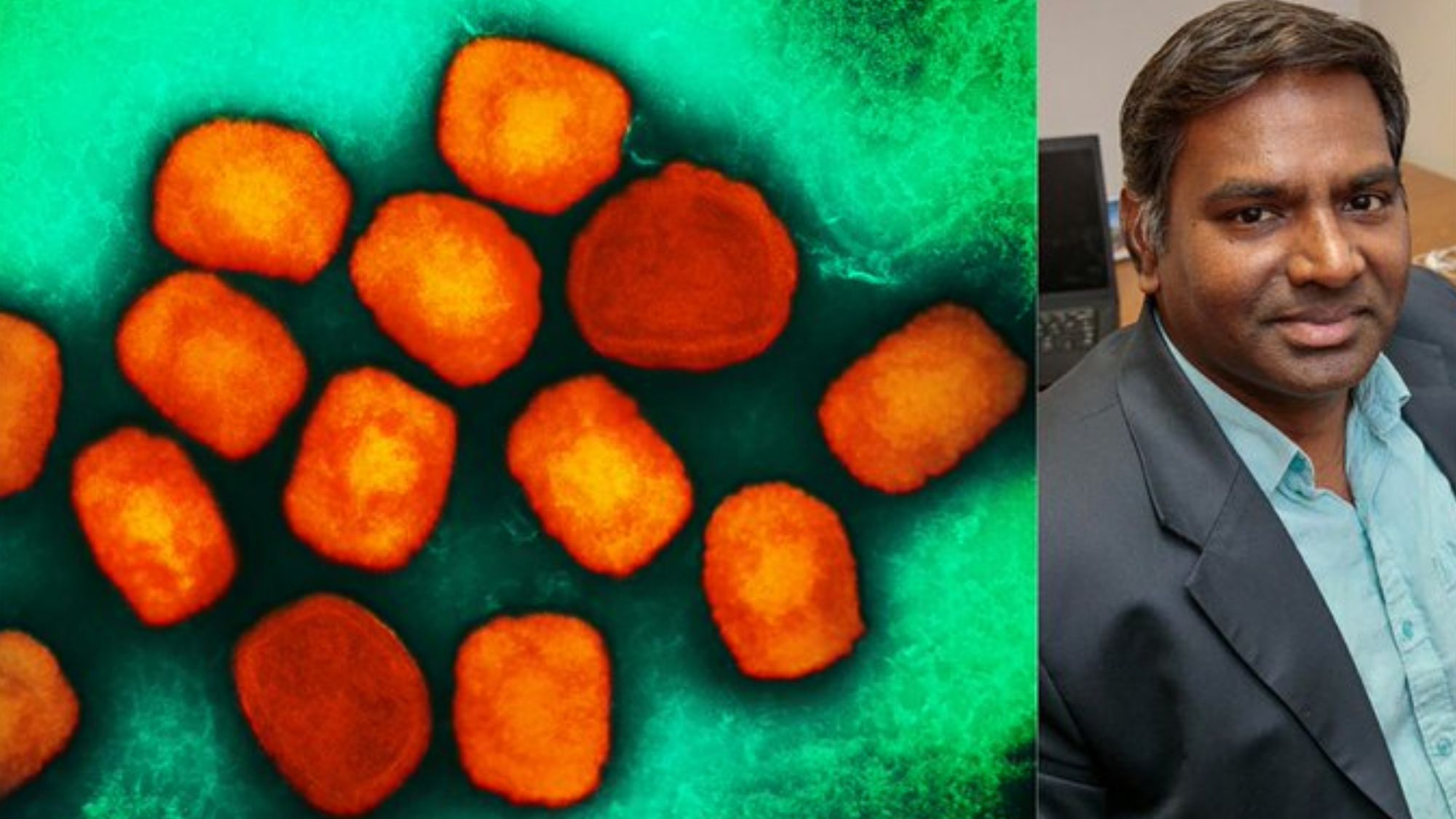
LOS ANGELES (Diya TV) — A UCLA-led research team, headed by Indian-origin scientist Dr. Vaithilingaraja Arumugaswami, has received a $3.5 million federal grant to study mpox, a viral disease once known as monkeypox. The National Institutes of Health (NIH) awarded the five-year grant to support new treatments and improve the scientific understanding of the virus.
The Eli and Edythe Broad Center of Regenerative Medicine and Stem Cell Research at UCLA announced the grant on July 2. Mpox, a rare but serious disease caused by the mpox virus, has seen a rise in cases in recent years. Symptoms often include fever, skin rashes, and swollen lymph nodes. In some cases, the disease can lead to severe complications, especially in people with weakened immune systems.
The NIH grant will help scientists uncover how the virus spreads, how it affects the human body, and how to stop it. The research could lead to faster diagnoses, better vaccines, and more effective antiviral drugs.
“This grant gives us the chance to study the disease in greater detail,” said Dr. Arumugaswami, the project’s lead investigator. “We aim to find better ways to detect and treat mpox before it becomes a larger public health threat.”
Dr. Vaithilingaraja Arumugaswami, originally from Tamil Nadu, India, is a professor of molecular and medical pharmacology at the David Geffen School of Medicine at UCLA. He is known for his work on infectious diseases and viral pathogenesis.
Arumugaswami has led several high-impact studies on emerging viruses, including hepatitis and COVID-19. His team now shifts its focus to mpox, a virus that has sparked global concern in recent years due to outbreaks outside its typical regions in Central and West Africa.
The research project brings together top minds from across the country. Dr. Ashok Kumar of Wayne State University in Michigan serves as co-principal investigator. UCLA’s Dr. Robert Damoiseaux, director of the Molecular Screening Shared Resource, also plays a key role in the study.
Their goal is to understand how the mpox virus interacts with human cells and how it can be stopped with targeted therapies. The team plans to use cutting-edge tools in molecular biology and regenerative medicine to examine how the virus behaves at the cellular level. Their findings could lead to drug screening platforms and early treatment strategies.
Mpox made headlines in 2022 when cases surged in multiple countries, including the United States. Though it is not as easily spread as COVID-19, it raised alarms due to its painful symptoms and potential to spread through close contact. In response, the Centers for Disease Control and Prevention (CDC) and the World Health Organization (WHO) urged countries to monitor new cases and invest in research.
With this new NIH funding, UCLA hopes to take a lead role in global efforts to fight mpox through science and innovation. The grant reflects the growing recognition of the need to study viruses before they cause widespread outbreaks. Experts say that proactive research like this is vital to prevent future pandemics.
“Our team is committed to developing solutions that protect public health,” said Arumugaswami. “We believe our work will help bring effective mpox treatments closer to reality.” As the world continues to face viral threats, projects like this remind us of the power of science and collaboration.