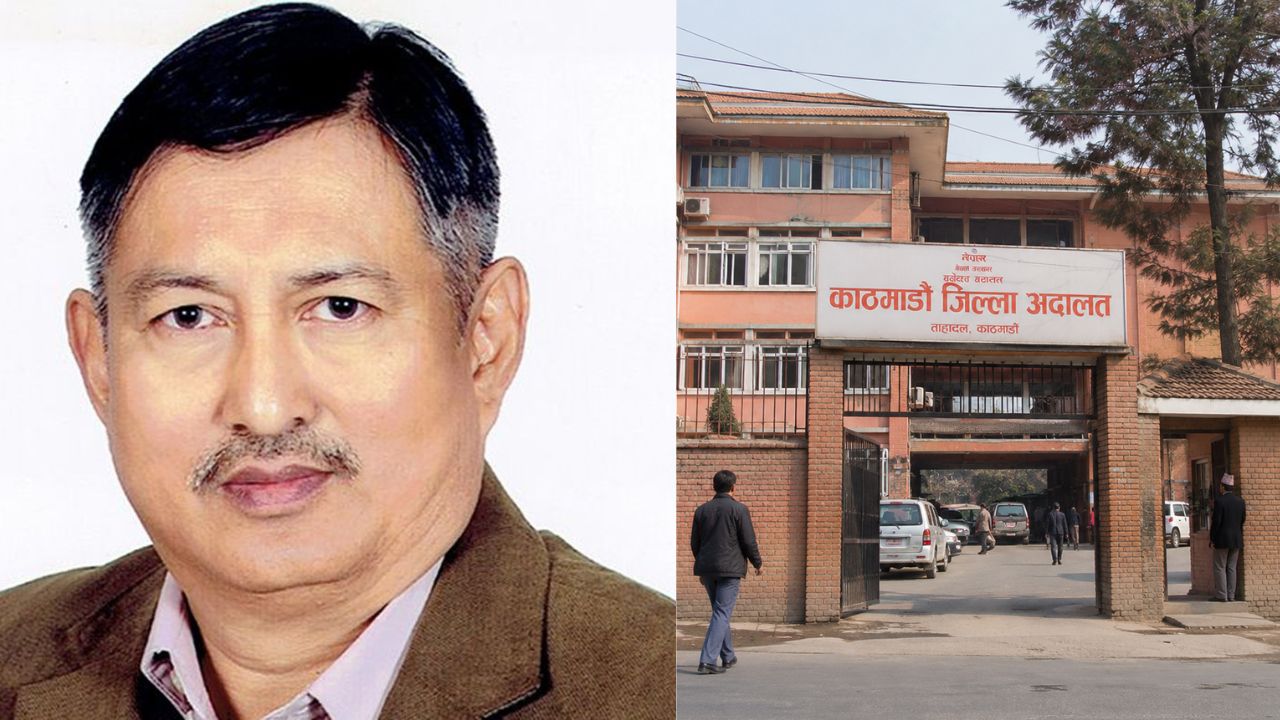
KATHMANDU, Nepal (Diya TV) — The Kathmandu District Court sentenced former Deputy Prime Minister Top Bahadur Rayamajhi to four years in prison and former Home Minister Bal Krishna Khand to two years on Tuesday, in a long-running case involving a scheme that fraudulently passed off Nepali citizens as Bhutanese refugees to secure their resettlement in the United States.
A single bench of Judge Tej Bahadur Khadka sentenced 16 people convicted in the case, delivering verdicts a week after finding them guilty on July 7. Rayamajhi, a leader of the Communist Party of Nepal (Unified Marxist-Leninist), was convicted of fraud, organized crime and offences against the state, and was fined 40,000 Nepali rupees in addition to his prison term. Khand, a Nepali Congress leader, was convicted as an accomplice and fined 20,000 rupees. Former Home Secretary Tek Narayan Pandey and network members Keshav Prasad Dulal, Sanu Bhandari, Sagar Rai, Sandesh Sharma, Govinda Kumar Chaudhary and Ang Tawa Sherpa were each sentenced to four years in prison and fined 40,000 rupees.
Bhutanese refugee rights activist Tek Nath Rizal was sentenced to two years in prison and fined 20,000 rupees. Dr. Indrajit Rai, a former security adviser to then-Home Minister Ram Bahadur Thapa, received a four-year sentence, though it was reduced to three years, two months and 10 days under legal provisions for senior citizens, as he is over 75. Narendra KC, Shamsher Miya, Hari Bhakta Maharjan and Niranjan Kumar Kharel were each sentenced to one year in prison and fined 10,000 rupees. Under Nepali law, defendants convicted on multiple charges serve only the single longest prison term concurrently, though fines for each offence must be paid in full. Of 31 individuals originally charged in the case, the court acquitted seven, ruling prosecutors had failed to prove the charges against them.
According to court documents, the scheme involved forging government records and falsely promising Nepali citizens they would be resettled in the U.S. by passing them off as ethnic Nepali refugees from Bhutan. Prosecutors said the racket illegally collected roughly 288.1 million Nepali rupees from hundreds of victims. The scam is believed to have originated around 2019, when a government task force led by former Home Secretary Bal Krishna Panthi was formed to compile details on unregistered Bhutanese refugees; investigators found the syndicate later tampered with the task force’s official report by adding fabricated appendices listing the names of ordinary Nepali citizens. The court described the scheme as an offence against the state, saying it had undermined the dignity of Nepali citizens and damaged the country’s international reputation.
More than 100,000 ethnic Nepali Lhotshampa fled Bhutan in the early 1990s after the kingdom’s government made national dress compulsory, restricted use of the Nepali language, and stripped many Lhotshampa of citizenship under a “one nation, one people” policy. Many settled in refugee camps in eastern Nepal for years before a third-country resettlement program, largely to the United States, ran from 2007 to 2018. The case came to public attention following investigative reporting published in 2023, after which authorities launched a formal investigation. Rayamajhi remains in custody, while Khand is out on bail; neither was available for comment following the sentencing, according to Reuters.