KUALA LUMPUR, Malaysia (Diya TV) — The United States and India have signed a landmark 10-year defense agreement aimed at strengthening their military partnership and boosting security cooperation in the Indo-Pacific region.
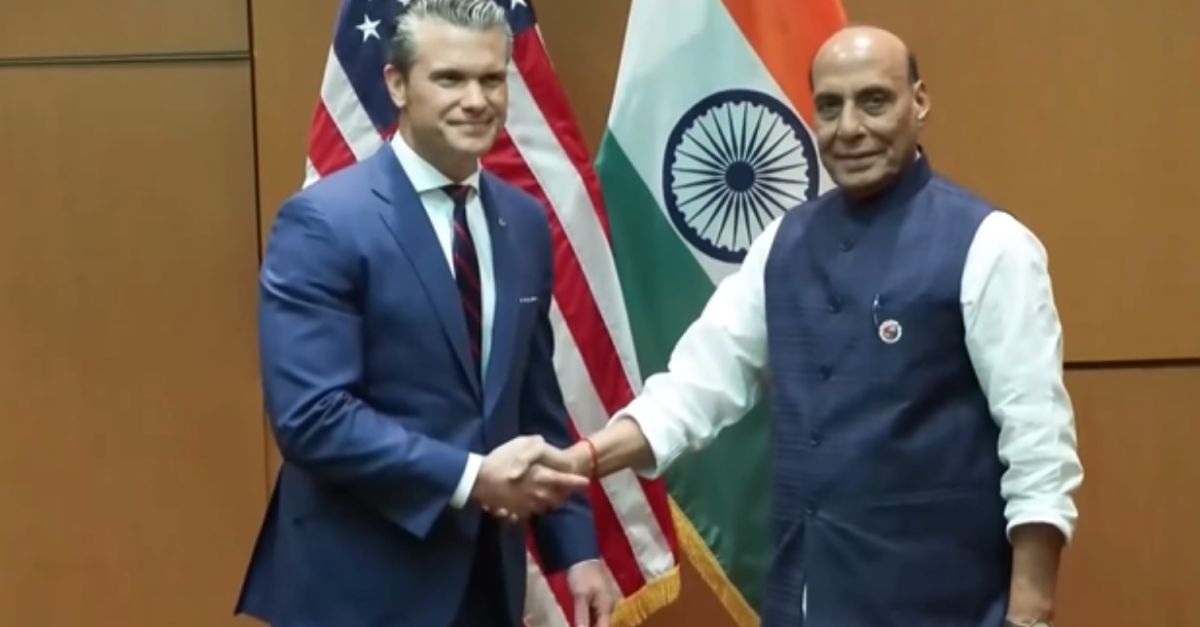
Secretary of War Pete Hegseth and Indian Defense Minister Rajnath Singh signed the Framework for the U.S.-India Major Defense Partnership on October 31 in Kuala Lumpur. The meeting took place on the sidelines of the 12th ASEAN Defense Ministers’ Meeting-Plus (ADMM-Plus).
The new pact marks a major step forward in the growing India-U.S. defense relationship. It will provide long-term policy direction for joint military cooperation, information sharing, and technology transfer between the two countries.
“This Defense Framework will provide policy direction to the entire spectrum of the India-U.S. defense relationship,” Singh said after the signing. “It is a signal of our growing strategic convergence and will herald a new decade of partnership.”
The agreement underscores both nations’ shared interest in maintaining a free, open, and rules-based Indo-Pacific region. Washington and New Delhi see their partnership as a vital counterbalance to China’s growing military influence in the region.
Across administrations, the U.S. has continued to deepen defense cooperation with India. American-made fighter jets, helicopters, missiles, and other advanced systems are increasingly becoming part of India’s arsenal.
Hegseth posted on X the agreement “advances our defense partnership, a cornerstone for regional stability and deterrence. We’re enhancing our coordination, info sharing, and tech cooperation. Our defense ties have never been stronger.”
The 10-year framework builds upon earlier defense agreements between the two nations that focused on military interoperability, joint training, and technology sharing. According to Pramit Pal Chaudhuri of the Eurasia Group think tank, the deal had been expected months earlier but was delayed due to political tensions following statements made by former U.S. President Donald Trump about India’s relations with Pakistan.
“This provides for further potential in all three areas — interoperability, technology access, and defense cooperation,” Chaudhuri said.
India and the U.S. have been steadily expanding their military partnership in recent years. During Indian Prime Minister Narendra Modi’s visit to Washington in February, defense cooperation was a key focus. Trump had pledged to boost arms sales to India by billions of dollars, paving the way for future deals involving advanced aircraft such as the F-35 stealth fighter.
Despite recent progress, the India-U.S. relationship has faced challenges. Trump’s administration imposed steep tariffs—up to 50%—on Indian goods and added penalties for India’s purchase of Russian oil and weapons. Those moves strained ties between the two democracies.
However, the new framework agreement signals that both countries are ready to move forward, prioritizing realpolitik and regional stability over past disputes. India continues to buy arms from Russia, but its dependence is gradually declining as New Delhi diversifies suppliers and strengthens domestic defense production. The U.S., in turn, sees India as a key partner in maintaining balance in the Indo-Pacific.
The latest deal represents a significant milestone in the India-U.S. strategic partnership, which has evolved rapidly over the past decade. The agreement is expected to guide cooperation across various domains, including maritime security, defense manufacturing, cyber defense, and joint military exercises.
Singh emphasized that defense would remain a central pillar of India’s relationship with the U.S. “Our partnership is critical for ensuring a free, open, and rules-based Indo-Pacific region,” he said.
With both nations working to finalize a new trade deal by November, the defense agreement highlights their shared commitment to closer political and economic ties.