
WASHINGTON (Diya TV) — President Donald Trump said Monday that the United States will reimpose steep tariffs on goods from Japan and South Korea starting Aug. 1. The move revives tariff rates first announced in April but paused for negotiations.
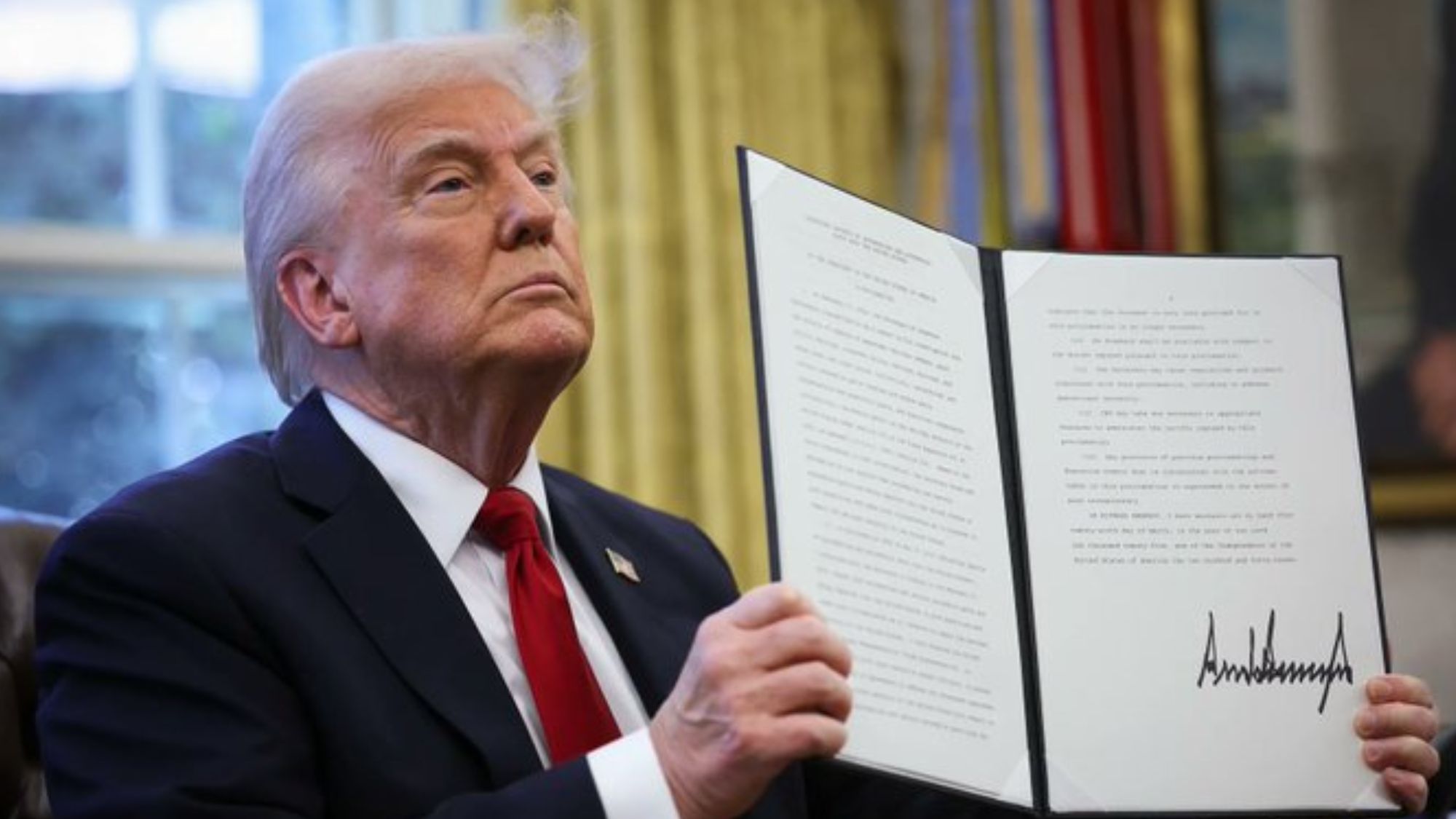
In a series of social media posts, Trump shared signed form letters sent to world leaders, including those from Japan and South Korea. The letters outlined new 25% tariff rates on imports from those countries and warned of penalties for attempts to avoid the duties.
The new action comes as a 90-day pause on the tariffs nears its end. Trump had lowered the rates to 10% in April after global markets reacted sharply. But with limited trade deals finalized during the pause, the White House is returning to its original plan.
White House press secretary Karoline Leavitt said 14 letters would go out Monday, with more expected soon. She also confirmed that Trump will sign an executive order to extend the tariff deadline from July 9 to Aug. 1.
The updated tariffs are part of Trump’s broader “reciprocal” trade push. The administration argues the levies are necessary to balance long-standing trade deficits. In 2024, the U.S. had a $68.5 billion goods deficit with Japan and a $66 billion deficit with South Korea, according to the Office of the United States Trade Representative.
Despite pushback from economists, Trump continues to view trade deficits as a sign that the U.S. is being treated unfairly. His letters state that the 25% tariffs will remain unless those countries eliminate their trade barriers.
“If for any reason you decide to raise your tariffs,” the letters read, “then, whatever the number you choose to raise them by, will be added onto the 25% that we charge.”
The letters also say, “Goods transshipped to evade a higher tariff will be subject to that higher tariff.” Transshipping refers to moving goods through a third country to bypass trade restrictions.
On Wall Street, markets dropped after the letters were released. The Dow Jones Industrial Average fell 447 points, or 1%. The S&P 500 declined 0.8%, and the Nasdaq Composite slipped 0.9%.
Both Japan and South Korea have yet to comment on the new warnings. However, trade analysts expect strong reactions, especially as the tariffs target key sectors such as cars and steel.
Earlier this year, Trump introduced the “Liberation Day” tariffs, a sweeping set of import taxes. Some countries saw duties of up to 40%. After major financial turbulence, the administration agreed to a short-term pause to negotiate.
Since then, the U.S. has announced limited progress. It reached tentative frameworks with the United Kingdom and Vietnam, and an early agreement with China. Yet most of the deals include new tariff rates, and final terms remain unsettled.
In particular, Vietnam agreed to a 20% tariff on its goods sent to the U.S., with a 40% duty on items deemed transshipped. In return, Vietnam would allow U.S. goods to enter tariff-free.
Trump’s multi-tiered trade policy has confused ongoing talks. Auto tariffs, in particular, have become a sticking point in talks with Japan and South Korea.
On Monday, Treasury Secretary Scott Bessent said the White House had received several new offers as the deadline approached.
“My mailbox was full last night with a lot of new proposals,” Bessent told CNBC. “We’ve had a lot of people change their tune.”
While Trump maintains that the tariffs are part of a broader strategy to protect U.S. workers and industries, critics argue the policies raise costs for American consumers and businesses.
The European Union is also in talks with the U.S. to avoid a spike in duties. EU President Ursula von der Leyen spoke with Trump recently and described the conversation as productive. The EU hopes to prevent a 50% tax on cars and a 50% steel tariff from taking effect.
Last week, Trump warned that Japan could face a tariff as high as 35% if no deal is reached before the upcoming deadline. As the clock ticks toward Aug. 1, pressure is mounting on U.S. trade partners to strike new agreements or face steep penalties.


