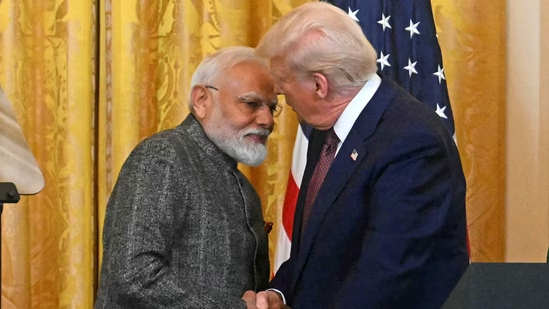
WASHINGTON (Diya TV) — President Donald Trump has reportedly abruptly canceled plans to attend the upcoming Quad Summit in India, signaling a dramatic shift in U.S.–India relations and the unraveling of a once-celebrated rapport with Indian Prime Minister Narendra Modi.
Sources familiar with the matter confirmed that Trump, who had earlier expressed intent to visit India later this year, has now withdrawn from the summit entirely. Neither the U.S. nor Indian governments have issued official statements addressing the sudden reversal, but the fallout appears to be rooted in escalating tensions and a series of diplomatic missteps.
Trump and Modi’s once-warm relationship began to deteriorate following controversial statements from the President, including repeated and unsubstantiated claims that he personally “ended” a military standoff between India and Pakistan. The assertion, reportedly made over 40 times in public since May, was flatly rejected by Indian officials, who emphasized that any de-escalation efforts occurred directly between Indian and Pakistani military leadership without U.S. involvement.
A private call between Trump and Modi on June 17 further strained relations. Modi, attending the G7 Summit in Canada at the time, is said to have firmly rejected Trump’s attempts to claim credit for the ceasefire and dismissed any talk of mediation—reiterating India’s longstanding position that third-party involvement in its conflict with Pakistan is unacceptable.
Despite these clear statements, Trump allegedly pressed on, even referencing rumors that Pakistan might nominate him for a Nobel Peace Prize—an implication that insiders say Modi did not appreciate. The call reportedly ended on a frosty note, marking a turning point in bilateral communications.
The diplomatic frost deepened when Trump later imposed a 25% tariff on Indian oil imports, a move widely seen as punitive. Observers note that India’s procurement of Russian oil was used as a pretext, but the targeted nature of the sanctions suggests a deeper frustration over India’s refusal to align fully with U.S. policy.
Experts have pointed out that if the goal were truly to curb Russian energy revenues, broader sanctions would have followed. Instead, India was singled out—raising questions about whether this was driven more by personal politics than coherent policy.
In the weeks following the call, Trump reportedly attempted to contact Modi multiple times but received no response. Sources familiar with the matter say Modi declined further engagement, signaling a deep personal and diplomatic rift.
The canceled India visit underscores how fragile global partnerships can become when overshadowed by ego, political optics, and miscommunication. While India remains a key player in the Indo-Pacific and a crucial member of the Quad alliance, the recent episode serves as a stark reminder that even strong bilateral ties can be swiftly undermined.
As the Quad Summit approaches, all eyes now turn to whether this diplomatic fissure can be repaired — or if a new chapter of U.S.–India relations will need to be forged from the rubble of a fractured friendship.