WASHINGTON (Diya TV) — United States striker Folarin Balogun will be available for the Americans’ FIFA World Cup Round of 16 match against Belgium after FIFA lifted his one-match suspension. The decision came after U.S. President Donald Trump said he asked FIFA to review the case. However, the move quickly sparked criticism from football officials across Europe and raised fresh questions about fairness during the tournament.
Balogun received a straight red card during the United States’ previous World Cup match against Bosnia and Herzegovina. Referee Raphael Claus dismissed the forward after a challenge on defender Tarik Muharemovic. As a result, Balogun faced an automatic one-match suspension and appeared set to miss Tuesday’s knockout game.
However, FIFA later suspended the ban for 12 months. Therefore, Balogun became eligible to play against Belgium. The decision has created debate because red-card suspensions rarely change during a World Cup.
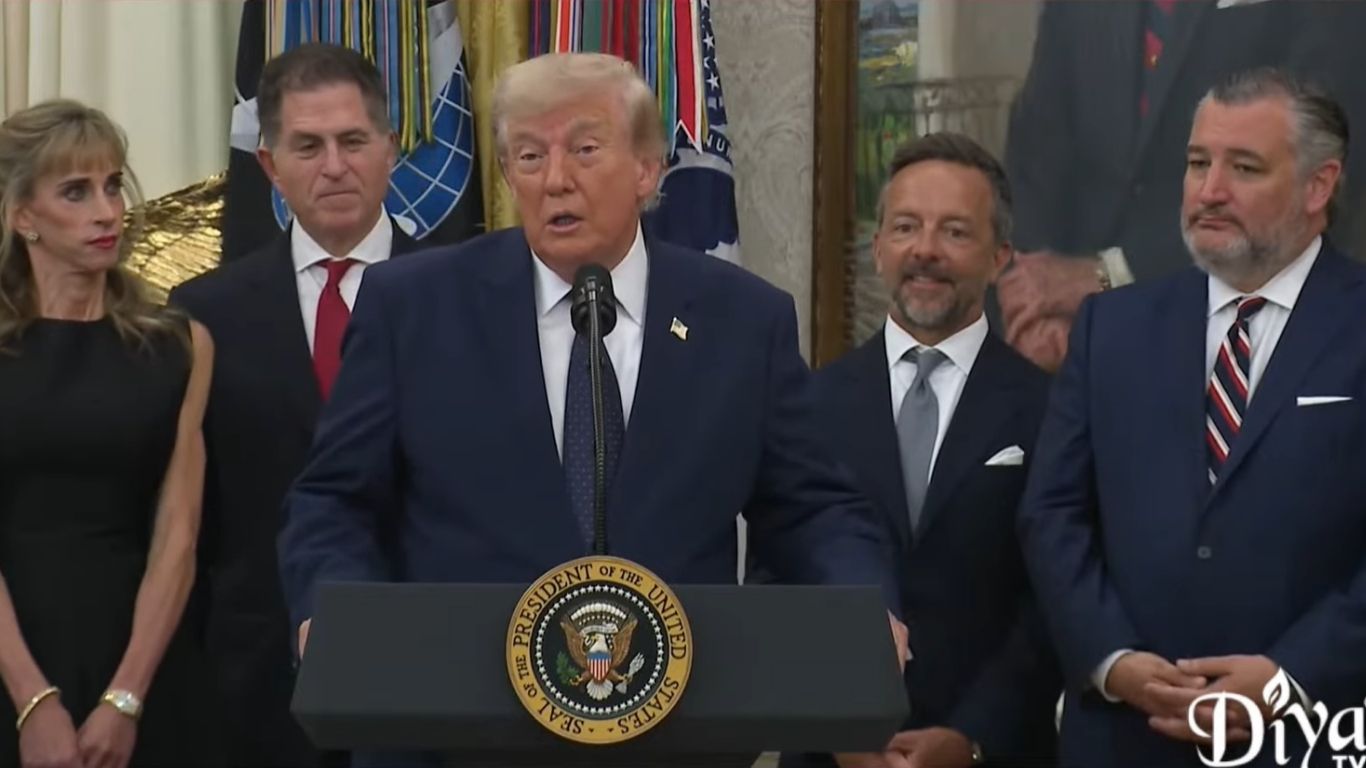
Trump confirmed on Monday that he had spoken with FIFA President Gianni Infantino about the incident. Speaking at the White House, Trump said he believed the challenge did not deserve a red card. He described the incident as an accidental collision between two players rather than a serious foul.
“I thought it was two great athletes who crashed into each other and got entangled,” Trump told reporters.
Trump also said he believed the suspension would have unfairly affected the United States during an important match. At the same time, he stressed that he did not order FIFA to change its ruling. Instead, he said he simply asked for a review.
“I can’t tell them what to do,” Trump said. “I don’t believe they made the decision; I believe it was the commission that made the decision. And it was the right decision.”
In addition, Trump strongly criticized Brazilian referee Raphael Claus. He called the red card a “horrible” decision and described the official as “a little bit suspect.”
FIFA declined to provide further details about the case. The governing body told BBC Sport it had “nothing more” to add “for now” regarding Trump’s comments, Belgium’s objections, or the appeal process.
Meanwhile, the decision drew a sharp response from the Royal Belgian Football Association. The federation said it was “astonished” by FIFA’s ruling. It also said it would continue to defend ethical standards, fair competition, and the interests of football.
The controversy also reached England’s national team camp. England head coach Thomas Tuchel questioned how similar decisions might affect future disciplinary cases.
“Where to draw the line is the question that I ask,” Tuchel said. “I have no answer to that.”
He also wondered whether teams should challenge yellow cards or other referee decisions if FIFA becomes willing to review disciplinary rulings during major tournaments. According to Tuchel, the issue creates uncertainty because no clear standard exists for future appeals.
UEFA also expressed concern over the ruling. According to BBC Sport, European football’s governing body said overturning a suspension during the World Cup had “crossed a line.” UEFA believes such actions could weaken confidence in disciplinary decisions during international competitions.
The Balogun case also stands out because similar reversals remain extremely rare in World Cup history. According to BBC Sport, this marks only the second known instance in which a player avoided serving the next-match suspension after receiving a red card during the tournament.
The only previous example involved Brazil’s Garrincha at the 1962 World Cup. That case happened before FIFA introduced automatic suspension rules. Reports at the time also included allegations of political interference.
Now, attention shifts back to the field as the United States prepares to face Belgium with Balogun available for selection. Still, the debate surrounding FIFA’s decision continues to grow. Supporters argue the review corrected an unfair punishment. Critics, however, believe the move could set a difficult precedent for future World Cup tournaments.