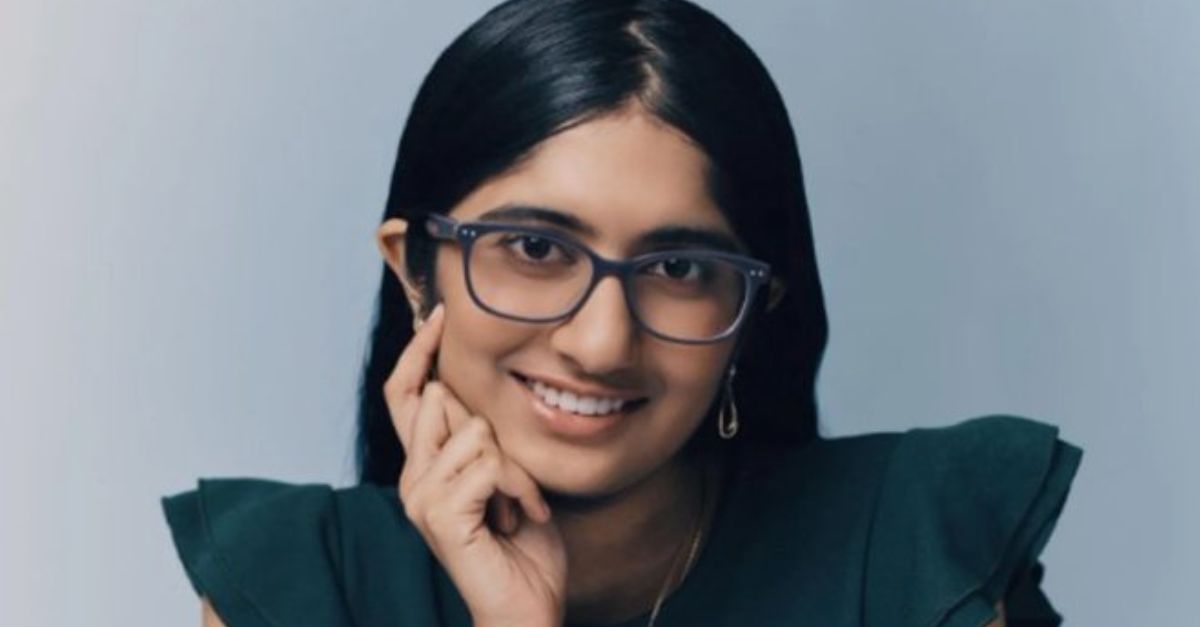
FRISCO, Texas (Diya TV) — TIME magazine has named Indian American teenager Tejasvi Manoj as its 2025 Kid of the Year, honoring her mission to fight cybercrime targeting senior citizens. The 17-year-old from Frisco, Texas, created Shield Seniors, a website and soon-to-launch mobile app that helps older adults learn digital safety, detect fraud, and report scams.
Manoj’s journey began in February 2024 after her 85-year-old grandfather nearly fell victim to a phishing scam. A fake email claimed to be from a distant relative seeking urgent money. Her father intervened in time, but the incident left a lasting impact.
“I realized how easily even smart and experienced adults could be tricked,” Manoj told TIME. “I wanted to use my skills to stop this from happening to other families.”
The experience pushed her to study online fraud patterns and explore how cybercriminals target older adults. That research became the foundation for Shield Seniors.
Shield Seniors is designed with seniors in mind. Its goal is to be simple, accessible, and effective. The platform has four main features. The “Learn” section explains online safety in clear language, covering topics like secure passwords and spotting fake charities. The “Ask” tool uses an AI-powered chatbot that gives answers in just two sentences to avoid confusion. The “Analyze” tool scans suspicious emails or texts with 95 percent accuracy and explains the results. The “Report” section connects users directly to agencies like the FBI and AARP to file complaints.
“Our goal is to help older adults feel independent online,” Manoj said. “We want them to navigate the internet with confidence and dignity.”
Manoj’s work addresses a growing national crisis. According to the FBI’s Internet Crime Complaint Center, Americans over 60 lost nearly $5 billion to cyber fraud in 2024, a 32 percent increase from the year before. Losses over $100,000 rose sevenfold in just four years, showing how vulnerable retirees have become.
Experts warn that seniors are frequent targets because they may be less familiar with digital tools. Fraudsters use tactics like fake investment schemes, tech support calls, and phishing emails to steal money and personal data. Shield Seniors provides both education and prevention to reduce those risks.
Manoj’s project has already earned recognition. In 2024, she received an honorable mention in the Congressional App Challenge. In 2025, she delivered a TEDx talk in Plano, Texas, highlighting how to close the digital divide for seniors. Local retirement homes and senior centers have partnered with her to host workshops on safe online practices.
Her dedication extends beyond technology. She is a high school student, a violinist, and one of the few young women to achieve the rank of Eagle Scout. She also tutors refugees and serves on the North Texas Food Bank Young Advocates Council.
“Community service has always been important to me,” Manoj said. “I feel lucky in my own life, and I want others to feel the same way.”
Shield Seniors is still in private preview, but Manoj is working to expand its reach. She is raising funds to move the platform from a free AI engine to a commercial system that can support millions of users. She also plans to launch more in-person workshops at assisted-living facilities to teach seniors practical online safety skills.
Mentorship has played a key role in her journey. Her parents, both software engineers, supported her work. She also credits industry mentor Aarathi Rajamanickam, along with programs like Girls Who Code and Cyber-Patriot, for giving her the skills to create robust cybersecurity tools. Looking ahead, Manoj hopes to study computer science in college, focusing on artificial intelligence and cybersecurity. Her dream is to expand Shield Seniors into a global platform.
By naming her Kid of the Year, TIME places Manoj alongside past honorees such as scientist Gitanjali Rao and activist Orion Jean. The recognition celebrates her blend of technical innovation and empathy. Her message is simple but powerful: seniors deserve safety, independence, and dignity in the digital age.
“Success will be when older adults see themselves not as victims, but as empowered users,” Manoj said.