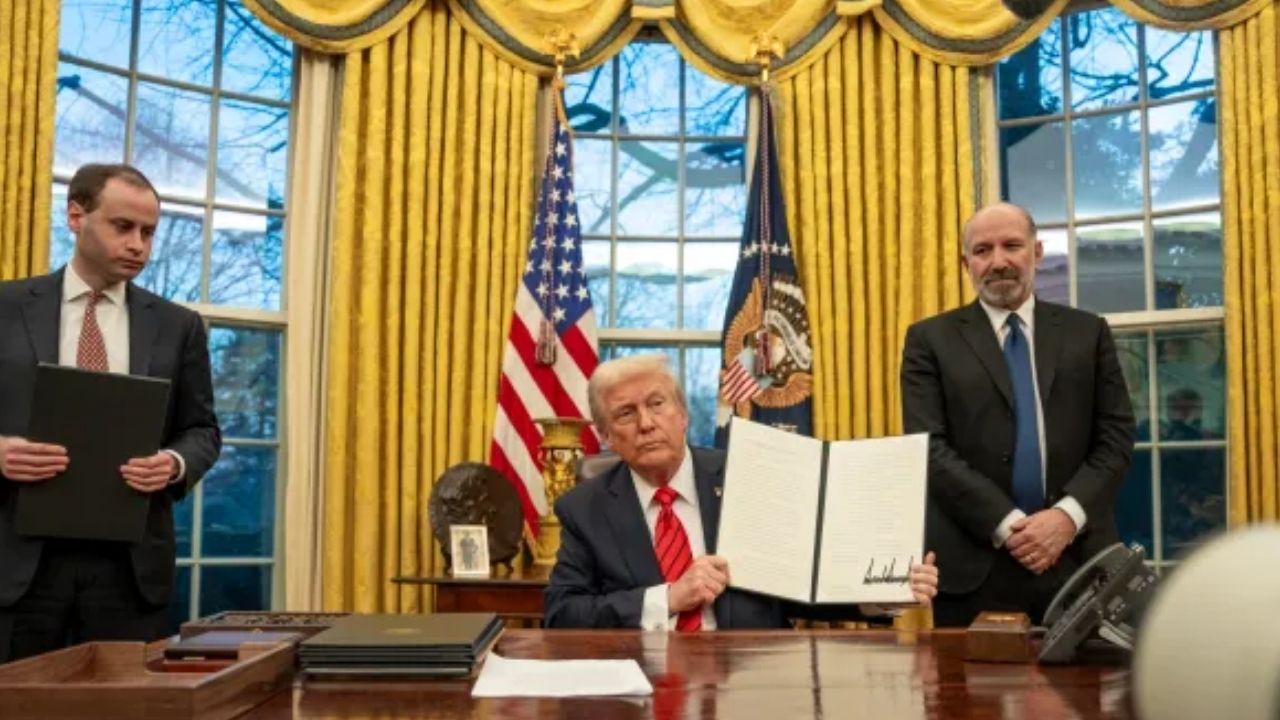
GREENBELT, Md. (Diya TV) — A federal judge on Friday refused to immediately block President Donald Trump’s latest executive order targeting birthright citizenship.
U.S. District Judge Deborah Boardman said immigrant rights groups had not yet formally challenged Trump’s 2026 order in their existing lawsuit. As a result, she said she could not block the order at this stage.
Still, Boardman moved quickly to give the groups a path to challenge the new policy. She allowed them to add the 2026 order to their complaint. She also set a fast schedule for arguments in the case.
The decision comes as Trump again seeks to limit birthright citizenship in the United States. The issue has already reached the U.S. Supreme Court, which rejected Trump’s earlier attempt to restrict the constitutional right.
Boardman sharply questioned the legal basis of Trump’s latest order during Friday’s hearing. She said the order appears to remove exceptions to birthright citizenship through executive action.
The judge described that approach as unprecedented. She also questioned whether the Supreme Court’s recent ruling supports Trump’s new policy.
Boardman focused on the court’s June 30 decision. The Supreme Court rejected Trump’s earlier effort to deny automatic citizenship to some children born in the United States.
The earlier order targeted children whose parents lacked U.S. citizenship or lawful permanent residency. Lawful permanent residents, commonly known as green card holders, can live and work permanently in the United States.
The Supreme Court found that Trump’s initial effort violated the citizenship clause of the 14th Amendment. That amendment generally grants U.S. citizenship to people born in the United States. The Supreme Court ruling now plays a major role in the new legal battle. Trump’s latest order seeks to limit birthright citizenship despite the court’s earlier decision.
During Friday’s hearing, Boardman questioned whether the Supreme Court ruling created any legal exception for so-called birth tourism.
Birth tourism refers to cases in which foreign nationals travel to the United States to give birth. Some seek U.S. citizenship for their children under the existing birthright citizenship system.
Boardman questioned where the Supreme Court’s ruling mentioned such an exception. Her comments suggested that she sees important legal questions in Trump’s latest order.
However, the judge did not rule on whether the new executive order violates the Constitution. Instead, she said the court needs a properly updated lawsuit before it can consider that question.
Immigrant rights advocates had previously won a ruling from Boardman against Trump’s first birthright citizenship order.
Now, the groups can add Trump’s 2026 executive order to their existing complaint. They are expected to argue that the new policy conflicts with the 14th Amendment and the Supreme Court’s recent ruling.
Meanwhile, the Trump administration continues to defend its effort to change birthright citizenship rules.