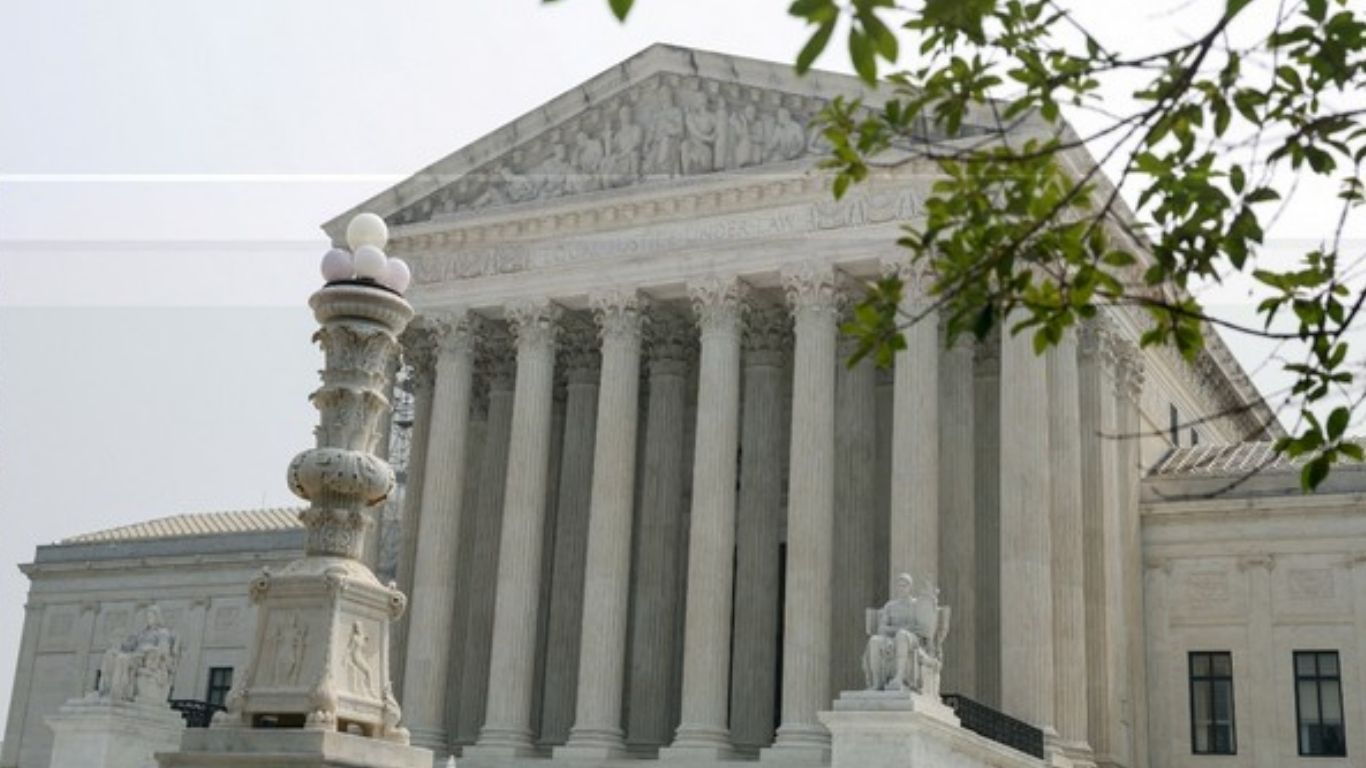
WASHINGTON (Diya TV) — The Supreme Court on Wednesday issued a major ruling that limits the use of the Voting Rights Act in challenges to congressional maps. The 6-3 decision raises the legal bar for claims that district lines dilute the voting power of racial minorities. The ruling centers on Louisiana’s congressional map and could have wide effects across the South and beyond. Legal experts say it may reshape how courts handle redistricting disputes ahead of future elections.
Justice Samuel Alito wrote the majority opinion. He said states violate the Voting Rights Act only when there is strong evidence of intentional discrimination based on race. The decision shifts focus away from the effects of a map and toward the intent behind it. For decades, Section 2 of the Voting Rights Act blocked election practices that weakened minority voting strength. Courts often looked at outcomes rather than just intent. This ruling narrows that approach. Alito wrote that the Constitution rarely allows the government to treat people differently based on race. He added that drawing districts with race as a primary factor can violate the equal protection clause.
The case challenged Louisiana’s congressional map drawn after the 2020 census. The state has six districts. Only one district has a Black majority, even though more than one-third of the voting-age population is Black. Lower courts ruled that the map likely violated the Voting Rights Act. They ordered the state to create a second majority-Black district. Lawmakers would have needed to consider race to do that. The Supreme Court reversed those decisions. The majority said that creating districts mainly based on race can harm the rights of other voters. The court found that the lower courts relied too heavily on race in their rulings.
The three liberal justices dissented. Justice Elena Kagan read her dissent from the bench, a sign of strong disagreement. Kagan said the ruling weakens Section 2 to the point that it may no longer protect minority voters. She warned that states could now redraw maps in ways that reduce minority representation without clear proof of intent.
“If other states follow Louisiana’s lead,” she wrote, “minority voters will lose equal opportunity to elect candidates of their choice.”
The decision drew sharp reactions from political leaders and civil rights groups. The White House praised the ruling. A spokesperson said the decision protects civil rights and ensures that race does not decide district lines. Civil rights groups strongly criticized the outcome. The NAACP called the ruling a major setback. The group said it could allow politicians to weaken the voices of minority communities. NAACP President Derrick Johnson said the decision threatens decades of progress. He urged voters to respond through participation in the upcoming elections.
The ruling may affect more than a dozen states, many in the South. Several of these states have court-ordered majority-minority districts. Lawmakers in those states may now try to redraw maps. Experts say the decision could lead to fewer majority-minority districts. That shift could change political representation in Congress. Many of these districts currently elect Democrats. It remains unclear how quickly states will act. Some may wait until after the next election cycle. Others could move sooner if courts allow changes.
Legal challenges to election maps will likely continue. However, plaintiffs now face a tougher standard. They must show clear proof that lawmakers acted with racial intent. This change may limit the number of successful Voting Rights Act claims. It also places more weight on constitutional arguments rather than statutory ones. The ruling marks another step in the court’s ongoing reshaping of voting rights law. Observers expect more cases to test the boundaries of this decision in the coming years.
For now, the decision stands as a significant shift in how courts view race and redistricting. It sets the stage for new legal battles over fair representation and voting rights in the United States.