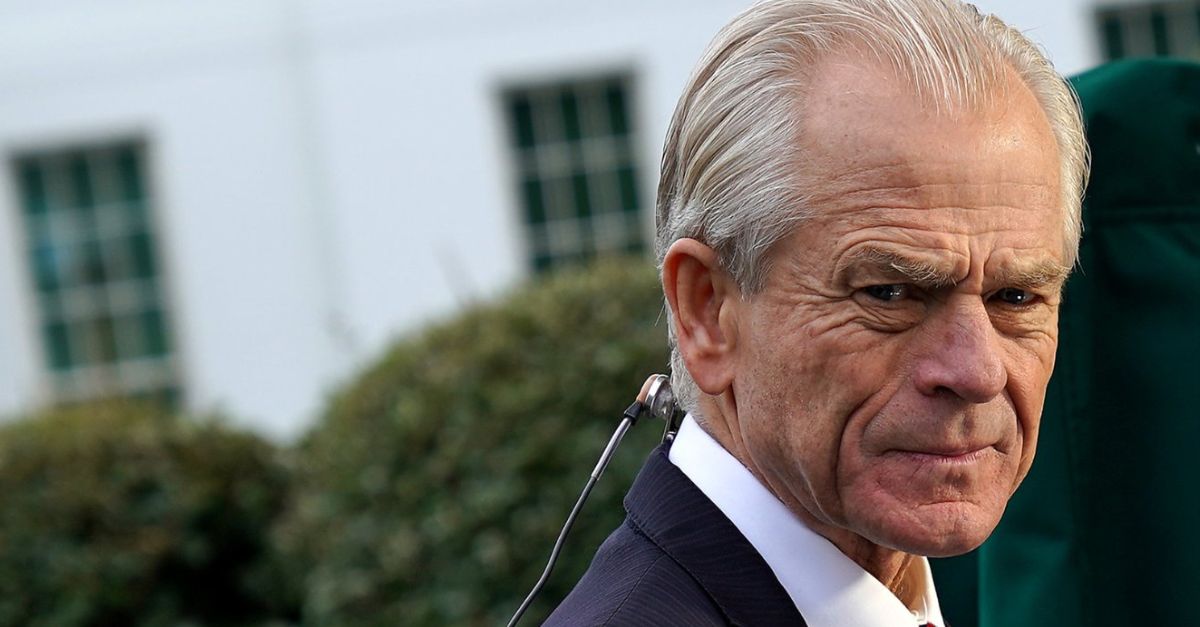
WASHINGTON (Diya TV) — Controversial White House trade adviser Peter Navarro warned that the fate of the United States rests with the Supreme Court as it prepares to rule on President Donald Trump’s use of a 1977 law to impose sweeping tariffs.
Navarro called the pending case one of the most important economic battles in U.S. history. He said a lower court ruling against the president could end America’s ability to protect its economy through tariffs.
The Supreme Court is expected to decide whether Trump acted within his powers under the International Emergency Economic Powers Act of 1977. The law gives presidents authority to act in national emergencies, but its scope has faced legal challenges.
A divided U.S. Court of Appeals for the Federal Circuit ruled 7-4 last week that most of Trump’s tariffs are unlawful. The court said the president went too far in applying the emergency law to impose duties on several major trading partners.
The ruling struck at the heart of Trump’s trade policy. His administration has leaned on tariffs as a tool to reshape global trade and pressure foreign governments. The appeals court allowed the tariffs to remain in place until October 14 while the administration appeals to the Supreme Court.
Navarro said the outcome will define the future of the U.S. economy. Speaking to reporters outside the White House, he framed the issue in stark terms.
“This case is arguably the single most important economic case that has ever come before the Supreme Court,” Navarro said. “If the lower court’s ruling is upheld, President Trump has correctly said that it will be the end of the United States.”
The remarks underscored how central tariffs have been to Trump’s trade agenda. From the start of his presidency, he pledged to use duties to protect U.S. workers and reduce trade deficits.
The appeals court decision covered both Trump’s “reciprocal” tariffs introduced in April and a separate set announced in February. Those measures targeted China, Canada, and Mexico. The administration said it aimed to curb imports of fentanyl and address what it saw as unfair trade practices.
The tariffs sparked tensions with U.S. allies and fueled a broader trade war with China. Supporters of the policy argued that the duties gave Washington leverage. Critics said the tariffs raised prices for U.S. consumers and risked damaging the global economy.
Navarro also addressed India’s role in global energy markets. The U.S. has criticized New Delhi for increasing purchases of Russian oil despite Western sanctions. Trump imposed tariffs on Indian exports in response, hoping to pressure the country to cut back on crude imports from Moscow.
India has become the largest buyer of Russian seaborne oil since the invasion of Ukraine in February 2022. With steep discounts offered by Moscow, India ramped up purchases while Europe and the U.S. moved to isolate Russia.
Navarro, who has made the rounds in the media claiming the Russian-Ukraine conflict is “Modi’s War,” said Washington views the purchases as undercutting international efforts to weaken Russia’s economy. The tariffs were meant to send a message that trade relations could face consequences.
If the Supreme Court upholds the appeals court ruling, Trump’s ability to use emergency powers for trade could be sharply limited. If the justices side with the administration, the president’s tariff strategy could continue largely intact.
The outcome will shape not only U.S. trade policy but also the balance of power between the executive branch and Congress. Lawmakers from both parties have long debated whether presidents should wield such sweeping authority over tariffs without direct approval from Congress.