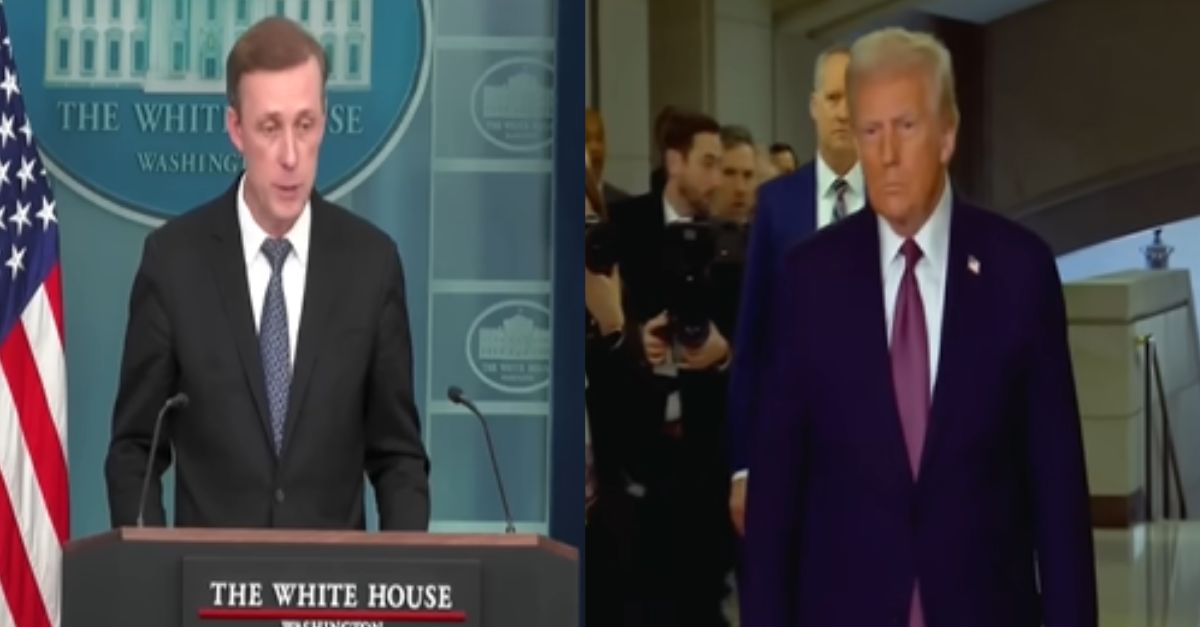
WASHINGTON (Diya TV) — Former U.S. National Security Advisor Jake Sullivan has accused President Donald Trump of damaging America’s strategic ties with India to benefit his family’s business deals in Pakistan. Sullivan, who served under President Joe Biden, said Trump’s approach caused “huge strategic harm” to the United States.
Speaking on the YouTube channel MeidasTouch, Sullivan stressed that U.S. policy toward India had long been bipartisan. He said both Democrats and Republicans had worked for decades to deepen ties with New Delhi. India, as the world’s largest democracy, shares interests with Washington in technology, economics, and countering China.
According to Sullivan, the progress achieved before Trump’s term was pushed aside when the former president turned to Pakistan. He claimed Trump’s family business interests played a direct role.
“Because of Pakistan’s willingness to do business deals with the Trump family, Trump has thrown the India relationship over the side,” Sullivan said.
Relations between the United States and India have faced strain in recent months. The Trump administration criticized India for buying discounted crude oil from Russia. However, Washington did not raise similar objections with China or European nations, both of which continue to import large amounts of Russian energy.
The former administration also imposed 25% tariffs on Indian goods, sparking further tension. Trump additionally claimed credit for a ceasefire between India and Pakistan, though Indian officials denied his role.
Sullivan said these moves weakened trust in U.S. commitments around the world. “Our word should be our bond. Our friends should be able to rely on us,” he said. “What’s happening with India right now has huge direct impacts. But it also has this reverberating impact across all our relationships and partnerships in the world.”
Trump’s warming ties with Pakistan have also raised questions. Earlier this year, Trump hosted Pakistan’s army chief, Field Marshal Asim Munir, at the White House. The two discussed trade, economic growth, and cryptocurrency. Soon after, Washington announced a new trade deal with Pakistan and pledged to help the country develop its large oil reserves.
In April, World Liberty Financial Inc., a cryptocurrency firm majority-owned by Trump and his family, signed agreements with the Pakistan Crypto Council. The deal aimed to promote innovation and attract foreign investment in Pakistan’s crypto sector.
These developments came at the same time as Trump’s administration penalized India with tariffs, deepening suspicions about his business motives.
Sullivan argued that sacrificing ties with India weakens America’s long-term strategic position. He emphasized that a strong U.S.-India relationship is vital for balancing China’s rise in Asia. By favoring short-term business deals, Sullivan said, Trump undermined U.S. credibility.
“Every other country in the world will look at this and say, ‘that could be us tomorrow,’” Sullivan noted. He warned that allies may now hedge their bets and reduce reliance on Washington.
The U.S.-India relationship has been a cornerstone of American foreign policy for decades. Both nations have expanded cooperation in defense, technology, and trade. The partnership has also been central in addressing regional security challenges.
Sullivan’s remarks suggest that the recent policy shifts risk undoing years of progress. He said restoring credibility with India will take time and effort.
“Our strength has always been that our friends can count on us,” Sullivan said. “When we sacrifice that, the damage goes far beyond one country. It sends a message to the entire world.”
The Biden administration has worked to rebuild ties with India since taking office. High-level meetings, trade discussions, and defense agreements have aimed to restore momentum. Still, the shadow of Trump’s decisions lingers.
As India grows into a global power, analysts believe Washington cannot afford to let the relationship falter. Sullivan’s comments underscore the stakes, warning that personal business interests should never outweigh national security.
For the United States, the path forward may depend on repairing trust with India and ensuring consistency in foreign policy. The coming months will show whether Washington can rebuild the strategic partnership that Sullivan says Trump put at risk.